Skip to content

News

  • What went down at the Bijlmer Run afterparty Patta

    What went down at the Bijlmer Run afterparty

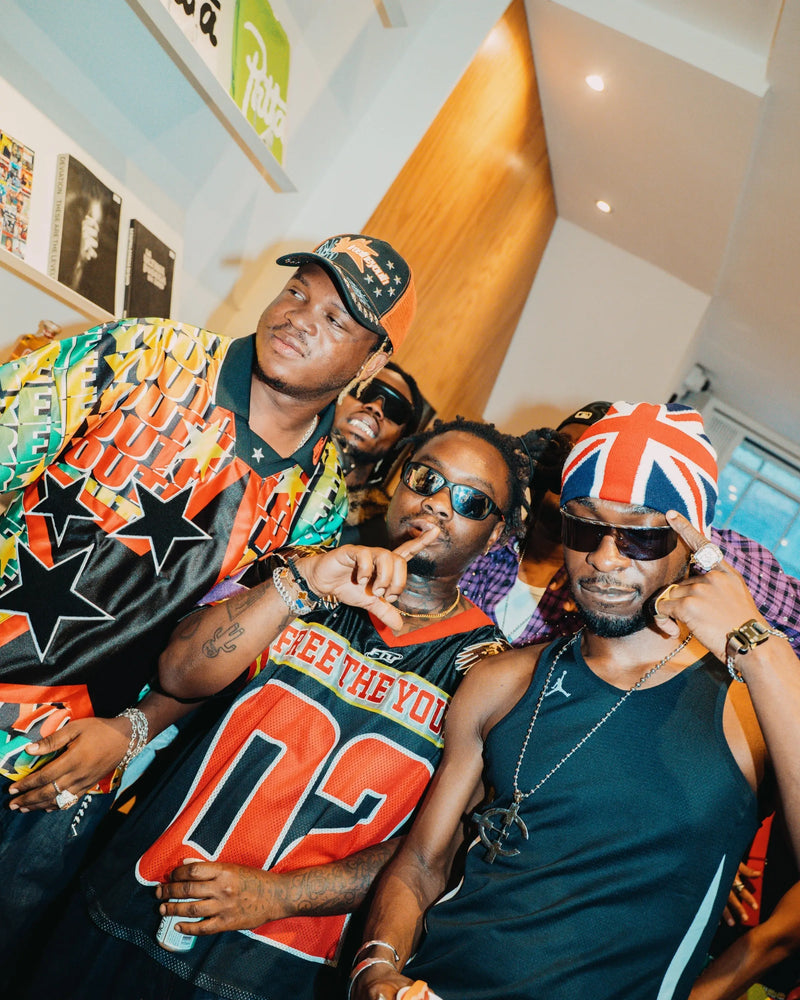
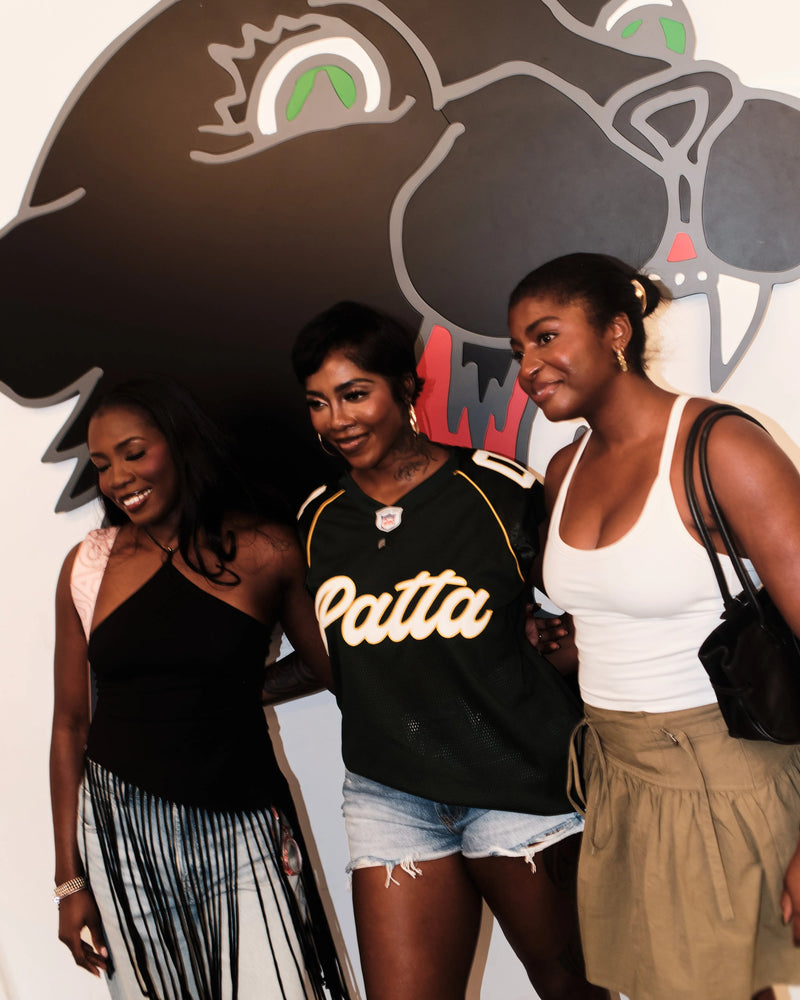
    To celebrate a successful Bijlmer Run, and the 5th year anniversary of the event - the Patta Running Team hosted the first offical Bijlmer Run afterparty as seen by Mazen El Majdoubi. A winners and a birthday party in one, soundtracked by Stevie Tune, Jay B, AK Soundsystem, Hernsy and Lil' Vic. 
    • What Went Down

  • Living Proof - Triumph Patta

    Living Proof - Triumph

    The expansion of rap music during the 1990s into the mid 2000s is widely regarded as a defining period in the development of rap music, often described as its “golden era” due to the scale of innovation and originality achieved during this time. The rise of regional styles from Brooklyn, New York to Long Beach, California gave different cities their own sound and point of view, moving rap beyond a single center and creating a genre that was relatable to people from urban environments all over the world. From groups like the Wu-Tang Clan, M.O.P, The Lox and Dipset to artists like Nas, Shyne, DMX and DJ Kay Slay; Clay Patrick McBride’s unique time spent with the artists during a developmental phase in their careers has been collected in “Triumph: Icons of Rap”. Showcasing nearly two decades of photographs of the most iconic rappers earlier in their lives.Living Proof has worked with Clay Patrick McBride to release a book on photographs documenting the golden era of rap’s defining artists during the creation of their most pivotal works, drawn from sessions Clay spent with the artists in their early years and magazine campaigns from the era’s best. The book includes test polaroids, original contact sheets and never before seen collages from the artists personal scrap book; as well hand written thank you letters from the talent. Living Proof - Triumph available now at Patta London.
    • Art

    • books

    • +1

  • Patta x Wax Poetics Cover Story with "Easy” Otabor Patta

    Patta x Wax Poetics Cover Story with Easy Otabor

    Words: David Kane, originally published in Patta Magazine Volume 6Isimeme “Easy” Otabor selects Nas’ timeless classic as his ‘cover story’, a long-running collaborative column between Wax Poetics and Patta. Illmatic is a fitting first in the series to feature in Patta Magazine.At this point, there’s little we can say about Nas’ Illmatic that hasn’t already been said. Nasir bin Olu Dara Jones aka Nasty Nas, aka Escobar, was aged just 20 when he released his musical masterpiece to an unsuspecting world with a little help from his producer friends — DJ Premier, L.E.S., Pete Rock, Q-Tip, and Large Professor (who must be kicking himself for turning down the opportunity to executive produce the record) — which has gone on to transform hip-hop, modern music and the wider pop culture canon.  Yet despite more than 30 years of lore-building, there are still some lesser-known aspects of the album and the greater cultural fabric it is woven into — and the millions of people's stories it continues to soundtrack.Otabor is a Chicago-born curator and gallerist whose work bridges contemporary art, fashion, and community-forward programming. “Born and raised in Hazel Crest in the south suburbs. My parents are both from Nigeria — first generation — they came here in their early twenties and tried their best to make a way for us. I started in sneakers, working at all the sneaker stores as soon as I could get a work permit. “I went to school for fashion, worked at RSVP Gallery with Don C and Virgil (Abloh), and learned by doing whatever needed to be done. That led to (the clothing brand) Infinite Archives and then Anthony Gallery, named after my dad,” he explains over a call from Florida. He’s often on the move, listing off Amsterdam (where he recently launched the second Anthony Gallery), Berlin, London, and Tokyo as recent destinations. Something of a Japanophile, Easy’s initial touchpoints into art came through anime like Akira, Fist of the North Star, and then Takashi Murakami, thanks to his work on the cover art for fellow Chicagoan Kanye West’s Graduation album. Easy credits his brother Ade for his omnivorous approach to culture. “He introduced me to Illmatic — really, all the music I know came through him. I was lucky to have a brother who knew what was happening, who was open to different sounds and always tuned into what was next.” The Illmatic cover operates as a kind of cultural Rorschach — the same image, endlessly reinterpreted. For some, it’s a portrait of lost innocence; for others, a map of inevitability, where place and identity are already fused. What you see says as much about you as it does about Nas.“Honestly, whenever I think of Illmatic, I think of that cover first. There’s a quote I can’t fully remember, but it’s about true genius being found in simplicity. You see where Nas grew up, merged with a childhood photo, those piercing eyes — but also this sense of knowing what he was about to do. Even the background, driving through his neighborhood, all comes together. It’s a perfect blend. You feel like you see yourself in it. No matter where you’re from, you can relate to that feeling of reflecting on your past while being ready for the future, and the present.”The 30th anniversary of Illmatic in 2024 coincided with a global tour, a 7” boxset release, and the publication of a cluster of new and archived content celebrating the record, including a musty interview recording with Nas’ father. In one video, Olu Dara, a successful jazz musician in his own right, recalled the moment the photo was taken. It was when he returned to the States after a long tour in Europe, found Nas and his brother in Queensbridge, who both excitedly ran towards him.  Olu said he saw it in Nas’s eye — “his mind was saying, wow, what a world.” In addition to Olu — who in the same recording mentions a “man with a camera” rather than explicitly claiming to have taken the photo himself, as is popular belief — the artwork was part of a cross-generational collaboration that included photographer Danny Clinch, with art direction by Jo DiDonato, and design by Aimée Macauley — the latter two, employees of Columbia Records. Clinch photographed Nas and his crew in Queensbridge, the largest housing project in the US. Six images appeared across the original vinyl and CD releases.According to Large Professor, speaking to DJ Vlad, the portrait of Nas, in which his hand obscures his face — complete with a small rip — was always meant to be the cover. The tear was accidental. “He had it under a piece of glass, and I guess when he went to grab it, the glass must’ve stuck right there, so that’s the rip right there.” It stayed because it felt right.Illmatic is widely considered to be the first of many hip-hop album covers to feature a child — from Biggie through to Lil Wayne, and Kendrick Lamar. Ghostface would later infamously call out rappers (supposedly Big) for biting the cover art during a skit on Raekwon’s Only Built 4 Cuban Link. Though Nas later dismissed the critique — but it’s not the first outside the genre.When I send Easy a Discogs link to A Child Is Born (1972) by The Howard Hanger Trio, he chuckles at the artwork. “If I had to guess,” he says, “it’s probably a record his dad had in his collection.” The resemblance to Illmatic is uncanny: a child’s face, roughly the same age, gazing directly at the viewer, superimposed over a crumbling city street. Musically, it’s a deep, almost spiritual modal jazz record, featuring eerie interpretations of Simon and Garfunkel’s Scarborough Fair, and Eleanor Rigby, by The Beatles.When it surfaces, A Child Is Born now sells for three figures, likely inflated by its accidental proximity to one of hip-hop’s most revered LPs. The trio released just three albums between 1970 and 1977 before quietly disappearing. Howard Hanger himself came from a lineage of principled Methodist ministers; a family history marked by civil rights activism, anti–Vietnam War protest, and the defence of same-sex unions. No official link has ever been acknowledged between the two covers. Which only reinforces the point: the difference isn’t what you take — it’s whether you make it yours.The red thread here might just be family. As Easy explains, “My older brother changed my life. I probably wouldn’t be where I am without him. Even recently, with a Jordan release, I made sure it landed on his birthday.” Easy’s referring to the 2025 release of the Infinite Archives x Air Jordan 17 Low, inspired by the OG model by Wilson Smith, the first Black sneaker designer for the Jordan brand.Long before culture was flattened into clicks and stories, Easy Otabor was dedicating himself to moments — overlooked and era-defining — that once felt abundant and now feel increasingly rare. As for Illmatic today?“I go back to it all the time. There are just so many records on there — ‘Life’s a Bitch’, ‘The World Is Yours’, ‘Halftime’, ‘It Ain’t Hard to Tell’. The whole album stays in rotation. So when the question came up about album covers and what they mean, it was a no-brainer.“It’s as timeless as the record itself. It taught me not to overdo it — that less really can be more, and sometimes more powerful than anything complicated. Every time I look at it, everything stands still for a moment.” 
    • Magazine

    • Music

  • Tales from the Echobox: Sophie Straat Patta

    Tales from the Echobox: Sophie Straat

    Interview by Passion Dzenga and Liesje VerhaveLaunching in 2021, Echobox has been forging a path for community radio by showcasing the diverse characters and concepts that surround their station. In this feature, we will be looking into one of the broadcasts that you can tune into, so get locked in and don’t touch that dial. Among them is Sophie Straat Hit Squad, a broadcast that feels less like a traditional radio show and more like a personal diary set to sound. Known for her sharp lyricism, multimedia approach and the self-built world of Protest Fest, Sophie Straat doesn’t separate curation from creation. Whether she’s programming a festival at Paradiso, touring across Europe, or stepping behind the decks, the thread remains the same: instinct over formula. Her Echobox residency wasn’t born out of a lifelong radio ambition; in fact, she admits she initially dreaded the idea of “having to listen to music again.” But somewhere between R&B deep dives, themed playlists about “winning,” and rediscovering the pleasure of listening without overthinking, the show became a reset button.Sophie Straat Hit Squad operates in the grey areas, where personal taste meets politics, where pop stages follow DIY rooms, and where a Justin Bieber record can sit comfortably alongside experimental drums or Gnawa rhythms. It’s less about making “social messaging music” and more about standing for something without announcing it. As she puts it, the artists she gravitates toward might not call themselves protest acts, but they represent what she stands for, and that’s enough. In this conversation, we speak to Sophie about rediscovering joy through radio, growing up in De Pijp, building Protest Fest into something tangible, and why identity is never fixed.What made you want to start a radio show, and what space did Echobox give you that you didn’t have before?Well, it was never really my dream to start a radio show. They asked me and I thought it was quite fun to do. What I like about it is that… I’m a musician, so I listen to music differently. Lately, I kind of lost my interest in music because I’m always working. When you listen to music, you’re always actively listening, and I lost the fun in it.I was actually really not looking forward to my radio show because I thought, oh yeah, shit, I have to listen to music again. But then, when it was coming up, I started listening to easy listening music. R&B, soul, indie kinds of places, and then I enjoyed it again. It’s fun. And it’s also like… people always have this image of you as a musician and what you listen to, and it’s fun to show them what you listen to. Do you get what I’m saying?The last show I did, I recorded yesterday, it’s for Thursday because I’m not in town, but I feel like that really represents how I feel now. I feel like every show is kind of like that. The description isn’t really correct, but every show is themed. Two shows ago, it was themed around “winning” because Zohran Mamdani got the win in New York, so I curated a playlist with a winning theme.So it’s both. It’s fun to curate a playlist in different ways, whether it’s something that happened, or how you’re feeling, or whatever. That’s what’s nice about music. When people ask what you listen to, it’s never one thing. It’s a billion things. And that’s what’s nice about curating.You curate in a lot of spaces, including Protest Fest. When it comes to your radio show, are you more open-minded to include things that are just “good music,” even if it doesn’t connect to the social lens people associate with your work?That’s a very complex question because “good music” is not really describable. And also, Protest Fest isn’t really only… what did you call it? Social messaging. When I make music myself, the goal isn’t to make social-message music. I make music, and it happens to be social-messaged. And in a way, the artists I listen to, they could fit into Protest Fest. And the lineup this year is Asma Hamzawi, who’s a Gnawa artist from Morocco, and Able Noise, which is experimental drums and vocals. They’re not really out there to be protesting or something, but I feel like they represent what I stand for. And that could be anything.After half a year of doing Echobox shows, how has the concept evolved for you? Are you more into collaborations and guests now?Yeah, I think next time I’ll take a guest. I’m always open to taking guests. It’s just that the show always comes up, I see it in my calendar and I’m like, oh shit, I have to do Echobox. And then I go up there and I just play the music that I feel like playing. But I was thinking to take a guest next time.Have you ever freestyled a show and it turned out better than expected?Terrible yeah. I’ve had that a couple of times, actually. Most times. Actually, most times. But yesterday I did prepare and it was really nice. So I’m going to do that more often. It wasn’t different than if it would be live because I still had to do it within an hour, but… because I haven’t listened to music in a while, it felt fun again. I tried to listen to music without thinking, and that was really nice for once. Listening to music that’s pleasant and not complicated or complicated in a way, but just… not thinking.What’s your relationship with community radio? Were you listening to stations like Red Light Radio before you had your own show?Not really Dutch or Amsterdam community radio, to be honest. Red Light Radio was always there and I’ve been a couple of times, but I don’t really have like a famous past with it or something.You grew up in De Pijp. How did that shape your taste? Do you play local artists, or are you more interested in the global conversation around music?De Pijp didn’t really influence… I guess. I mean, I’ve been raised by my mom but also by my neighbours and like my best friend’s mom, and she listened to a lot of Dutch hip-hop and rap, and that was the first music I listened to if I think about it. So in a way De Pijp influenced me because we were always over there, but I’m not sure if the neighbourhood introduced me to music I still listen to. But I think it’s interesting that you’re raised not only by your parents but also the people around you, and then after that, you choose the people around you that form you. That forms your musical interest as well. Life passes and you meet people, and those people have an influence on your taste and curiosities. The different lives you have within one life bring insights, music and tastes. That’s what I really like about it.You’re on tour right now. What kind of music do you listen to when you’re not working?It could be anything. And I’m not the only one choosing. It depends on how we’re feeling and what people want to listen to. I’m really looking forward to Jebba’s album; it’s coming out the day our tour starts, so I know I’m going to listen to that on the first day. Usually, when we’re on our way home, either we’re really tired and don’t listen to music, or we’re hyped and then my guitarist, Los, comes in with his awful playlists. It could literally be anything. I don’t know how to answer that.Do you listen to your own music?I listen to it for practice. Sometimes I listen to it with other ears, as you place yourself within someone else, but not really for fun. When it’s not released yet, I listen to it a lot the whole day, on my bike, in the train, I can’t stop. And then when it’s released, I’m like… over it.On tour, who controls the aux? Who’s the dominant one on the speaker?That’s funny you say that because… Justin Bieber actually got me out of that not-wanting-to-listen-to-music thing. I listened to this record, and I was like, oh yeah, I enjoy this again. The latest is Swag 2, which is also a great name. But yeah, I could be dominant, but I guess I’m the most dominant one with the speaker.The tour starts in early March. What are you most excited for?I’m really looking forward to Protest Fest, obviously. And the first week is going to be fun because it’s four shows in a row, so we’ll get into it. It’s always fun, so it’s a good starter. Then… N is always good fun. And then two times Rotterdam, which is also fun. So the first week is going to be a really good start.And we’re going to do two radio shows during the tour, actually, during Rotterdam twice, we’re going to do Operator Radio, and then in Brussels, we’ll do Kiosk as well.Do you have any tour rituals or anything you do before being away and sleeping in strange places?We don’t sleep in that many strange places because we’re mostly touring here and in Belgium. I think we only sleep three times somewhere else: Brussels, Rotterdam and Groningen. But I really like that the only thing I have to think about is getting in the bus. That’s the only thing I’m doing in the month. I’m really looking forward to that, because when I’m not touring, I’m busy with a billion things, and this March is just about performing.You’re a multimedia person, photography, music, video, art school. When did sound become one of your main expressions?When I was at art school, I always loved music, but I think I always used music within projects. I don’t know, I suppose I always used music within projects and I use my other stuff within other projects. It’s one big mess. But if you ask my main medium: music. Definitely. That’s my job. That’s what I do every day.Your album title asks, “Who the hell is Sophie Straat?” So: who is Sophie Straat today?I feel like we’re all not one particular personality or secret identity. We have multiple sides to us. It would be terrible and destructive if we said we only have one part and one identity. We have to go out to our different personalities and not be filtered into one place. You can be one thing one day and a completely different thing the other day, and don’t get stuck in an identity crisis because it’s not you or whatever. I want to embrace that and be someone else when I want to be.This project feels different from your earlier work. What are you looking forward to on this tour? What will feel new?Everything is always different. We evolve, I hope, and don’t stick to one thing forever. This album’s been out for a few months, and we did one tour in DIY places, small rooms, and now we’re doing the big pop stages. So it’s the album again but in a different place, which is fun. It’s going to sound different because the sound system is different, the production is different. And I like how you can play the same stuff in a different place and it can be completely different.You’ve collaborated with everyone from Goldband to the Metropole Orkestra. What do you look for in collaborators and in guests for your radio show?Either they’re people I think are fun and I love them, usually friends, or I think they’re really cool and I want to hang out with them and I see it as a good excuse. It’s one of those.Protest Fest has been at Paradiso for a while, and it donates to charity. Why build that platform?It started out because I had my show there and I thought, I might as well bring some other bands because I have that place. It’s kind of like curating a radio show, because you think your music is cool and you want to show the rest as well. It’s very self-centered, I suppose, because you think you’re cool and you want to let people know what is cool. That’s how it started.Why was donating part of the idea, and why support MiGreat this year?When I’m calling it Protest Fest, I can’t really own all the money that’s given to me. And if you’re owning money, you might as well donate it. MiGreat is doing interesting stuff; it’s very active. When you donate to somewhere, you don’t really know what they’re going to do with it. But MiGreat tells you what you can do. We’re probably also going to do a workshop to be active. People always ask, what can I do, how can I help? and MiGreat really tells you what you can actively do, like marry someone without papers, or they have these examples that are active and solve stuff.Where does the “Hit Squad” name come from? Because you played Punjabi Hit Squad on the show too.Yeah, that’s where it’s from. First I wanted to play that song as a jingle every time I would start, but after a while I stopped doing that. But that’s where it came from.Tune in to Echobox, broadcasting from below sea level every week, Wednesday until Saturday.
    • Tales From The Echobox

  • RADIO Z at Skatecafe Patta

    RADIO Z at Skatecafe

    A new frequency, RADIO Z. Ray Fuego and Dio are taking over with a pirate broadcast in the form of an album. Produced by Kabul $lim. RADIO Z is already planned to change Lowlands forever, but before that, they will have their one and only performance in Amsterdam.   25th of June, Skatecafe - don't miss out and get you tickets here.
    • Events

    • Music

  • What went down at the Patta x New Balance Grey Days Party Patta

    What went down at the Patta x New Balance Grey Days Party

    Once again, the iconic Patta x New Balance Grey Days party took over Amsterdam. The night heated up with bites from Sichuan Territory, a live performance by Anysia Kym, and new and timeless sounds kept the crowd moving deep into the early hoursBetween chess games, familiar faces and standout moments, the unmistakable Grey Days energy brought everyone together for another evening we won't soon forget. Get familiar with Grey Days as seen by Aryan Hamyani.  
    • What Went Down

  • Shubeen at Skatecafe Patta

    Shubeen at Skatecafe

    Shubeen returns to Skatecafe on June 6 for another annual gathering where the diaspora comes first. A three-room takeover dedicated to migrant sounds, global bass pressure and the communities that continue to shape nightlife from the margins outward.Created by Murkage Dave and Passion DEEZ, Shubeen is built for the people who grew up between cultures, across borders and inside scenes that never fully reflected them back. It’s a celebration of music as memory, migration and connection from soundsystem culture to club mutations, from leftfield classics to dancefloor chaos.Leading the charge are co-founders Murkage Dave & Passion DEEZ, reuniting after last year’s sold-out edition for a genre-hopping b2b spanning global club sounds, Hotep hip-hop, Dalston kebab-shop anthems and everything in between. Fresh off the release of his album Brut Thoughts and a headline show at Village Underground, Murkage Dave steps back into the booth alongside his club collaborator. Opening things up is Amsterdam-based Garnett, whose sets pull deeply from reggae, dub and dancehall traditions while pushing soundsystem culture into new territory.Flying in from Los Angeles, Bianca Oblivion arrives with the kind of high-pressure energy that has made her one of the most exciting selectors in global club music right now — packed with dubplates, razor-sharp blends and pure movement. Joining her is Yeimy, founder of Popolaclab, bringing a sound rooted in dembow, salsa, cumbia, merengue and reggaeton straight from Mexico.In 1900, dengdeng curates a sweat-drenched room full of rhythm, chaos and community alongside the unstoppable Cata.Pirata. The South African-born multidisciplinary artist and SKIP&DIE frontwoman whose sound travels freely between continents, scenes and identities.Tickets are live now and if you came last year, you already know not to wait for the inevitable Ticketswap panic.
    • Events

  • Shawn Brauch on Pen & Pixel, Southern Rap Artwork and Building a Visual Empire Patta

    Shawn Brauch on Pen & Pixel, Southern Rap Artwork and Building a Visual Empire

    Before Pen & Pixel became one of the most iconic design studios in hip-hop history, it began with a Xerox machine, a storyboard, and a willingness to experiment long before the technology was truly ready for it. In the early nineties, Southern rap was rapidly expanding beyond regional recognition, but visually, the culture still lacked an identity that matched its ambition. Pen & Pixel would change that forever.Shawn Brauch and his brother Aaron Brauch originally entered the world through Rap-A-Lot Records during a period when the label was operating at full intensity. Aaron had been working remotely with Rap-A-Lot founder James Smith while studying at Cornell — something almost unheard of at the time. “He had a laptop in 1990,” Shawn recalls. “That alone was crazy.” After graduating, Aaron moved to Houston full-time to help build Rap-A-Lot alongside James Smith and the rest of the team. Shawn, meanwhile, was working at an advertising agency and doing illustration work independently when Aaron called him with a simple request: could he storyboard a music video?The song was A Minute to Pray and a Second to Die. Shawn had limited experience with storyboards but agreed to try. That opportunity quickly exposed something larger. “I saw there was a deficit in Rap-A-Lot’s marketing,” he explains. “So I started sketching things, putting together album covers with Xerox machines, pen and ink, whatever we had access to.” What started as improvised visual problem-solving soon became a much larger operation. Rap-A-Lot had been outsourcing design work using early Photoshop, QuarkXPress and FreeHand systems at enormous cost. Shawn and Aaron proposed bringing that entire process in-house.The investment was massive for the time. “The Quadra 800 alone was around seventeen thousand dollars,” Shawn says. “The printer was almost three grand. The monitor was over two thousand. People forget how expensive this technology was back then.” Beyond the equipment itself, they also needed specialists who understood how to operate the systems. At that point, Shawn was still learning himself. But the limitations of the technology became part of what shaped the Pen & Pixel aesthetic. “This was Photoshop 1,” he explains. “You had layers, but once you clicked off the layer, it was stuck. There was no undoing things the way you can now. Every move had consequences.”That technical restriction forced a kind of disciplined experimentation. Shawn’s background in photography, illustration and architecture all began feeding into the work simultaneously. “We kept detailed notes on everything,” he says. “What worked, what crashed the machine, what effects you could push further. We were learning while building.” Eventually, that process evolved into a distinctive visual language filled with surreal compositions, metallic typography, explosions, reflections, diamonds, flames and impossible environments that felt larger than life. One of the earliest turning points came with Willie D’s Going Out Like a Soldier, a cover featuring the rapper posed in front of a burning Capitol building. “That was one of the first covers where people really started asking, ‘How did you do that?’” Shawn remembers. “Honestly, sometimes I still look at it and wonder how we pulled that off on those machines.”At the same time, Rap-A-Lot itself was expanding rapidly. The label was producing projects from the Geto Boys, Scarface, Willie D, Gangsta Nip and countless others at an exhausting pace. “It was sixteen, eighteen-hour days constantly,” Shawn says. “Everybody knew there was an opportunity happening.” Eventually, artists began arriving at Rap-A-Lot not just looking for record deals, but specifically asking about the artwork. That was the moment Shawn and Aaron realised the design work itself could become a business.After unsuccessfully pitching a partnership structure to Rap-A-Lot, the brothers decided to leave and build Pen & Pixel independently from their apartment dining room table. They purchased the same expensive equipment and committed fully. “When you’re building a business, the money doesn’t go into your pocket,” Shawn explains. “It all goes back into the company. That’s the painful part most people don’t understand.” For years, they survived by reinvesting everything while living modestly. The apartment quickly became too small. Then the house they upgraded to became too small too. Eventually, Pen & Pixel expanded into a custom-built 5,000-square-foot studio, followed by another 5,000-square-foot building across the street housing a photography studio, CD replication facilities, printing equipment and mastering labs.By then, Pen & Pixel had become much more than a graphic design studio. “People misunderstand what the company actually was,” Shawn says. “You could walk in with a DAT tape and your wallet, and we could take care of everything.” The company handled artwork, mastering, music videos, licensing, distribution, posters, packaging, transportation and security. The infrastructure became so complete that major labels like Universal and Relativity viewed a Pen & Pixel package as a stamp of reliability. “If an artist came in with Pen & Pixel behind them, labels knew the quality and systems were already there,” Shawn explains.Inside the studio itself, the atmosphere was chaotic, collaborative and relentlessly productive. Pen & Pixel was intentionally designed to overwhelm clients visually. Gold records, platinum plaques and posters covered the walls. “People would walk in and immediately feel like they were in the right place,” Shawn says. Artists often arrived with wildly different levels of direction. Some came with fully formed concepts, while others simply trusted the studio completely. Shawn compares the creative process to music production itself. “I’d explain to artists that Photoshop works like making a song,” he says. “You have your lyrics, drums, melodies and layers. We’re doing the exact same thing visually.”The process behind covers like 8Ball & MJG’s On Top of the World reveals just how complex that layering became. The famous cover featuring the Dodge Viper was assembled piece by piece. The car, owned by Suave House founder Tony Draper, was photographed separately in the studio to control reflections. 8Ball and MJG were photographed later while on breaks from touring. Pool tables, cues, reflections and lighting were all composited manually. “People think those covers were random chaos,” Shawn says. “But your eye knows when something is wrong. Everything had to be exact.”Not every project leaned into hyper-surrealism. When Destiny’s Child approached Pen & Pixel through Matthew Knowles, the assignment required restraint rather than excess. “The shoot was already done,” Shawn explains. “They needed retouching, backgrounds, effects. But you don’t need extreme effects when the women are already that beautiful.” The result was cleaner and more polished, proving Pen & Pixel’s range extended beyond Southern rap maximalism.Still, the studio’s most enduring work often came from the personalities surrounding Southern rap itself. Shawn remembers the Geto Boys as a collection of completely different energies forced into one explosive chemistry. Gangsta Nip’s dark horror-inspired persona directly influenced the roughness of his artwork. Meanwhile, Master P emerged as one of Pen & Pixel’s most important collaborators. “If you wrote the word entrepreneur in the dictionary, Master P should be beside it,” Shawn says. P’s relentless business instincts matched the studio’s own work ethic perfectly. Whether creating annual-report-style brochures for No Limit Sports or elaborate album packaging, the relationship was built on speed and trust.Cash Money Records brought another kind of energy entirely. Juvenile, BG, Turk and a very young Lil Wayne frequently moved through the studio while building what would become one of the defining rap dynasties of the era. Shawn vividly remembers Wayne arriving at the studio at just thirteen years old. “He always had this notebook with him,” he says. “He was constantly writing ideas and observing everything.” While others joked around, Wayne quietly studied the business around him. “You could tell immediately he was serious.”That spirit of experimentation extended beyond the covers themselves. Pen & Pixel’s creative process often involved anyone present becoming part of the work. Staff members modelled for covers. Friends became characters. Employees brought bikinis to shoots. For Master P’s Ghetto D, another artist volunteered to portray a crack addict surrounded by burning CDs and tapes. “He knew exactly how to look,” Shawn laughs. “Garbage bag pants, dirty sweater, ashy teeth — he fully committed.” That original version later had to be censored for retail stores like Walmart, forcing the studio to redesign parts of the artwork entirely.As the company grew, Pen & Pixel developed systems that resembled a high-functioning advertising agency more than a traditional art studio. Every client had detailed job folders tracking concepts, production schedules, budgets and revisions. Massive press proofs were printed, hand-cut and assembled before being physically tested inside record stores to see how they competed visually on shelves. “We obsessed over possession,” Shawn explains. “If someone held the cover for more than five or six seconds, the chances of them buying the CD increased dramatically.”That philosophy became central to Pen & Pixel’s influence. The covers were designed not simply to look impressive, but to interrupt people visually. “You wanted someone flipping through CDs to stop and say, ‘What is this?’” Shawn says. “At that point, the job was already done.”When Pen & Pixel eventually closed in 2003, Shawn initially assumed the story had ended. He stepped away from the industry entirely, moved to the Virgin Islands and taught scuba diving for a period. But over time, the imagery began resurfacing online, first ironically and then reverentially. Younger audiences started recognising the craftsmanship behind the work rather than dismissing it as excessive nostalgia. “People would say, ‘I hated those covers so much I bought the CD,’” Shawn laughs. “But the point is — you bought the CD.”Today, Pen & Pixel’s visual language has become inseparable from the mythology of Southern rap itself. Beyond the chrome text and exploding backgrounds, the company represented a moment where regional rap scenes visualised their ambition without limitation. Every cover promised scale, success, wealth, danger and fantasy all at once. Looking back, Shawn sees the work as an extension of something much older: the tradition of iconic album art itself.“When I was a kid, I’d sit there listening to records and staring at the sleeves,” he says. “Pink Floyd, Fleetwood Mac, Supertramp — those covers stayed with you. You’d study them while the music played. One day, I thought, imagine designing something that makes people feel like that. And somehow, eventually, we did.”Check out Wax Poetics' new collection by Pen & Pixel! 
    • Art

  • Steve McQueen - Atlas Patta

    Steve McQueen - Atlas

    Steve McQueen has always occupied a rare space between artist and filmmaker, moving fluidly between cinema, installation and political reflection without ever fully belonging to one discipline. Whether through the physical intensity of Hunger, the historical brutality of 12 Years a Slave or the deeply human portraits inside Small Axe, his work consistently examines the relationship between memory, power, race and lived experience. Now, De Pont Museum in Tilburg is bringing that vision into focus with ATLAS, McQueen’s first solo exhibition in the Netherlands.Running from 21 March to 30 August 2026, the exhibition presents four major works that together form an expansive meditation on history, space, trauma and perception. At its centre is the world premiere of Atlas (2026), a newly commissioned work created specifically for De Pont Museum, alongside Sunshine State (2022), Untitled (2025) and Bounty (2024). Together, the exhibition positions McQueen not only as one of the defining filmmakers of his generation, but as an artist deeply engaged with the emotional and political dimensions of image-making itself.The newly commissioned Atlas marks a striking shift in scale. Created using astronomical data from the European Space Agency’s Gaia mission, the work transforms scientific observation into an immersive visual experience. Collaborating with davidkremers, Julian Humml and Alejandro Stefan Zavala, McQueen uses machine learning systems to reinterpret telescope data into something both empirical and poetic. The result is less a straightforward representation of outer space than an attempt to confront the vastness of existence itself — a journey through scale, time and perception that feels equally grounded in science and imagination.That cosmic perspective is balanced by Sunshine State, one of McQueen’s most emotionally layered recent works and now part of the De Pont collection. Originally commissioned by the International Film Festival Rotterdam, the multi-channel installation intertwines fragments of film history with McQueen’s own family narrative. The work traces the story of his father, who migrated from Grenada to Florida in the 1950s to work in the orange harvest, while simultaneously reworking footage from The Jazz Singer (1927), the first feature-length sound film in cinema history — infamous for Al Jolson’s use of blackface.McQueen manipulates the archival material through reversals, distortions and altered speeds, creating a fragmented visual language where memory becomes unstable and historical imagery begins to collapse into something more haunting and unresolved. Across the installation, silences and absences become as important as the images themselves, exposing the ways personal trauma and colonial histories continue to shape one another across generations.Elsewhere in the exhibition, Bounty (2024) offers a quieter but equally charged meditation on history and place. The 47-part photographic series documents flowers and plants from Grenada in vivid states of bloom and decay. On the surface, the images appear tranquil and almost meditative, but beneath that beauty lies a deeper reflection on colonial extraction, survival and regeneration. Even the title carries dual meaning: bounty as abundance, but also bounty as plunder.The series will also be accompanied by a newly published catalogue from MACK, featuring Derek Walcott’s poem The Bounty alongside a new text by poet and novelist Dionne Brand. Like the exhibition itself, the publication extends McQueen’s interest in connecting visual language with historical and emotional memory.Taken together, ATLAS feels less like a conventional museum exhibition and more like a series of interconnected meditations on how we experience time, history and physical presence. Across film, sound, photography and data-driven installation, McQueen consistently asks viewers to confront what remains unseen beneath surfaces — whether that means inherited trauma, erased histories or the sheer incomprehensible scale of the universe itself.Few artists move as comfortably between radically different mediums while maintaining such a distinct emotional and political clarity. From the experimental films that earned him the Turner Prize in the 1990s to Oscar-winning cinema and large-scale installations, McQueen’s practice has always resisted categorisation. What connects the work is a persistent attention to vulnerability: the body under pressure, memory under strain, and history as something both deeply personal and collectively lived.With ATLAS, De Pont Museum presents McQueen at a moment where those ideas feel more expansive than ever. The exhibition moves from the intimate to the cosmic without losing sight of the human experience at its centre. In doing so, it offers a powerful reminder that Steve McQueen’s work has never simply been about images — it has always been about what images carry, conceal and reveal.
    • Art

  • Patta x Bijlmer Run Afterparty Patta

    Patta x Bijlmer Run Afterparty

    After the Bijlmer Run, we keep moving. Join us at Bitterzoet for the official Patta Running Team afterparty. A night powered by the community, with Patta Running Team members behind the decks and on the mic. Sounds by Jay B, Lil Vic, Hernsy, AK Soundsystem and Stevie Tune. Please note that this event is ticketed and is 18+, you can get tickets on the door or via Bitterzoet.
    • Events

  • Patta x Bijlmer Run Shakeout Patta

    Patta x Bijlmer Run Shakeout

    The day before the Bijmer Run, we’re hosting a Shake Out Run on May 15th starting from Marineterrein. RSVP via Patta Running Team to participate. Run together. Celebrate together. 
    • Events

    • Patta Running

  • Get Familiar: Het Sikkelcelfonds Patta

    Get Familiar: Het Sikkelcelfonds

    Interview by Passion Dzenga and Liesje VerhaveAs part of our collaboration with the Dutch Sickle Cell Foundation, we spoke to Professor Marjon Cnossen, pediatric haematologist, researcher and one of the driving forces behind the foundation, to better understand the realities of sickle cell disease, why awareness remains so low, and why community-led support matters more than ever. From the outside, sickle cell disease is still widely misunderstood. For many families living with it, that lack of recognition can feel almost as difficult as the illness itself. Through research, advocacy, fundraising and events like the Bijlmer Run, the Sickle Cell Foundation is helping to change that — building not just visibility, but real support for patients and their families.Could you briefly explain what sickle cell disease is for people who may never have heard of it?Sickle cell disease is a hereditary blood disease that mainly affects people of colour, although that includes many different communities. Most patients have ancestors from Africa, but we also see a lot of patients from the Middle East and India. Those are also regions where the disease is very common.The disease developed through something that was originally protective. Thousands of years ago, a mutation in the DNA emerged that helped protect people against malaria, which is common in regions around the equator. If you carried that mutation, you were better protected against malaria, and because of that, many carriers lived longer and passed this genetic trait on to their children. Over time, more and more people became carriers. If two carriers have a child together, there is a one-in-four chance that the child will be born with sickle cell disease.In practical terms, sickle cell disease affects the red blood cells. Normally, they are round, but in sickle cell disease, they become crescent or moon-shaped. These cells can stick together and block the blood flow. Red blood cells carry oxygen, so when blood flow is blocked, parts of the body don’t get enough oxygen. That causes pain, and over time, it can also cause serious damage to organs.What does that mean for daily life?The impact is huge. Patients live with severe anaemia. A healthy person in the Netherlands might have a haemoglobin level around seven or eight, but many sickle cell patients have half of that — around three-and-a-half or four. That means they are tired all the time. They struggle to concentrate. They may not be able to participate in sports or activities like their peers.That’s one of the things I find emotional as a doctor. Sometimes people see these children and say they are lazy or not trying hard enough. But if your haemoglobin level is half of what it should be, of course, you are exhausted. There is a very real reason a child might fall asleep in class.Then there are the extremely painful episodes, called sickle cell crises. These can be triggered by very normal things: cold weather, changes in temperature, stress, fever, infection, dehydration, tiredness. In the Netherlands, that means winter can be especially difficult. Patients often live in anticipation of the next sickle cell crisis.When a severe crisis happens, they may need to come into the hospital for strong pain medication such as morphine, ketamine and other treatments. Sometimes they are admitted for one or even two weeks.And beyond that, there is progressive organ damage. Because blood flow is repeatedly blocked and oxygen supply is reduced, organs can slowly start to fail. We see complications in the kidneys, liver, heart and brain. Patients can have strokes or other very serious long-term consequences.So although it’s a blood disorder, it really affects the whole body.Exactly. It is a systemic disease. It not only affects the blood. It affects the whole life of a patient — physically, mentally and socially. And there is another part people often forget: loneliness. Sickle cell disease is often invisible. If someone has childhood cancer, people understand immediately that something is wrong. They may look visibly ill. But with sickle cell disease, a patient can look “fine” to the outside world, even while living with constant fatigue, recurring pain and serious complications. That invisibility means many people do not understand the disease, and patients often feel very alone.Is that lack of awareness one of the biggest problems?Yes, absolutely. That is one of the biggest issues. Sickle cell disease is not rare globally — around 300,000 babies are born with it every year, and there are millions of people affected worldwide — but in the Netherlands, it is still treated like a rare disease. And even among rare diseases, it receives far too little attention.I also treat haemophilia, and everybody knows what haemophilia is. That shows you something important: awareness is not only about how severe a disease is. It is also about who gets seen, who gets heard, and who has access to influential networks.Patients with sickle cell disease are often too unwell to advocate for themselves. Their families are often working very hard and may not have access to the kinds of systems or connections that help bring national attention. So the disease remains invisible in places where visibility matters.That is exactly why the Sickle Cell Foundation is so important. We want to create a voice for patients and families. We want to make sure sickle cell disease is recognised as the severe and progressive disease that it is.What does treatment look like right now?We provide what we call comprehensive care. Patients are seen regularly, at least twice a year and more often if needed. In childhood, they receive antibiotics because their spleen does not function properly, which means they are more vulnerable to severe infections.From around nine months of age, many children also start a medication called hydroxycarbamide. That can help increase the amount of fetal haemoglobin in the blood, which reduces complications by modifying disease symptoms, making the disease less severe.Some patients also need regular blood transfusions. In more severe cases, especially when there are major complications, we use chronic transfusion programmes or exchange transfusions, where sickle blood is removed and donor blood is given.At the moment, the only curative treatment is stem cell transplantation, which is the same as a bone marrow transplant. The idea is that you replace the patient’s bone marrow — which is producing the sickle cells — with healthy donor bone marrow.That sounds incredibly intense.It is. It can cure the disease, and I have many patients who have been cured this way, but it is also a risky procedure. To do it, you first have to destroy the patient’s own bone marrow with chemotherapy. That makes them very vulnerable. They can get severe infections. The donor bone marrow can also interact with the host (graft versus host disease), causing severe complications. There is also a small but real risk of death. So, although the intervention is very promising, there is also a lot that can be improved.The difficult thing with sickle cell disease is that, ideally, you want to do this treatment when children are still young — before organ damage becomes severe — because the outcomes are better. But at that point, the child is still relatively healthy. It is often very hard for families to decide to put a young child through such an impactful. We as doctors know the disease is progressive, but we cannot predict exactly how severely it will develop in each person. That makes decision-making very difficult.A major part of care also depends on blood and donor systems. Is donor diversity a big issue?Yes, very much so. We need more blood donors from diverse cultural backgrounds. That is incredibly important. The Dutch blood bank Sanquin is actively working on this now, because many of our patients have blood types or blood characteristics that are less common in the current donor pool. The more diverse the donor bank becomes, the better we can care for patients with sickle cell disease and thalassemia. Not everyone is in a position to donate blood regularly, of course, but if you can, it is a very meaningful way to help.So if people want to help in a tangible way, becoming a donor is one step. What else can they do?Talk about sickle cell disease. That is really one of the most important things. Talk about it if you know someone with the disease. Talk about it if you have learned something about it. Share information. Raise awareness. That really matters.People can also support the foundation directly, donate money, support collaborations like this wonderful Patta t-shirt project, and come to events like the Bijlmer Run. These moments are important not only for fundraising but also because they create visibility and community.For us, being in Bijlmer feels very special. Many of our patients and families live there. When we are present there, people already know what sickle cell disease is. They know someone who has it. They come to the stand and say, “I know what this is about.” That feels very different from having to explain it from scratch every time. It feels like coming home.What role does the foundation play beyond raising awareness?We support research, raise funds for better treatment and better care, and help give patients and families a stronger voice. For me personally, the foundation came from frustration. There was simply too little funding, too little awareness, and too little urgency around the disease. We founded the Sickle Cell Foundation in 2017 because we felt something had to change. We started small, but we are becoming more meaningful, and that makes me very hopeful.Are there any key moments this year that people should look out for?Yes! World Sickle Cell Day on the 19th of June is very important. This year, we are organising an event in ITA in Amsterdam for scientists and of course, also for patients! I hope that in the future this event will bring more and more patients together from across the Netherlands. We are growing as a foundation. There is more programming coming. Patients are organising things too. Our new director, Inge, is fantastic. There is a real sense that the foundation is building momentum.Finally, if someone remembers one thing from this conversation, what would you want it to be?Sickle cell disease is serious. It is progressive. It is painful. And it deserves much more awareness than it currently receives. And also: talk about it. Support where you can. Whether that means donating blood, supporting the foundation, buying the t-shirt, coming to the Bijlmer Run, or simply helping spread the word, it all matters. These kinds of collaborations, as we have with the wonderful Team Bijlmer Run and Team Patta, are so powerful because they feel organic. They feel logical. They come from people recognising a shared purpose. And those are always the strongest collaborations.Patta x nijntje T-Shirt available Saturday, May 16th, exclusively at the Bijmer Run.
    • Get Familiar

  • What went down at Women Artists in Conversation Patta

    What went down at Women Artists in Conversation

    Together with Ella Ezeike and MOSAIKO Magazine we supported an evening dedicated to women, artists in the creative industry, a space centered on dialogue, exchange, and connection.Taking place at OSCAM what unfolded was more than a panel. It became a room shaped by openness and honesty, where perspectives met, and ideas moved freely between disciplines and experiences.Guided by Shaquille Shaniqua Joy and with contributions from Sonia Ihuoma, Treshna Ballantine, Michelle Hellena Janssen, and Bernice Mulenga, the conversation touched on creative process, authorship, and what it means to navigate and claim space within the industry.What stood out was the energy in the room, a shared willingness to listen, reflect, and engage. It was also important to see a diverse audience present, reinforcing that these conversations extend beyond one perspective and benefit from collective participation.We believe in supporting platforms that create space for dialogue and community. This evening felt like a meaningful step in that direction.
    • What Went Down

  • What went down at Patta Kingsday Patta

    What went down at Patta Kingsday

    Local and international talents surprised the crowd at Patta Kingsday 2026 and shut it down. Here’s what went down as seen by Dennis Branko. Big up all the artists and see you at the next dance. 
    • What Went Down

  • The Alchemist, Budgie - Living Forever ft JayaHadADream Patta

    The Alchemist, Budgie - Living Forever ft JayaHadADream

    JayaHadADream can not be boxed into a genre and keeps writing music. The Alchemist released a new track featuring JayaHadADream. The song is called ‘Living Forever’ on The Alchemist & Budgie’s latest tape ‘The Good Book III’, only available on vinyl or digital download right now. 
    • Music

  • Get Familiar: Window Kid Patta

    Get Familiar: Window Kid

    Interview by Passion Dzenga | Photography by Cody (333visuals) and Adam BrocklesbyAfter more than a decade of bars, radio sets, side quests and underground graft, Window Kid has finally hit the kind of moment that looks sudden from the outside — even though it’s been years in the making. Long before the nominations, sold-out tours and breakout singles, Greg was building his name the old way: on local radio, in club smoking areas, on pirate-energy sets and alongside some of the most vital names in UK rave culture. What makes his rise feel so deserved is that none of it sounds manufactured. Whether he’s shelling a grime beat, fronting a garage anthem or filming YouTube content, there’s still something unmistakably DIY about the way he moves.Now, with a DJ Mag Best MC/Vocalist win under his belt, a huge Sir Spyro link-up in motion and a new chapter shaped by sobriety, self-reflection and sharper songwriting, Window Kid feels more open-ended than ever. In this conversation, he reflects on ten years in the underground, the reality of building a career out of chaos, and why getting sober didn’t close the door on his creativity — it opened the whole house.You’ve had a monumental year already — tours, Australia, awards, nonstop shows. How have you been holding up through it all?Yeah, it’s been non-stop, but in a good way. We’ve had the UK tours, then Australia, then the awards, then more shows straight after. So it’s definitely busy, but it’s the kind of busy you can’t really complain about. It’s a blessing.A lot of people are only just now catching on, but you’ve really put your time in. Before all of this, before the awards and the bigger stages, what was Window Kid when it first began?Window Kid originally was just a lad spitting bars on his lunch break instead of playing football. Then it became me spitting in people’s ears in smoking areas outside clubs and bars — just doing what everyone was doing, getting mashed up and chatting bars. At the same time, I was DJing and producing as well, mostly because I thought girls didn’t like MCs. I’d be on the radio or on the decks somewhere and people would start telling me, “Window, spit a bar.” Then I’d spit, and people clocked that I was actually alright. From there, it just slowly built. The lads around me in Nottingham kept telling me, “You need to get on a tune. You need to make a track.” That’s when it started becoming more serious.So before Window Kid became a recording artist, you were already building inside DJ and radio culture?Yeah, definitely. I used to run a radio show in Nottingham called The Window Show. I didn’t really know loads of MCs or producers in Nottingham at the time — I just liked the idea of creating somewhere people could come and practice, really. I’d be on the decks and MCs could pull up and spray bars.It was on a station called Local Motive at the time, and once I started doing it, loads of Nottingham MCs began jumping on. Snowy, Kyeza, Mez — all them lot. That was really when I started becoming part of the scene properly. Then I started taking it outside the station, doing events around it, and because I was so involved, people began realising I could actually spit myself. That’s kind of when it all started taking shape.It sounds like you were building your own infrastructure in Nottingham, rather than waiting for someone to give you one.Yeah, kind of. There probably were other people doing their thing, but I wasn’t really deeply tapped into the old scene like that. I wasn’t jumping on JDZ Media or Grime Daily or SBTV early on. I was more in the background, more of a fan of the music than someone moving around in those circles. So I kind of had to start my own thing.When does it shift from bars on sets and freestyles into proper songs — actual records with structure, hooks, ideas bigger than a 16?That really started with Snowy, to be honest. He was the one who wouldn’t leave me alone about it. He kept saying, “You need to get on a track.” He basically forced me into the studio and made me record something. I made a tune called “Ben Stiller” that never actually came out, but it gave me confidence.Then Brucey reached out and said he wanted to make a tune with me. Bru-C had a buzz already, and we ended up making tunes like “5 Bet” and “Hide the Ting.” Once those started getting some numbers, that’s when I realised I could actually make songs — not just spit bars, but make actual records people connected with.I never really overthought it, though. I just spat whatever was on my mind. Grime, garage, bassline, dubstep — whatever I was feeling that day.And after that comes the touring period — Crewcast, Bru-C, Darkzy, Skepsis. That chapter really put you on the road.Yeah, exactly. I toured with Crucast, Bru-C and Darkzy, and I hosted for Darkzy for years. We were constantly on the road — six, maybe seven years of that kind of lifestyle. But I always knew I’d eventually have to step out on my own, because I always wanted to release my own music and build something as my own artist.I loved hosting for Darkzy, but over time my own songs started getting traction, my socials started growing, and I got to a point where I had enough music for a live set and enough people listening for that to actually make sense. So I broke away and started touring as myself.That’s quite a leap though — going from host and hype man energy into carrying a full show on your own.Yeah, but it felt natural by then. It didn’t feel like jumping off a cliff. I’d already built up the songs, the crowd, the confidence. Once everything lined up, it was just time.Your sound has always sat in an interesting middle ground — grime, garage, bassline, dubstep, rap, internet culture, all of it. Where do you feel like you fit now?The fun thing is, I don’t really feel boxed into one place now. I’ve shown enough respect to all the different sides of it, and I genuinely love all of them. I can go do a grime show with Novelist and Flirta D, then roll into a drum & bass rave and shell a tune like “Put That Kettle On” with Bou, then go film some YouTube content with joke YouTube guys.I’ve always just stayed in my own lane, had a laugh, and made sure I never disrespected anyone or forced myself into a scene I didn’t belong in. So now I can kind of pop in and out of all these worlds and it still makes sense.And that probably explains why people don’t just see you as “a genre act” anymore — they just see you as an MC.Yeah, maybe. I think that’s fair. I don’t really know where I fit exactly, but I know I can move about now, and that feels good.Do you think your sound matured naturally, or did sobriety really change the way you write and think about music?Sobriety definitely changed it. Before that, I was partying too heavily and drinking too much, and I got to a point where I was basically forcing myself into the studio every few months trying to make another “Boozy.” Because that tune was streaming well, I started thinking in a very narrow way — like, how do I make another party song?And I lost myself a bit, if I’m honest. When I first had to go sober, I actually panicked because I thought, “What am I going to write about now?” So much of what I’d written before was about drinking, taking gear, being off my head. I genuinely thought the whole thing might be over. But it turned out to be the opposite. It opened way more doors. Suddenly, I could write about anything.That’s a huge shift — because before, a lot of your records had that humour and chaos to them, but now you’re making songs with real emotional weight.Yeah, exactly. After Christmas I wasn’t seeing my boys much because a lot of them were out drinking and I still had to avoid that. So I wrote this tune just sitting on my sofa about not seeing my mates enough. It had this bittersweet feeling to it — happy because I love them, sad because I missed them. And Jason Williamson from Sleaford Mods heard it and said he wanted to jump on it.That kind of thing proved to me that I could write in a totally different way now. And really, it started with “Lost Myself” with Nathan Dawe & Shapes — that was the first time I made something that felt very different emotionally, and it ended up being my first charting record. So that told me a lot.When you go into the studio now, how do you know whether you’re making something funny, something introspective, something for the rave?I genuinely don’t know until I’m there. I never really plan it. In normal life, that can be a bit of a problem because I can doss about and not do much, but in the studio, it works in my favour because I’ll just go in and something will happen. JJ and Gaz, who record me a lot, always say I’m so creative with the stuff I come up with in the room.One day I’ll make a grime tune, the next I’ll make something sad, the next it’ll be pure chaos for the rave. It literally depends on how I feel on the day. I just go to the studio and see what happens.That brings us nicely to the new tune with Sir Spyro, “Badboy Sound.” How did that one come together?Spyro and I have been good mates for years now, ever since I did the Sounds of the Verse thing where I had that “lots and lots and lots” lyric. We always stayed in contact. He’s in my top three producers of all time, easy.We’d linked before, years back — me, Spyro and Champion were in the studio once — but that was during the period when I was drinking too much and trying too hard to make party music, so nothing really happened. This time was different. I was so excited to work with him properly. We went into the Sony studio in London and I was basically egging him on like, “Do that Spyro shit. Put some Spyro noises in there.” He started going one way with it and I was like, “No, bro, do the mad Spyro thing.” Then within minutes, he built this absolutely stupid beat.The mad thing is, I’d already written some grime bars a couple of months before, and I deliberately kept them aside because I thought, “These are for Spyro.” So the second that beat was there, I knew exactly what I was doing. I’d heard him making all these dubstep bits too — which were cold — but I always wanted that proper Spyro grime beat from him. That was a dream from way back.When you collaborate with people from very specific corners of UK music — grime, garage, dubstep, drum & bass — does your process change depending on who you’re with?Yeah and no. It’s different every time. Sometimes I hear the beat first and write to it, sometimes I write first and then swap the beat later. Like with “Cardigan,” I must have changed the beat about five times. Management was sick of me. They kept saying, “Please just make something else,” and I kept saying, “Trust me.” Then it became one of my biggest songs.So there’s no fixed formula. But yeah, when it’s someone like Spyro, there’s definitely more pressure because you really want to leave with something sick. If I go in with a random producer and don’t like what comes out, whatever. But if I’m in with Spyro and don’t leave with a banger, I’m going home pissed off.Over the past few years, what do you feel you’ve improved at most as an artist?Definitely the live show. Weirdly, I’ve taken a lot of inspiration from Robbie Williams. He’s one of my pals and I’ve seen him live a few times now. The way he works a crowd, tells stories between songs, plants little lines that lead into the next tune — I love that. He’ll start saying something and mention a lyric, and the crowd starts clocking what’s coming next before the tune even drops. That stuff is genius to me.So I’ve been putting loads of thought into how my live show flows — how I speak between records, how I create little moments, how the crowd helps shape the energy. And doing all that sober has changed everything. I can actually see what’s going on now. I can feel the moment, remember the show, and make decisions in real time. I think my live set is the best it’s ever been.Do you actually rehearse a lot or is it more trial and error on stage?We never rehearse. Ever. We just try things live. If we’ve got an idea, we say, “Let’s test it tonight.” If it works, it stays. If it doesn’t, we change it next week. Because I’m doing at least one show a week at the minute, the show is kind of constantly evolving anyway.You recently took that show to Australia and New Zealand too. How did it feel outside the UK?Honestly, it was unbelievable. They appreciate UK culture and UK music so much over there that it means a lot when you actually go. The crowds were just so warm and excited. Every venue felt different too — one felt like a jazz bar, another felt like a uni club, another felt more like a theatre — but the energy was amazing every night.We sold the whole tour out and it ended up being one of the best months of my life. I can’t wait to go back.And that trip happened while you were still very new into sobriety. Were you worried about that?Massively. I was genuinely panicking for about two months before we went. I thought I’d land and just want to drink the entire time. I thought I’d be craving it every day and it would ruin the trip. But it didn’t happen like that at all.We were getting up early, getting juices, going on walks, going to the beach, having naps, seeing animals, just actually living. If I was still drinking, I would’ve done none of that. I’d have just been getting smashed and wasting the whole experience. So it was actually one of those moments where I really realised the change had already happened in me.And that seems to connect to that trip you took with Marshall as well — which felt very human online, not forced at all.Yeah, that was a special one. Marshall’s more of a social media guy, but we followed each other and I knew his story. His wife had died, Faye, and a lot of his content was about grief and living through that. He asked if I’d get involved in a fundraiser for the charity connected to the cancer she had, and I said yes straight away. Then I just said, “Do you want to go on holiday?” and he said yeah.We ended up going to Slovenia, to Lake Bled, and just filmed some stuff together. It kind of blew up online, but what it really was, was just two blokes both trying to figure out life in different ways. His grief was obviously much heavier than anything I was going through, but there was still this shared feeling of trying to navigate a new chapter. It was emotional, funny, sad, uplifting — all of it. And we came back proper mates.That’s probably why it resonated. It felt real. Nothing about it felt manufactured.Yeah, because it was real. That’s all it was.Do you ever feel like you’re “performing” online or in your music, or is it all just Greg?It’s just me. Honestly. I get why people ask because one minute I’m making an aggressive grime tune and the next I’m on YouTube eating Easter eggs or whatever. But that’s just how I am. I’ve always been like that. I’m not this mad badman, so obviously some of the bars come off funny as well, but none of it’s an act. It’s all just Greggy Boy.And maybe that authenticity is exactly why you’ve managed to build a real independent career. What do people underestimate about doing it this way?Maybe they underestimate how much you’ve actually got to live through to write like that. Like, if you’re writing party songs, you’ve actually got to be in that world. If you’re writing about missing your friends or losing yourself or figuring out sobriety, you’ve got to actually be going through that. None of it’s fake.And now life’s changing all the time anyway. I’m getting stopped in the street constantly. The shows are bigger. Everything is shifting. So the music is naturally changing with it. That’s just how it works.Over the next few months, what can people expect from you?The YouTube channel is fully back. I’ve just put out the UK tour vlog, the Australia vlogs are coming, and I’m doing more content with some massive YouTube names as well. I feel like the live show is in a really strong place now — I’ve got enough songs, enough bangers — so I can let that breathe a bit while still going studio.And the tune I’m most excited about right now is one I’ve made with P Money, Local and Kruz Leone. It’s called “Levitate,” produced by Frost, and it is absolutely mental. Proper old-school grime-dubstep energy, all of us just going psycho on it. We’ve played it out twice already and it’s getting the biggest reaction of the set, and no one even knows it yet. So that one I’m really gassed about.And longer-term, are we looking at a full project?Yeah, definitely. I’m working on the album now. It’s actually not far off because I’ve got too many songs at this point. It’s more about quality control than output. I’m not even someone who goes to the studio all the time — I’m actually terrible for it — but over the years I’ve built up enough music from the party era, the emotional shift, and where I’m at now, that I can really see the shape of an album.I want it to be a proper concept too. Like that OutKast Speakerboxxx feeling — one side is getting fucked up, one side is not getting fucked up anymore. That’s the idea.That feels like a very Window Kid way to make a concept record — honest, funny, but still heavy.Yeah, exactly. That’s the plan.Last one. If you could go back and speak to young Greg — before all of this, before the tours, before the blow-up — what would you tell him?I’d tell him: you always knew you had it in you, so keep going. But also, for God’s sake, don’t drink so much. And if you feel like you’ve got demons, really look at them. Ask for help if you need it. Don’t think you’ve got to do everything alone. This life isn’t exactly standard. Being in the public eye, constantly touring, constantly moving — it can get strange. So if you need a helping hand, just ask for it. Don’t overthink that bit.“Badboy Sound,” produced by Sir Spyro, feels like the meeting point between everything Window Kid has built over the years and where he’s heading now. It’s sharp, direct and built for the moment. Listen to the track now.
    • Get Familiar

    • Music

Error