Get Familiar: Raoul Etienne
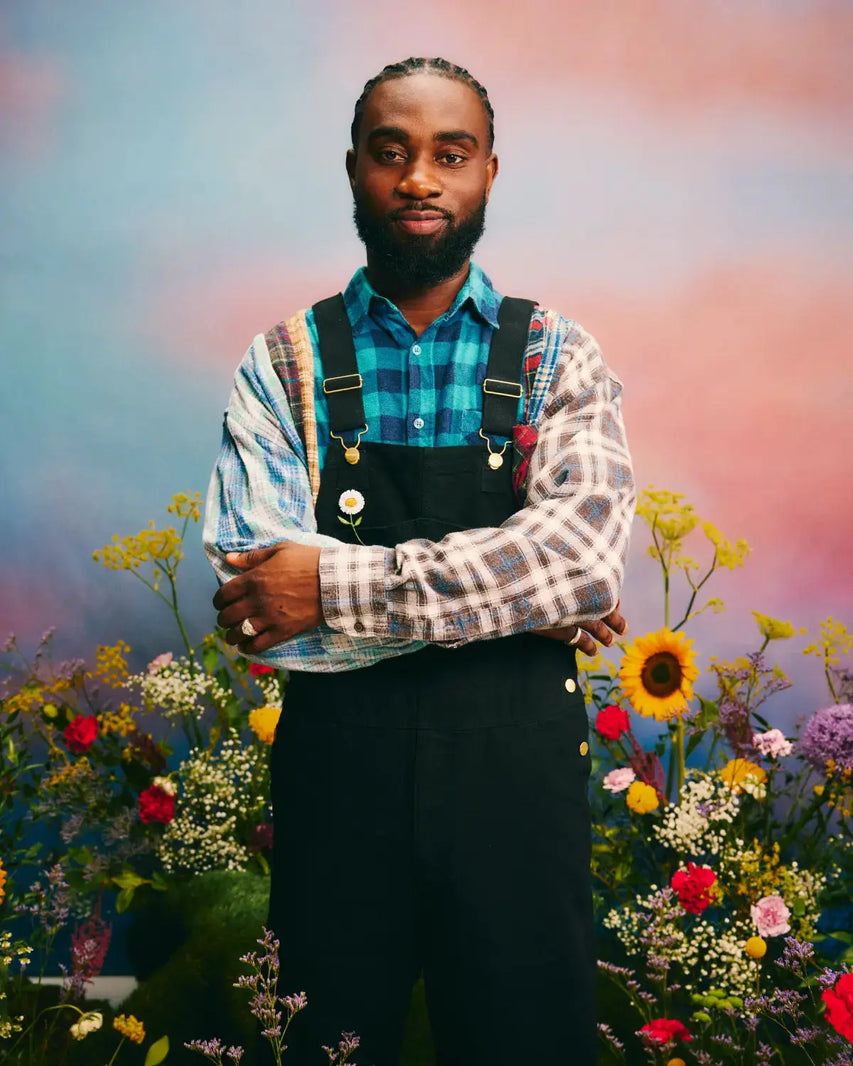
From a quick Batman sketch drawn by his dad to the Rembrandts and Van Goghs he first saw on a school trip to the Rijksmuseum, Raoul Etienne has always found his own way into art. The Dutch painter spent eleven years as a tattoo artist and built a sneaker brand that took off across Amsterdam and Rotterdam, all while painting for friends and family. His work pulls from anime, the Italian masters and street culture, with one goal at its centre: a message so clear you get it the moment you see it.
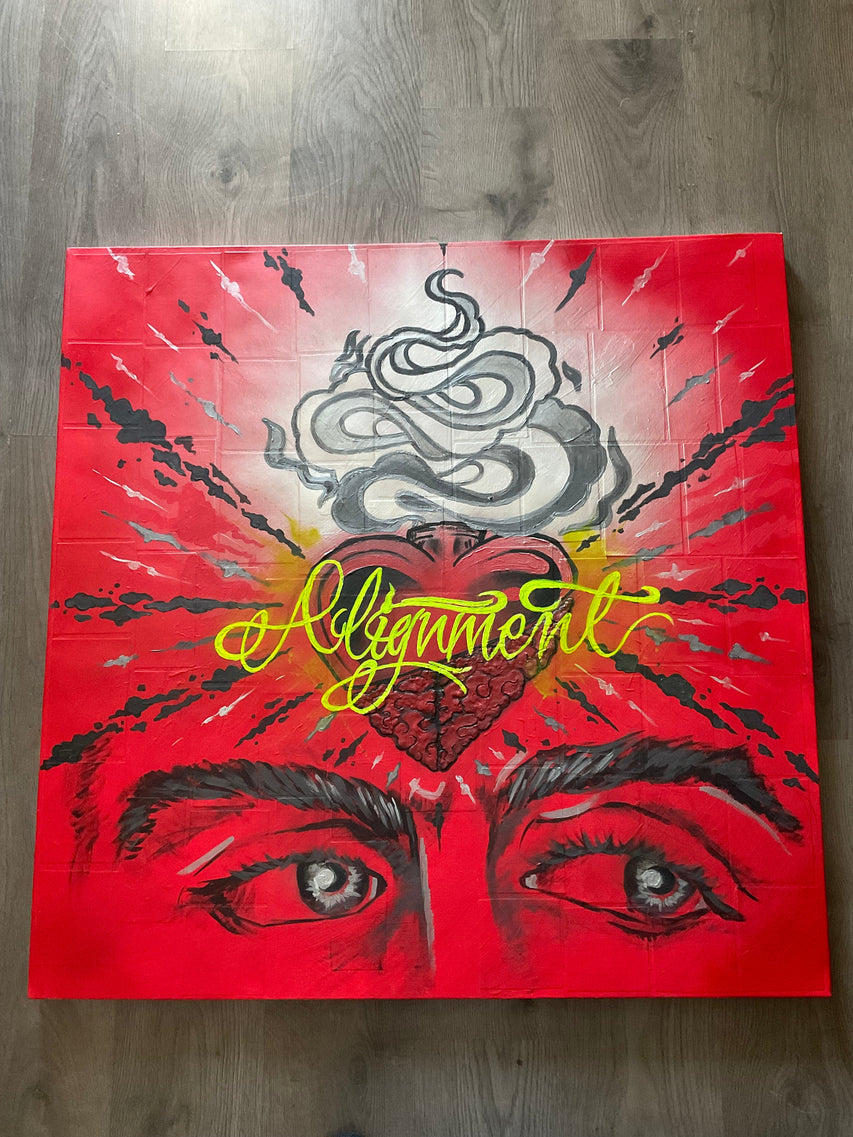
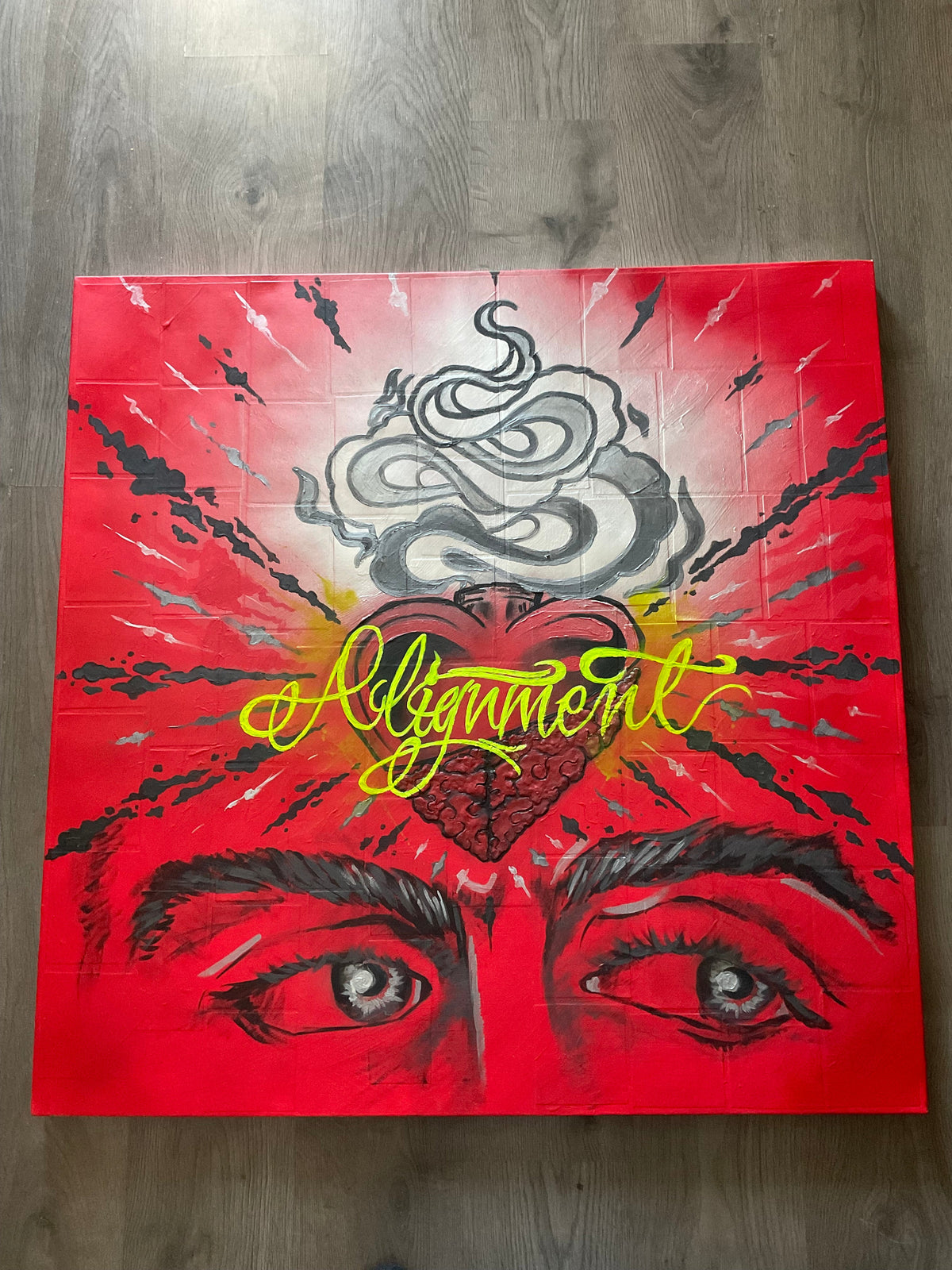
On All Connected, his first exhibition, he strips the stories of Christianity, Islam and Judaism back to the messages they share. Opening Friday, October 30th at Burgemeester Rendorpstraat, the show presents its paintings as reminders rather than sermons, from an Adam who barely lifts a finger towards God to a canvas that simply reads There's only now. We caught up with Raoul Etienne to talk about his first museum visit, walking away from a church that took more than it gave, red-and-blue 3D paintings and why the time is now. Step inside All Connected and get familiar below.

For people getting familiar with you for the first time, can you introduce yourself and tell us about the journey that brought you to making art?
I started making art when I was young. I used to look at Rembrandt and Van Gogh. I didn't necessarily love the paintings themselves, but I loved the idea of making art, and that's what pushed me to start drawing and, later, painting. I always kept painting, but I never thought I could turn it into a job. Friends would ask me to make paintings for them and I always did, but to me it was just for fun. So Rembrandt and Van Gogh were the first inspiration, and later on I started to appreciate Da Vinci and Michelangelo too.
Was there a lot of art around your house growing up? What were the first things you drew?
No, there wasn't a lot of art at home. But my dad could draw the face of Batman really quickly, and I couldn't understand how he just did that. From that moment I started drawing Looney Tunes: Road Runner, Speedy Gonzales, characters like that. My family always told me it looked good, and I'm still not sure if that's because it actually did. I started making drawings for their birthdays, because I was a young boy and didn't have money. Drawing was the only thing I could give. Sometimes I drew portraits of them. That's really where it began.

Beyond your father, were there people or places that inspired you? Were you going to exhibitions growing up?
Not really. In the last year of primary school, group eight, we went to the Rijksmuseum with the whole class. That's where I saw Rembrandt and Van Gogh for real, the actual paintings, and that was really special. But otherwise I never saw paintings. In the communities and places I came from, there wasn't much art around.
You've told me that as a Muslim there are things you are and aren't meant to read, yet your work draws on several faiths. What does your research process look like, and how do you come up with your ideas?
It goes back to my mother, who was a Christian woman. From when I was about eight until I was fourteen, we went to church four or five times a week. But that church exploited us. I don't want to say Christianity is bad, but the church we went to wasn't good. They told us a tenth of your salary has to go to God, and then the pastor showed up in a new car while we were poor and sometimes didn't have enough to eat. My mom gave so much, believing she would be blessed, because she was listening to the pastor.
Around fourteen, I told her, "Mom, this isn't working." My sister felt the same. For a while I was really angry, and I felt like Jesus and God were all bad. Later, I started reading the Bible myself, without a pastor, trying to understand what it actually says. That's when I realised the message has a strong foundation. If you really understand what's being said, it can change your life.
So I started reading the Quran. I haven't finished it, but a friend was teaching me, and I saw that it also made really good points. I began to think there's something in religion we don't see, because we believe in the stories but not in the message underneath them. We listen so much to the stories, the pastor and the imam, that we get clouded. So I asked myself: how can I show the message itself, not the story? I decided to paint it as simply as possible, so that when you see it, you get it, whether you're Muslim, Jewish or Christian. The message is right in your face. That's the inspiration for my paintings.

Street culture is a major influence in your work, but that means different things to different people. Which scenes and communities have been important to you, and what have you taken from them?
For me, it's anime and Japanese culture. I love how clean it is, and how much care goes into every drawing. You can tell everything is thought through. That was the biggest influence, and I studied it a lot. Tattooing was a big one too. I tattooed for eleven years, and that was the style I worked in most, so it shaped me.
I also love the Italian masters, because their work has a bigger meaning and purpose. It's timeless. You can look at it now, or a hundred years from now, and you'll still find a message that speaks to your moment.
Beyond that, the way I paint comes from intuition, but also from study. When I'm studying something, I see a picture in my head, and I ask myself how I can make that picture easy to understand for people who might not get the message straight away, so it still resonates with them. In Dutch we'd say laagdrempelig: easy to step into. That's how I paint.

Can you take us through one piece from All Connected, from the first thought to the finished work?
Everything I make is connected. Islam, Christianity and Judaism all carry messages through metaphors, and the message underneath is the same. But because we take the metaphors so literally, we miss the message.
Take Moses parting the Red Sea to lead his people to safety. That's the metaphor. What I take from it is this: if you believe in God, even when you face a huge challenge, He will help you. He'll even divide a sea so you can get through, and you'll make it. I found metaphors like that in Islam and Judaism too. So when I draw, I draw the point instead of the metaphor, so you can see what's really meant without being held back by thoughts like, "I'm a Christian, so I can't learn from the Quran," or, "I'm a Muslim, so I can't learn from the Bible." Those messages are still relevant to you if you stop looking at who is sending them. That's what I put on the canvas.
One simple example is my take on God reaching out to Adam. In my version, Adam is nonchalant. He's not really extending his arm or his finger; he's relaxed, a bit lazy. The meaning is that God is reaching out to us all the time, and we could connect with Him as quickly as we want, but we stay in that lazy state. To make it personal: I'm like that too. "I'll do it tomorrow."
In the painting, the figure of God is shaped like a brain, anatomically. And Adam isn't just Adam, he's also an atom, a particle of the body. The idea is that the physical comes out of the mind. I painted that layer in red, and the illusion, the image as Michelangelo drew it, in blue. So you need 3D glasses: look through the red and you see the deeper meaning; look through the blue and you see the illusion.
This is your first exhibition. How did you come up with the title, and why is now the time to show your first big body of work?
You know those scenes in films or series where the police are searching for someone, and they pin up photos of everyone he knows, with red string between them? He's connected to that man, that man is connected to this guy, this guy is connected to that girl, and she's connected to the suspect. Suddenly you see it's all one big organisation. That's what I'm doing with these paintings. They cover different topics, but the message is the same. Only the way we present it differs. When you connect the dots, you see it's all connected.
As for why now: at first I didn't believe I could do it. At some point I started believing in myself. I'm not religious, but I believe in God, and I thought, if I believe in God, then this is possible. From that point, people came into my life saying, "I can help you with this," "I can help you find a space," and I thought, okay, I get it now. The moment you focus on what you want, the dots connect. It's all connected, and you're the one who has to focus, see the dots and join them. That's my whole philosophy: it's happening now. We're living now, and everything is possible now. So now is the perfect time.

Where can people see the show, and what can they expect?
It's at Burgemeester Rendorpstraat. People can expect messages, though I prefer to call them reminders, because I think everyone can relate to them. They're not for one culture, race or religion. They're for humans.
For example, one painting says There's only now. That isn't a message for Muslims or Christians; it's for everyone. Live in the now. Don't let your mind drift to the future or back to the past, because you'll miss what's happening right in front of you. You already know this. We all know we should stay positive and present, but there are so many distractions that we forget. My paintings are there to remind you: stay here, and when you're here, you'll see what's happening and be able to do what you really want to do. Personally, I like how I painted them. Whether other people like them is up to them, but I like them.

Through All Connected, Raoul Etienne turns years of questioning faith, family and himself into paintings anyone can step into, whatever they believe. The same mindset drives his sneaker brand Redipill, where health is wealth and everything starts in the head. With his first exhibition about to open, he is living by his own philosophy: it's happening now. Visit All Connected at Burgemeester Rendorpstraat from Friday, October 30th and follow Raoul Etienne for what comes next.