Skip to content

News

  • Mad City presents: Westside Gunn - Patta

    Mad City presents: Westside Gunn

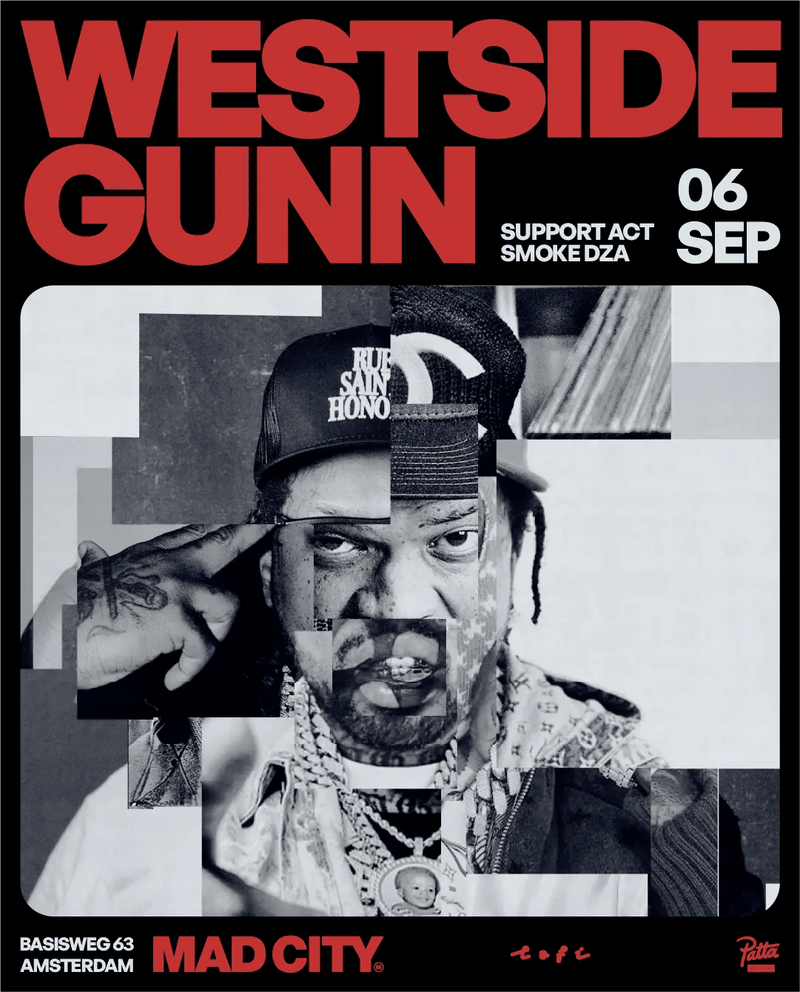
    This Saturday, it goes down. Westside Gunn — the visionary, the curator, the voice behind Griselda — lands in Amsterdam for his first-ever show in the Netherlands. Powered by Mad City and Patta Soundsystem, we’re bringing bars, bass, and pure energy under one roof. Summer’s almost done, but we’re closing it properly. Don’t sleep — this one’s for the heads. One night. One stage. One for the books. Tickets are moving so we fixed some for our community — grab yours now!
    • Events

  • Get Familiar: Ral Duke - Patta

    Get Familiar: Ral Duke

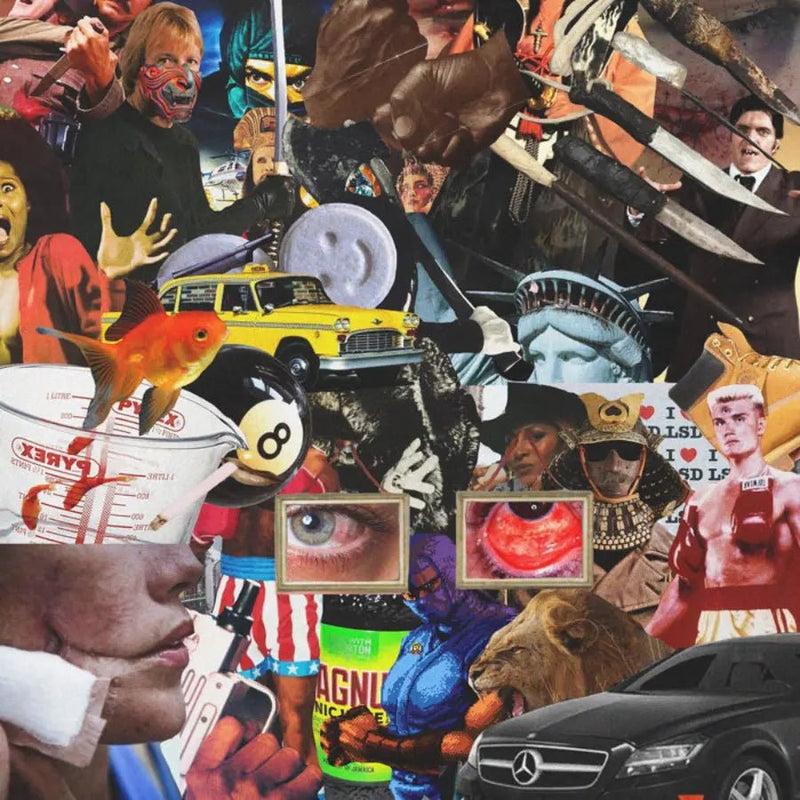
    Artwork by Ral Duke | Interview by Passion Dzenga From the graffiti-splashed streets of Barry Town to the vinyl shelves of hip-hop collectors worldwide, Ral Duke—born Sam Jones—has built a career out of merging worlds that shouldn’t fit but somehow do. Once an MC in a gritty South Wales crew, he swapped bars for blades, cutting together surreal collages that feel as cinematic as a 1970s Scorsese frame. His work has graced the covers of Westside Gunn, Ghostface Killah, The Alchemist, and countless underground heavyweights, cementing him as a quiet architect of the modern independent hip-hop aesthetic.Rooted in a DIY ethic learned in the Squid Ninjas days, Duke approaches each piece like a beatmaker—layering textures, flipping images, and knowing exactly when to stop before the magic is lost. Influenced as much by Wu-Tang and drum & bass as by Kubrick and boutique film restorations, he thrives in contrast: soulful samples over street grit, dream logic over hard reality.In this conversation, we talk about his Cardiff come-up, the social media leap that connected him to Griselda, the challenge of designing for both streaming thumbnails and 12-inch vinyl, and why surrealism is more than just an aesthetic choice—it’s a way of warping reality without losing the truth.  You’re known creatively as Ral Duke, but also as Sam Jones. How did that alias come about, and how does it connect to your artistic identity?It started when I was an MC with my friends under the collective moniker Squid Ninjaz. The name came from Fear and Loathing in Las Vegas—Hunter S. Thompson’s alter ego was Raoul Duke. I liked the idea of warping reality with words, so it fit. With my Cardiff accent, “Raoul Duke” became “Ral Duke” for a sharper punch. It stuck ever since. You grew up in Barry Town, near Cardiff. What was the scene like when you started, and how did it shape your vision? Barry had its own gritty, raw style—very Wu-Tang inspired. The local music was dark and atmospheric, graffiti was everywhere, and all four pillars of hip-hop—MCing, DJing, breakdancing, graffiti—were alive. Drum and bass was also big in the area too. That environment influenced my taste, visuals, and even how I produce—keeping things true to the textures around me. Before designing album covers, what did your early art look like? Was collage always your thing?My art came out of necessity. In my crew Squid Ninjaz, we were very DIY with all aspects of our craft—we made the beats, the raps, and the artwork ourselves. Collage came naturally, and I see it a lot like making beats—layering pieces to create something new. I started with physical collage from old magazines, but shifted to digital as tech got better. I still collect magazines for texture and want to return to more hands-on work. How is making a collage similar to making music, and how do you know when it’s finished? Both are about taking separate parts and combining them to tell a new story. I love contrast—like soulful samples with heavy street lyrics, or luxury images with real-life grit. As for knowing when it’s done, it’s instinct, like cooking. You stop before you overdo it. Sometimes the simplest ideas hit hardest. How did you branch out from the Cardiff scene into working with US artists like Westside Gunn and Ghostface Killah?Social media. I was a fan of Westside Gunn early on and responded to his open call for an album cover. He didn’t use my first submissions, but a few days later, he DM’d me for a specific track cover. That led to work with Conway, Benny the Butcher, Alchemist, and Ghostface. Do you approach each project the same way, and how is it different working locally with friends like Earl Jeffers versus US artists? I go off the vibe of the project—sometimes highly detailed and layered, other times stripped down. With Earl, we work in person, bouncing ideas in real time. With US artists, it’s all remote, so the brief is usually clearer from the start. Your work blends music culture, photography, and surrealism. Why is surrealism important to you, and what inspires your visuals outside of music? Surrealism lets me show alternate versions of reality, making unlikely elements work together to tell a story. Outside of music, I’m heavily inspired by 70s cinema—directors like Scorsese and Kubrick. I collect boutique 4K restorations of cult films from labels like Arrow Video and Second Sight.  How has the shift from physical album covers to small digital thumbnails changed your work, especially in the independent hip-hop scene? On streaming, simplified images read better at small sizes, but I still design with vinyl in mind. Hip-hop vinyl collecting is huge again, and with independent artists, covers are now treated as art rather than just marketing. Working directly with artists—no middleman—means the visuals stay true to the music. Would you like to take your art beyond album covers?Definitely. I’d love to do a concept gallery show in my hometown, like a conceptual exhibition with a unified story. Are there concepts you’ve wanted to make but couldn’t, and do you ever revisit old pieces? Some client ideas are too ambitious for collage and need illustration. For my own work, I push until I’m happy—if not, I start over. I don’t revisit old pieces; they’re time capsules of who I was then.Have you included unexpected elements in your work, and how does meme culture play into it? Once I put a dog with three eyes in an Alchemist cover. My search history is full of weird finds. People have turned my covers into memes—like edits of Benny the Butcher covers—but while memes are quick hits, I aim for lasting aesthetic impact.  How does it feel to be seen as part of Griselda’s aesthetic?Proud and humbled—especially when Alchemist asked me to do the Hall & Nash 2 cover because he saw me as part of that era.Should people experience your work with the music or separately? Both together is ideal—like when you buy a record because the cover grabs you.What’s next for you? I want to keep cooking in the street wear world working with brands that fit that hip hop aesthetic. I feel like I am bringing a unique take in that area. I’m working with my brother and local actor Lloyd Everitt (as seen in Alien Earth!) on poster design for his directorial debut. Keep cooking these album covers up! And me and my brother Mickey Diamond been cooking some new music together.  Finally, what advice would you give younger artists blending music and visuals?Keep going. Do it because you love it. Consistency is everything—most people drop off, but if you stick with it, opportunities come. 
    • Get Familiar

  • The context and meaning of Notting Hill Carnival - Patta

    The context and meaning of Notting Hill Carnival

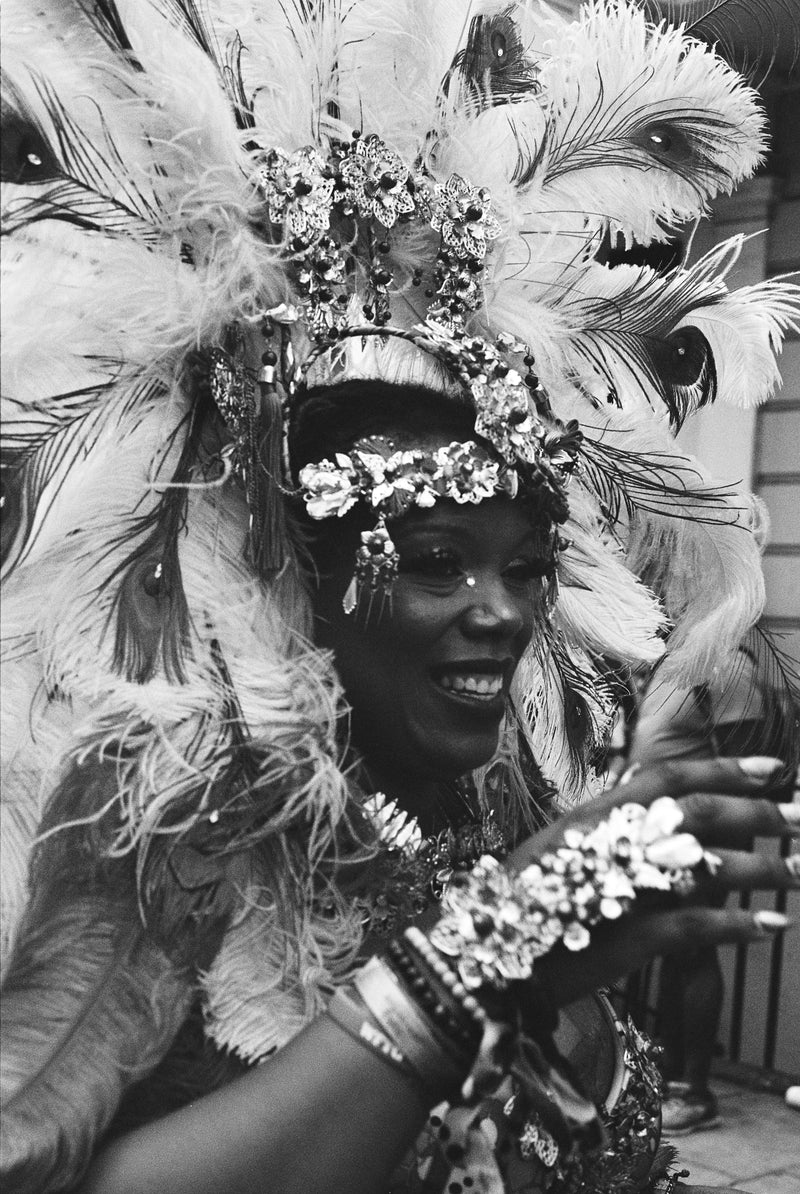
    Words by Nicolas-Tyrell Scott | Photo curation by Angela Phillips The beam of a late summer's sunshine on the body as soca rouses the spirit, the jubilance of West Indians chanting, whistling, wining and in laughter across the carnival route, the unexpected and familiar embraces with any and everyone across the day — the British summer’s finale, and yearly celebration of Caribbean culture is Notting Hill Carnival. Photo by Giles MoberlyCelebrated yearly — for the most part — since its 1966 inception, Notting Hill Carnival lays its roots in West Indian solidarity, lineage, resistance, and celebration. Manifested in the wake of Kelso Cochrane’s death, the Windrush generation were promised ease, work, and refuge in a post-war United Kingdom; instead, racial tensions fuelled the Antiguan’s tragic murder in Notting Hill. Resistance in its thousands erupted not just at his funeral but in post-intra and intercommunal relations between Notting Hill’s West Indian, African, Irish, and English demographics, leading to the activist feminist and journalist Claudia Jones’ idea of erecting an indoor Caribbean Carnival in Notting Hill. Conceived as a concept taken from the Caribbean, and carnival’s origins in the 17th and 18th century eastern and southern Caribbean islands, carnival unites West Indian, African and Creole practice, in its most traditional form, platforming soca and calypso. Francophone islands, including Guadeloupe, Dominica, St Lucia, Martinique, and Grenada, as well as Spanish-owned Trinidad and Tobago at the time, would come to influence the first iterations of carnival.In 1966, following multiple Jones-led carnivals indoors, the country gained its first outdoor festival, infusing Notting Hill with not just music, but coteries yearning for a taste of home. Pan-Caribbean in its evolution, carnival expanded in meaning, infusion and context across the 1970s, when soundsystems would usher themselves into the festivities. Referencing the impact that reggae had had on the country and Jamaican culture at large, soundsystems were debuted through Carnival organiser Leslie Palmer. Cultural expansion at the time was necessary to re-centre West Indians who had become curious and immersed in sound system culture. Palmer recalled “Carnival couldn’t be one band’. There were no stalls, no costumes. I thought, ‘this cyah work’”. Simply put, the variety of music genres and quality of sound system production would distinguish Notting Hill Carnival from West Indian carnivals worldwide.  Photo by Giles MoberlyCarnival is so much more than a frivolous excuse to get intoxicated and celebrate the Bank Holiday; the bacchanal is a form of cultural production, a spiritual embrace with ancestors and thanks to their courage, liberation and reclamation of our autonomy. J'Ouvert, a practice formally observed on the Sunday morning of day one of Notting Hill’s two-day celebration, inaugurates carnival, but also lays its roots in Trinidad, as part of a wider practice of Canboulay — mockery and reclamation from slave masters. J'Ouvert in a Notting Hill context has come to inaugurate the festival, but its true roots are never forgotten. In Spicemas, Grenadian culture, Jab Jab forms part of their J’Ouvert — which is orchestrated using horns, black paint across the body, chains, and other provocative elements. Participating in Jab Jab in Grenada two years ago, changed me forever and was a transcendent, deeply intricate experience that enlightened me. Grenadians in London routinely honour their tradition in Notting Hill year-on-year, highlighting diaspora practice weaved into contemporary culture. Photo by Ethan ParkerIn my years at Notting Hill Carnival, I’ve seen intergenerational exchanges build bridges between multiple generations of West Indians. Even in my own experience, it’s helped me to see the fun my great-grandmother must’ve had in her days. As a child, I remember a year she came, walking stick in tow, to catch a glimpse of ‘the road’ in action. A strong, stubborn, and determined lady in her time, she made it, getting her hour or two immersed in the action a stone's throw away from Westbourne Park station. Having lived in Shepherd's Bush most of her life with my late great-grandfather, West London was often my stomping ground a few weekends a month. From the long-gone Roti Hut on a Friday with my grandmother — I still can’t find a roti in the city as good — to walking past the plot of land that would eventually become Westfield, I remember an older era of West, and the community tied to it, both old and young. Like most things, time evolves areas, terrains, street corners, families, but Notting Hill Carnival to me is a reminder to keep fighting for the traditions and exchanges between old and young that matter.As we enter the second-half of the decade, it is imperative that Carnival is protected.In my years playing in bands like Island Mas, the stark difference between carnival with a band and carnival as a civilian is day and night. In 2024, four bands were removed for failing to adhere to the Notting Hill Carnival bands' music policy. “I see our role as preserving the culture – calypso and soca do not enjoy the same commercial impact as other forms,” Matthew Phillips, Notting Hill Carnival’s current chief executive explained to Soca News. Cultural preservation is what allows for meaning, identity and understanding in a world that exists in a diversely rich fashion — anchoring and continuing to protect the likes of soca and even more so calypso is paramount.In a country that’s benefited from West Indian communities in tailoring, music genres — including grime, jungle, drum and bass, afro-swing — sport and food, respect for the road is important too. Masqueraders often bear the brunt of entitled attendees who, at times, interfere with and directly enter the rope that partitions band members and patrons, and the general populace. It's instances like this that ruin the heritage and festivities for all. Like any form of cultural practice, remembering to respect an area, community, or space, as a guest is paramount, as the beauty in cultural exchange is found first, with respect.  Photo by Adrian BootCarnival has been, and will continue to be, exuberant in the best of ways. An experience one feels in the days, weeks, and months following — an experience we West Indians refer to as tanbanca. As it dawns on west London once more, we remember the sacrifice, meaning, and context forever more. From Trinidad and Tobago to Notting Hill, our ancestors paved the way for our expression; they are the reason behind our meaning, and we are the reason and heartbeat behind its evolution, fortified in West Indian tradition. See you on the road. 
  • NO VAI powered by Patta Soundsystem - Patta

    NO VAI powered by Patta Soundsystem

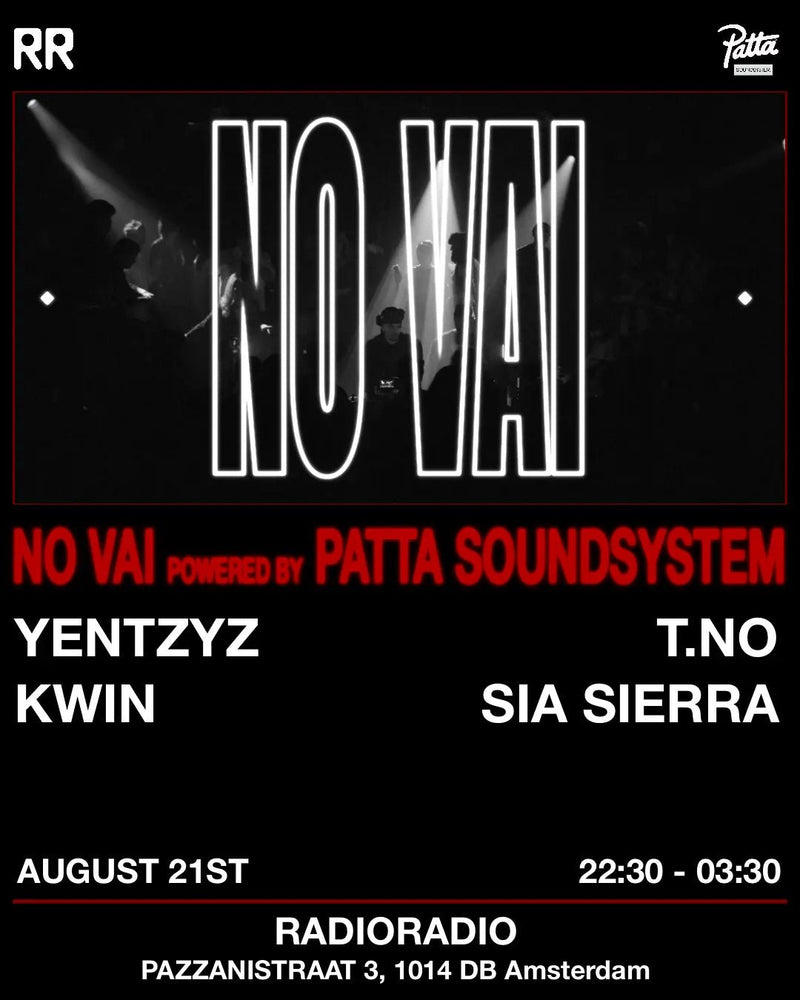
    This Thursday, Radio Radio turns all the way up to celebrate the brand new drop from T.NO, the hypnotic new release “NO VAI.” Powered by Patta Soundsystem, we are coming together in a collision of sound, style and pure movement. Don’t miss out on this epic summer night, tickets are available now and a limited amount will be available on the door. Mark your calendars, bring your crew, and let’s get the party started.
    • Events

  • Patta x Awake NY x Marshall for Oroko Radio at Fête de la Musique - Patta

    Patta x Awake NY x Marshall for Oroko Radio at Fête de la Musique

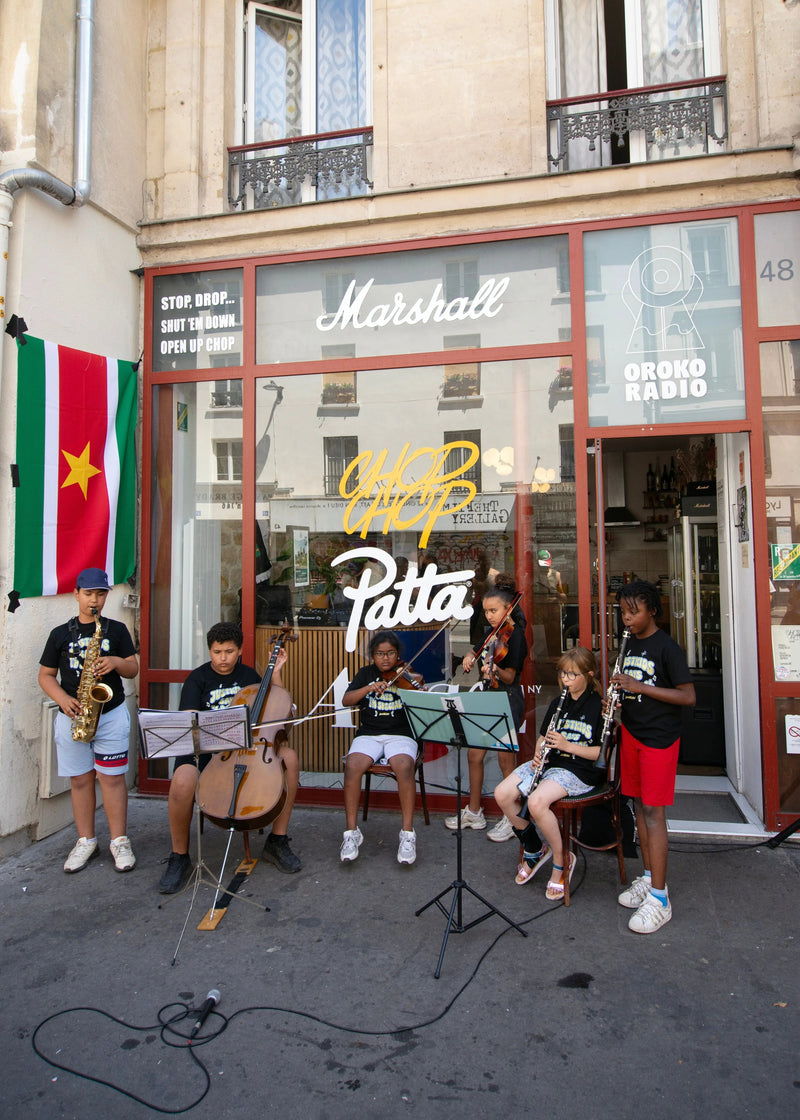
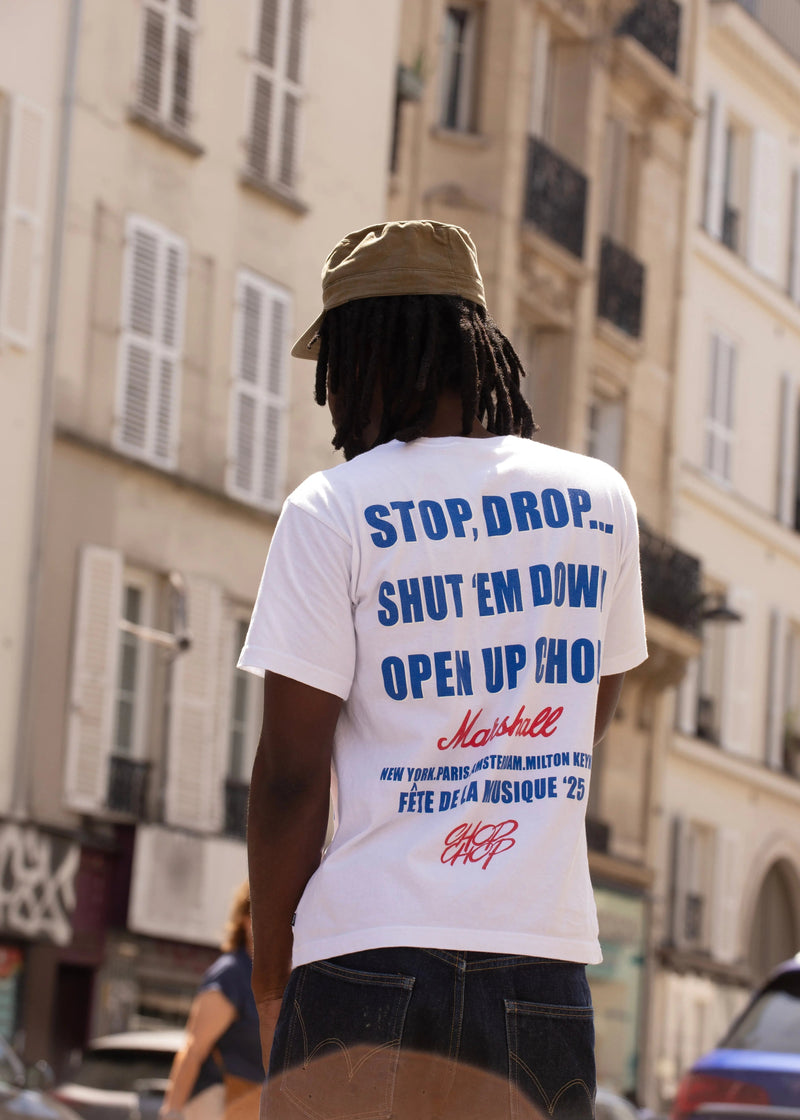
    Patta x Awake NY x Marshall took over the Oroko Radio for Fête de la Musique at Chop Chop, broadcasting live from the heart of Paris. We amplified not just the sound, but the spirit of our community: bringing music, energy and connection straight to the streets and beyond. From sunup to sundown, the beats flowed through our all-day radio takeover, uniting listeners and passersby in a celebration of culture, community and sound. Big love to everyone who tuned in, pulled up and kept it alive. Until next time.T.NO x YENTZYZHajarCho RoomAlissa ZaddiAQWEANinafterdark
    • Music

    • What Went Down

  • Tales from the Echobox 023 - Patta

    Tales from the Echobox 023

    Since its inception, Echobox has become a haven for boundary-pushing broadcasters, giving space to voices that move through the shadows of sound. Among them is REGE SATANAS, a long-standing presence on the station and a name whispered with reverence by those drawn to the esoteric side of radio.From the very beginning, REGE SATANAS has stood for freedom in its most omnipotent form, a guiding force behind every broadcast. His shows are more than curated sets; they’re sonic rituals where Ennio Morricone collides with Dead Can Dance and spacey soundtracks bleed into psychedelic dreamscapes.After four years with Echobox and even more with Red Light Radio, REGE SATANAS is now waving goodbye. There’s nearly a week’s worth of original transmissions archived on his Echobox page.What does "freedom in its most omnipotent form" mean to you, and how does this guide the REGE SATANAS show?Freedom in its most omnipotent form, to me, is just an esoteric way to express that I'm doing exactly and only what feels good for me. That might sound egocentric, but it fits my way of life. For the show, it means that I can touch anything soundwise or choose any theme.Your show ties in a lot of inspirations from mysticism, rituals and magic. Do you think there's something magic about radio making?Of course, there is something magical about making radio. You're taking other people into your reality or realm. There is nothing so good as losing yourself to music.You're leaving almost a week of original radio in the Echobox archive. Are there any moments or episodes that stand out to you?After almost 4 years of Echobox and 10 at Red Light Radio, it's hard to choose one. I have to mention, however, that episodes about favorite composers always stuck most to me. Moments are countless, as I have met a lot of beautiful people while making radio. This goes for fellow radiomakers and listeners.What's next for REGE SATANAS?For now, I'm always open to play somewhere. Music will always be a motivator for me, especially if I'm asked to play soundtracks or spaced-out sets.What are some typical REGE SATANAS musicians?Wow, that's a tough one. But if I have to mention 5 artists, it would be as follows:The Devil's BloodEnnio MorriconeTangerine DreamDead Can DanceDeath In JuneNeedless to say, these are also in random order. And furthermore, I have a shelf full of weird and esoteric records that always speak to my imagination.As I did weekly shows at Echobox, I probably had the most encounters with other radio makers. To be honest, I like every single one of them for being themselves. But Stricktly Tapes has a special place in my heart.As far as evolution during my years of radio making, there are no major changes or shifts regarding my approach to creating shows. It only changed because my collection changed. And of course, life dictates my choices. So to sum it all up: REGE SATANAS, eternally moving and shifting through the vast sea of time, creating magick and chaos in the sonic structures of mankind…So stay free and stay pagan. REGE SATANAS out. 
    • Tales From The Echobox

  • R.U.I.S. (Reimagining Us in Solidarity) - Patta

    R.U.I.S. (Reimagining Us in Solidarity)

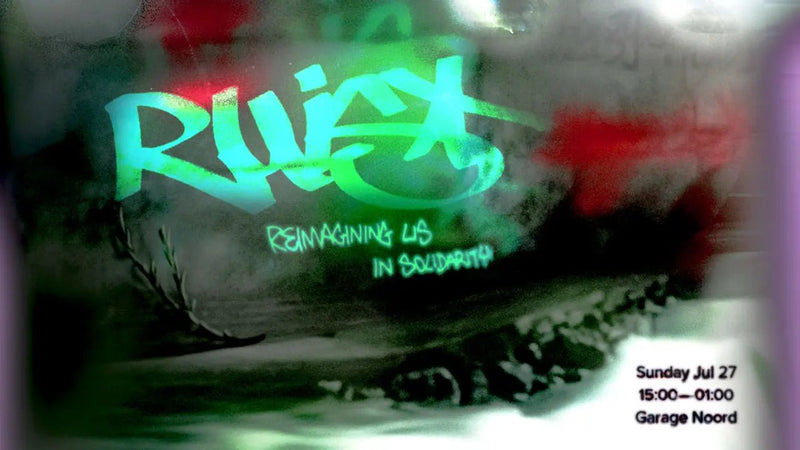
    This Sunday, July 27th, Garage Noord becomes a haven of resistance, community, and radical joy. From 15:00 to 01:00, it will host R.U.I.S. (Reimagining Us in Solidarity) — a queer-led, anti-capitalist rave and fundraiser reclaiming nightlife from corporate control. R.U.I.S. is a movement: a celebration of solidarity and a powerful demonstration that rave culture can be a force for radical change.In a cultural landscape dominated by corporate interests, R.U.I.S. stands as a defiant act of reclamation — of space, energy, and collective purpose. All proceeds from the event will support: Artists who withdrew from KKR-owned Milkshake Festival in solidarity with Palestine and direct aid to Palestine, via Oxfam Novib Emergency Fund for Gaza and the Sameer ProjectThe night is designed to amplify voices of solidarity, merging art, music, and activism to generate real, material support for those in need. With its queer-led, anti-capitalist ethos, R.U.I.S. transforms rave into a site of political power — where resistance and celebration meet. Every beat, every dance move, and every shared moment becomes an act of collective defiance against systems of oppression. Born from a commitment to queer liberation and anti-capitalism, R.U.I.S. is powered by a network of artists and organisers who believe joy and justice go hand in hand. The event offers both a platform for fundraising and a rallying point for solidarity.They dance for artists who refused to be complicit. They dance for Palestine. They dance because joy is resistance — and in that resistance lies hope. R.U.I.S. invites everyone to take part in this radical night of purpose and unity. On July 27th, Garage Noord won’t just echo with sound — it will pulse with solidarity — tickets available now!
    • Events

  • Get Familiar: KRUISPUNT - Patta

    Get Familiar: KRUISPUNT

    Interview by Passion DzengaOn July 24th, KRUISPUNT celebrates two years of genre-bending, basement-shaking, community-building chaos with their biggest event yet at Garage Noord. What started as a one-off club night for a band has grown into one of Amsterdam’s most vital underground platforms — a collision point for punk bands, out-there electronics, and dancefloors that don’t sleep.KRUISPUNT was born out of frustration — a lack of proper band nights in a city full of talent — and built on joy, urgency, and the belief that music should bring people together across scenes, genres, and generations. Their nights are messy in the best way: part gig, part rave, part family reunion. From mosh pits to strobes, every set is a new chapter in a night that feels like it could fall apart at any moment — but never does.Now, they’re throwing their most ambitious night yet: Eight live acts. Eight DJs. Two floors. The lineup is a head-on crash of styles, from INSIDE JOB's hardcore assault and Bleedroot's heavy riffs to the deconstructed club chaos of Arda(io) and the twisted pop of My Purse. Upstairs, a cast of wild selectors — Neska, dj dj, Bootleg Sjaak, Tommy T, and more — will carry the night into full-blown delirium. It’s a celebration of what happens when scenes overlap and walls come down. A space where a hardcore band might play before a cumbia-infused DJ set. Where queer kids and old punks find common ground. Where noise meets movement and the mosh pit turns into a dancefloor. Two years in, KRUISPUNT is still doing what they do best: creating moments of joyful disorder and giving the mic to the unexpected. If you’ve ever felt like the club was too polished or the gig too exclusive — this night is for you. We spoke to Andre and Dmitri to get familiar with what it takes to start a project with such broad scope.Your project just turned two years old. What sparked its creation and what were the core ideas from the beginning?Dmitri: We actually came together originally for a different project — to make merchandise and organise a concert for my band. Through that, we realised we shared a love for bands, music, and club nights. But we also noticed a lack of proper band nights in the city, and that’s where the idea started. Andre suggested starting this project in Amsterdam, and from there it just grew organically. Andre: Exactly. At first, it was just meant to be one night for Dimmitri’s band, INBRANDERS, maybe kind of a club-tour thing. But it quickly took on a life of its own. It became clear that it wasn't just about one band or genre — it was more about a collection of different sounds and communities coming together. We didn’t want to create just a club night or just a band night — we wanted something that mixed it all up, something more chaotic and celebratory.You've been building momentum in the underground scene. What does being "underground" mean to you in 2025?Andre: It means staying curious and being present in the scene. We're constantly discovering artists who don’t yet have a platform. Being in the crowd at their first shows, talking with people, living the night with them — that’s what keeps us rooted in the underground.  It’s about being in the crowd, talking to people, seeing it all firsthand.Dmitri: It’s also about building bridges. We connect people who would never usually meet — new audiences with new artists, older heads with newer acts. We love the educational part of what we do — exposing people to the range of what’s out there.  We’re growing a community that’s more than just a scene. We try to educate and expose people to the wide spectrum of underground talent that exists. From hardcore bands to abstract electronics.For someone who's never been, what’s the vibe like at a KRUISPUNT event?Andre: Unlike traditional band nights that might end by midnight, our events feel like a celebration — it’s chaotic, full of energy, and lasts deep into the night. It’s not just about watching music, it’s about being part of the experience. It’s chaotic — in the best way. Our nights stretch into the late hours and early mornings. People are screaming, moshing, dancing. The energy feels like a celebration. It’s also really about just being together, smoking and talking the whole night.Dmitri: Yeah, our nights are a bit rough in the best way — people scream, dance hard, mosh. There’s this wild, unfiltered energy. It's different from passive music consumption; the audience becomes part of the performance. There’s nothing polished or passive about it. People get sweaty; they lose themselves in the moment. It’s punk in spirit, even when the music isn’t.You mix punk chaos with abstract electronics. How do you curate such a wide variety of acts?Andre: We want sounds to clash and contrast. If we already have two hardcore bands, we’ll bring in something completely different — like a cumbia band — to shift the energy. It’s about creating a night that feels like a public space where different people and sounds intersect. We want contrast. If we book a fast-paced band, we’ll follow them with something completely different — like a DJ playing riddims or ambient sounds. That clash of energy creates momentum through the night.Dmitri: Exactly. Our name translates to “Cross Point” or “Intersection.” It reflects our approach: programming diverse acts to create a dynamic flow, avoiding nights where only one genre dominates. We want people to be surprised. We want the night to move — to shift between moods and styles. That’s what makes it exciting.Would a KRUISPUNT night ever feature just bands or just DJs?Dmitri: No, that wouldn't feel right for us. We want everyone to feel included — whether they’re there for live music or to dance to a DJ. We think of our nights as complete evenings, and DJs help create an energy shift that’s crucial. The mix is essential. DJs are just as important as the live acts. They help us close out the night and build a different energy.Andre: We actually tried doing just a full DJ night once, and the vibe wasn’t the same. Our regulars didn’t show up. It made us realise how central that mix is to our identity.How do you nurture your community and maintain those connections between events? Andre: We’re at all the shows, always talking to people. We’re not some distant curators. The events are cheap and accessible, and we treat everyone like part of the same family. We're just... around and involved. We’ve built relationships. It doesn’t feel transactional. It feels like we’re all part of it.Dmitri: We’re hosting a dinner for our second anniversary — cooking ourselves, inviting friends who helped build this community and anyone who would like to join. We’ve done bigger ones before, inviting every artist that’s ever played. It created an amazing energy and reminded us of the power of inclusivity. It creates such an amazing atmosphere before the event even starts.That dinner sounds amazing. What's on the menu and where’s it happening?Dmitri: Nothing fancy — mushroom noodles. But it’s about togetherness, not the food. We’re cooking it at home, then hosting the dinner at the venue, on the terrace before the event.Andre: We’ve seen how a shared meal sets a tone for the night. It creates a different kind of energy — one that feels like family.Is there a political or emotional thread that ties your community and events together?Dmitri: Many of the people who attend are active — politically or socially. The space we provide isn’t explicitly activist, but it’s a platform where people meet, talk, and share values. It's a different kind of activism — less protest, more community. Not explicitly — we don’t brand ourselves that way. But a lot of people in the crowd are politically active or involved in different communities. It’s a space where values are shared, even if it’s not the focal point.Andre: Most of our artists have strong stances, and that shows in their performances. The emotions and politics are there, even if we don’t frame the night that way. Conversations happen, connections spark — and often, something new is born from these nights.  We don’t always set out to make political statements, but we invite artists who have something to say — emotionally or politically. The politics are also in the connections people make. Conversations happen, ideas form. It’s a softer, community-based kind of politics.So even though you’re not labeling the events as political, they’re still spaces for organising and connection?Andre: Exactly. We've heard from people that projects and ideas were born during our nights. When you put like-minded people together in a space for hours, good things naturally come out of it. We’ve had people start projects after meeting at one of our nights. It’s a place where people from different worlds collide, and sometimes those collisions spark something new.Dmitri: Yeah. It’s a different kind of political — one rooted in joy, togetherness, and shared experience. Sharing space, building community, breaking genres, breaking norms — all of that is radical in its own way.What was the loudest set you've ever heard at KRUISPUNT?Dmitri: For me, definitely Key/Gen. Not even decibels here. I mean pure noise — distortion and chaotic energyAndre: Yeah, Key/Gen was just wild. I’d say Arda(io). Even though it's also electronic, I didn’t know what to expect, and it totally threw me around the room. Like, full-body experience.Dmitri: He just loves noise. It’s crazy — the grooves, the sound design... it’s rough but incredibly detailed. Really sick stuff.Can you describe what your first party was like?Andre: Yeah, if we count that first gathering at Café40. That’s where it really started. We were supposed to launch a publication, but the printing failed. So we just launched our Instagram and invited a bunch of friends... plus people we didn’t even know showed up. We had some rock 'n' roll DJs and realised — wow, people really need this kind of space. It wasn’t even heavily promoted, but the room filled up.Dmitri: It felt like a birthday party, honestly. That kind of joy. That moment confirmed something for us — we could bring people together. And that was enough reason to keep going.So just opening your doors showed you there was a demand. Were you imagining you’d still be doing this two years later?Andre: No way. But it kind of snowballed. After our first night at Garage, Tommy from Pacific invited us to program at a bigger event. Then more opportunities kept coming. It really never stopped. Now we work on almost everything together.Dmitri: Tommy’s been a huge inspiration. He gave bands space at club nights way before we did. He booked my band INBRANDERS back in 2018. That was a real “first time seeing it’s possible” kind of moment.Same here — he was the first person to book me at Garage Noord. Shout out to Tommy and Pacific Ondergounds! So you’re about to hit two years. Have any rituals emerged? Anything you see repeating at every party?Dmitri: Honestly, our ritual is just running all night. Artist management, troubleshooting, making sure people show up — it’s go, go, go. There’s also this one moment each night — you can feel the crowd click into place, like, “OK, now it’s happening.”Andre: But once the last band finishes around 1:30 or 2AM, that’s when I finally let go and just party. That’s my personal ritual. Yeah, it's usually after the first band. Everyone’s warmed up, and suddenly it feels like we’re all moving in sync. That moment — that shared energy — is kind of sacred.With live acts, there’s so much more coordination than a DJ night. It’s real production work.Andre: Exactly. Monitors, backlines, gear changes — it’s intense, but that chaos is what makes it fun.Let’s talk about your anniversary lineup. How did you approach curating it?Andre: Initially, we wanted a pure rock ‘n’ roll night — kind of nostalgic. But then we thought, nah, let’s keep it versatile. Downstairs is bands and rock-centric DJs. Upstairs is fully electronic. It’s actually our most versatile night ever.Dmitri: We’re part of a Garage box (funded project for “newer” Amsterdam-based projects, also with Fuuture Jazz and b3tter:irl) program now, which gives us a better budget. So we thought — why not open both floors?Andre: Upstairs is almost exclusively our friends, too. That was intentional — for year two, we wanted returning artists, but also fresh faces. It’s our biggest lineup yet: eight live acts and eight DJs, if I count myself.Dmitri: I’m most excited for Arda(io) again — that set will be chaos in the best way. Also, Inside Job, a proper hardcore band. First time we’re doing a self-titled hardcore band like that.Andre: And Grote Geelstaart— they’re experimental, wear suits, and just go off. I think they're from the conservatorium, but I’m not even sure. They’re just... amazing.Two years deep — what’s next for you?Dmitri: Staying rooted in Amsterdam is key. This city needs spaces like this. But we also want to expand — Utrecht, Rotterdam, The Hague where Andre is already working on projects but even abroad. But never at the expense of the home base.Andre: We’d love to host a stage at a festival — to really push ourselves, start early, end late, and see what we can do across an entire day.Dmitri: Production-wise, that’d be a huge learning curve. But we’re ready for it. Every night teaches us something.Andre: Also, still dreaming about doing a publication. Maybe digital, maybe annual print. It’ll happen — just need the time.Any final thoughts before we wrap this up and start preparations for tomorrow?Andre: Just that we care deeply about representation. We want young girls, queer kids, everyone — to see themselves on stage. That’s what punk is. You don’t need to be great to start a band. You just need to start.Dmitri: Exactly. If people leave our events feeling inspired, then we’ve done our job. The ones on the dancefloor today should be the ones on stage tomorrow.Andre: And we’re always open to hearing from people. Whether it’s an act, a band, or someone wanting to get involved — reach out. We’re listening.From one-off night to a full-blown underground force, KRUISPUNT has become the intersection where bands thrash, DJs explode, and new scenes are born on the dancefloor. It’s a movement built on joy, urgency, and radical togetherness. KRUISPUNT are the embodiment of what makes DIY culture so powerful. It’s a cycle of inspiration. You try something, someone sees you do it — and suddenly, they believe they can too. They are hosting their 2-year anniversary on July 24th at Garage Noord and tickets are available now. If you’ve ever felt like the club was too clean or the gig too closed-off — this night is for you. Come lose your voice, find your people, and become part of something that keeps growing from the ground up.
    • Get Familiar

  • Roc Marciano & The Alchemist - Skirt Steak - Patta

    Roc Marciano & The Alchemist - Skirt Steak

    A new cut from two of the finest in the kitchen. Skirt Steak is here — Roc Marci laces sharp talk over Alchemist’s medium-rare production. No filler, just flame. The Alchemist pulls up in the Patta x Avirex — heavyweight leather, heavyweight bars. This ain’t just music, it’s tailoring season for your eardrums. Stream it now. Let it sear.
    • Music

  • What went down Patta x Nike launch in Lagos - Patta

    What went down Patta x Nike launch in Lagos

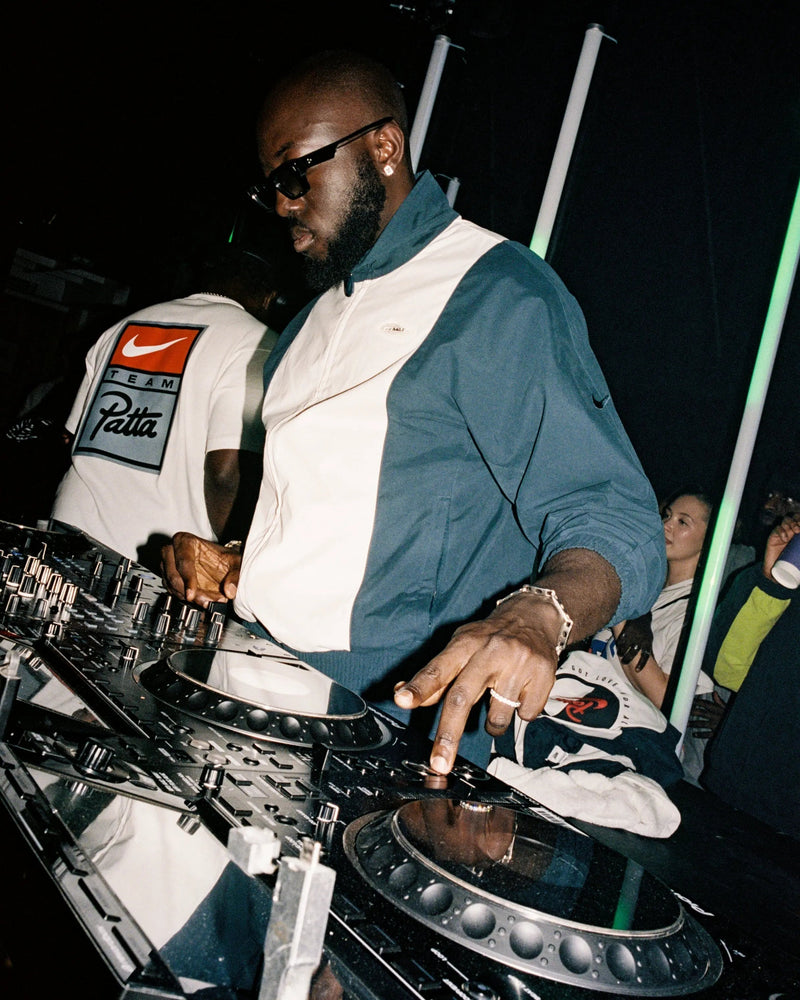
    We came together to celebrate the latest chapter in the Patta x Nike story, marking the release with an unforgettable night at the Patta Lagos store hosting a gathering of culture, creativity, and community.Footwear from the Patta x Nike collaboration dropped exclusively in-store, and the vibes followed suit. Live sets from OOO, WEAREALLCHEMICALS, and KEMKEM kept the momentum high, pushing sound boundaries and bringing the crowd to life.From sneaker lovers to music heads, the room was full of those who move culture forward. Conversations sparked, beats knocked, and the spirit of Lagos showed out. It wasn’t just a launch — it was a moment.Big love to everyone who pulled up and made the night what it was. The wave keeps moving, and this is just the beginning.
    • What Went Down

  • Echobox 4 Year Anniversary at Skatecafé - Patta

    Echobox 4 Year Anniversary at Skatecafé

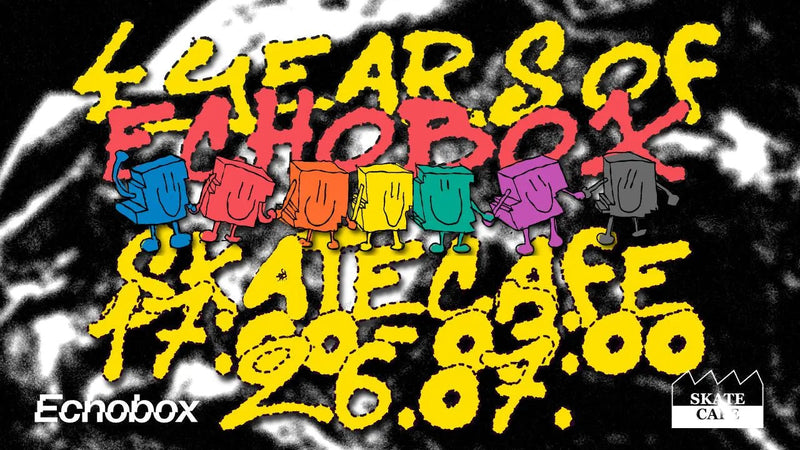
    Echobox Radio is marking its fourth anniversary with a day-into-night celebration on Saturday, 26th July at Skatecafe, featuring a lineup packed with radio residents, familiar faces and leading lights from Amsterdam and beyond!The celebration begins at 17:00 with a live on-location broadcast from the Skatecafe courtyard. Echobox resident shows Key Sync, hosted by rising star Baby Ganoush, Taco Fett’s Heavy Heavy Show and Jamrock Radio with DJ Madbwoy & The Dancehall Explorer.Departing Echobox mainstay REGE SATANAS will open the broadcast as a final goodbye to the station, while new residents 333, hosted by Helmond Lang, DirtyDMs and Silver Pearl, will close the radio section.From 23:00 to 03:00, the evening program moves indoors with a three-room event hosted by Echobox residents and special guests. Taking care of the intimate Club 1900 are Echobox favourites Unauna & KITT and Zgjim & STATE OFFF for a dark and steamy session of breaks, bubbling and more. Kurashi collective’s Jackie Jr. will kick off Dick & Dick, followed by Tida Kamara and Jolani Jones.Amsterdam favourites Lamsi and angelboy will open proceedings in the Club room with a 2-hour B2B, before two Amsterdam icons in Nena and Cinnaman top the bill.Broadcasting live four days a week, every week, Echobox has produced more than 5000 hours of live radio and supports a community of over 150 monthly residents. Programming spans ambient, techno, classical, noise, jazz and talk radio about everything from sexuality to cycling – reflecting the station’s commitment to experimentation, accessibility and musical freedom.Tickets for the 4 Years of Echobox are live now and available from the Skatecafe website! In 2024, Echobox launched the Echobox Family subscription program. Family members have access to special discounted tickets for the event.
    • Events

  • Get Familiar: Earl Jeffers - Patta

    Get Familiar: Earl Jeffers

    Interview by Passion Dzenga From dusty attic record collections to underground club nights in Cardiff, Earl Jeffers’ musical journey is rooted in deep listening, creative evolution, and community connection. Whether crafting soulful house under his own name, building hip-hop landscapes as Metabeats, or collaborating through collectives like CRST and Darkhouse Family, Jeffers has consistently pushed the boundaries of genre and process.His approach is as much about heritage as it is about innovation—drawing from classic ‘90s sounds, jazz records, and MPC experiments while always keeping an eye (and ear) on what’s next. With a DIY spirit and an ear for detail, he’s developed a body of work that spans labels like Local Talk and Ten Thousand Yen, as well as his own eclectic imprint, Melangé.In this conversation, we dive into the foundation of his career, the role of Cardiff in shaping his sound, the magic of sampling, and what it means to stay true to your creative instincts in a fast-shifting musical landscape.Let’s start from the beginning. Can you walk us through your musical journey—from childhood to becoming a DJ and producer?At around five years old, I was picking up whatever was playing from my dad’s room or on the car radio. Then a few years down the line, my older brother and cousin were into hip-hop—N.W.A., Wu-Tang—and later jungle. My first tape was a Fabio set from Amnesia House. I remember the gold case. That stuck with me.They also bought rave tape packs—Dreamscape and all that—and got into house and garage. My brother’s friend was a DJ, so I’d go to his and pick up some basics. The youth clubs were also key—there was this guy putting on parties, in the local area. But I was a little too young. So he would bring his turntables to the youth club sometimes. I’d walk 45 minutes across town just for a go. That’s where it really started. That’s all I wanted to do. I would be up before school mixing records. Once I got decent at DJing, I started thinking: how are these records made? A friend got an MPC 2000, and we started experimenting. I’d make beats for MCs, and over time I knew this was what I wanted to do—not just for fun.How did you transition from hobbyist to professional?It clicked in college. I tried plumbing and a few other courses, but nothing stuck. Nothing felt as right as music. So I focused entirely on it.You’ve worked under several names—Metabeats, Chaser, Earl Jeffers. How do you decide which alias fits?It evolved naturally. I had three styles. The hip-hop and instrumental stuff was Metabeats, which was my first name. Chesus came from a nickname a friend gave me—I used that for house. Then Earl Jeffers was more sample-based house, where I applied a hip-hop approach to house music. Over time, I just focused on the Jeffers identity to simplify things. I still do Darkhouse Family work, where I go by Jeffers.How did growing up in Cardiff shape your sound and access to music?It was challenging. In the early 2000s, there was a healthy hip-hop scene and dance music always had a presence since the late 80’s But to break through from Cardiff, you had to look beyond it.That said, Cardiff gave me my first gigs—I was DJing in clubs before I was even legally allowed in! These days, younger artists have more access to music, which leads to more genre-blending. That’s really exciting.Tell us about the old Cardiff parties that helped shape you.Places like The Emporium and Vision were great for the House & Garage nights in the late 90’s/early 2000’s, then Higher Learning at the Toucan Club was massive for Cardiff hip-hop in the early 2000s. They booked a lot of UK talent. We’d leave the club and head straight to the studio to make records all night. That’s how I met Mayor from Associated Minds, the label that released my Metabeats projects. We even worked with names like Quelle Chris, Action Bronson, and Elucid.Your sound often pulls from classic ’90s house to soulful, jazzy textures. What draws you to those older sounds?Constant digging. My ears have matured—I’ll revisit records I bought years ago and hear new things I missed back then. That shift in perspective keeps the music fresh.Sampling is key to your style. What’s your process like?Definitely. Sometimes I’ll hear a sample and it sparks a whole track. That usually happens with jazz, soul, disco, or early house—sounds I grew up with. My dad had a music room, and hearing the music he was playing through the walls left an imprint. What’s your studio workflow like these days?It varies. Sometimes I start with records and chop samples. Other times, I build from scratch using keys or synths. I’ve got a Rhodes right in front of me—I've been using that a lot more lately.Any essential hardware you rely on?Yeah, the Rhodes is huge for me. It’s expressive—the action lets you really put emotion into the keys. I also use a Korg Triton and Roland JV-1080. You’d be surprised how many iconic sounds are in those. Even “Grindin’” by the Neptunes came from a Triton preset.Have collaborations always been part of your journey?It started solo but quickly became collaborative. My friends weren’t DJs but were deep into music, so we made stuff together. I’ve been part of CRST (garage/house), Darkhouse Family, and other projects. I honestly enjoy it more than working solo—two ears are better than one.CRST was pretty influential in shaping modern UKG. Could you see yourself returning to that?Possibly, but only two of us still make music. It was the right timing and energy back then. My focus has shifted, but I’m open to doing something future-facing—maybe not strictly UKG, but something new. That era, with dubstep, fidget house, and UKG colliding, was a pivotal time.Tell us about Darkhouse Family. What sets that project apart?It started with Metabeats energy but evolved. During the peak of the LA beat scene—HudMo, Hoya Hoya, etc.—we were influenced by that experimental sound while still staying rooted in hip-hop. Our last album leaned jazz-heavy, mixing samples with live instruments. Now we’re working on a new one—it’s more raw, hip-hop-leaning, with vocalists and rappers. We’ve come full circle.You’ve released music on respected labels like Local Talk, MCDE, Ten Thousand Yen, and Handy. What do you look for in a label now?Early on, it was about where the sound would fit and getting exposure. Now it’s more about relationships and community. Handy, for example—I’ve known James for years. That trust matters. I also release through my own label Melangé, which gives me full creative control.What’s the vision behind your label Melangé?“Melangé” means “mixture” or “cocktail” in French—that’s what I aim for. I don’t want it to be just a house label. It’s a platform for all styles I love. We’ve put out music from people like Javonntte and Byron the Aquarius. I also created Melangé Archives to re-release older tracks I had on other labels, so everything lives under one roof and tells the full story.Have you put out any LPs through Melangé yet, or mostly EPs?Just 12"s so far. I think club music works best in short formats. If I were to do an album, it wouldn’t be strictly house—it’d showcase a range of styles.Your visual aesthetic is distinct. How did the collaboration with Ral Duke and the family photo direction begin?From the start of Melangé, I wanted something personal. I used old family photos for artwork. I love that aged-photo feel, especially when it carries meaning. When other artists release on the label, I ask them for images from their own family archives too. It adds soul to the whole thing.Ral and myself have been good friends for many years before the label and his art was even a thing, so that was an organic relationship and approach. You’ve toured widely. Any standout shows or cities that left a mark?Glastonbury and Bloc were definite highlights. But smaller clubs are where it’s at for me. Glasgow, for instance—the energy is insane. Places like Sneaky Pete’s and Sub Club never disappoint.You’ll be playing in Amsterdam soon. What can the crowd expect?Yeah, I’m playing with DJ Pointless at Phono Lake. First time there, so I’m excited. Amsterdam’s always been a favourite—not just to play but to soak up the vibe. I’ve been digging into older NYC sounds recently, so expect a bit of that, along with new material.What else should we be looking out for from you this year?I’m continuing the Boomedit series. I don’t really think of them as edits—more like remixes or reinterpretations. The first was disco-heavy, the second leaned into late ’90s/early 2000s R&B, the third had a Neptunes-style flavor. More of that is on the way, along with reissues on Melangé. ‘Special’ is the first release in the series that’s just dropped.You’ve also been involved in community work. What’s Extravagaza about?It’s a series of fundraising parties we’ve been running to support relief efforts in Gaza. We’ve done a few in Cardiff and plan to expand to Bristol. It’s a small gesture, but it matters. People can follow me on Instagram or Facebook for updates.Any final thoughts?Just that I’m grateful to still be doing what I love. There’s a lot more to come—through music, art, and the projects we’re building together. Stay tuned.From MPC experiments in Cardiff bedrooms to shaping the sound of UK house and hip-hop, Earl Jeffers has carved out a deeply personal, genre-defying path. Now, he brings that energy to Phono Lake x Handy—alongside DJ Pointless and Tiago—for one unforgettable night in Amsterdam. Expect soulful house, deep cuts and raw grooves from across the spectrum, delivered by artists who live and breathe the underground. Tickets on sale now — don’t miss it.
    • Get Familiar

  • Get Familiar: Chinnamasta - Patta

    Get Familiar: Chinnamasta

    In the realm of pulsating rhythms and sonic explorations, Chinnamasta stands as a luminary figure, intricately weaving the vibrant tapestry of Caribbean riddims with contemporary beats. As the creative mastermind behind the latest Patta SS24 Mixtape , her name resonates across club spaces and festiv
    • Get Familiar

  • What went down Patta x Nike 'The New Wave' party - Patta

    What went down Patta x Nike 'The New Wave' party

    Photography by Juvenal MazePatta x Nike x Play Piem took it there in London for The New Wave - a celebration of heritage, community and the iconic Air Max 90, reimagined through Patta’s lens. The vibes were high, the music hit deep and the energy was unmatched from start to finish.We brought the people together - from sneakerheads to sound chasers - and turned the night into something more than just a link-up. Live sets lit up the space, conversations flowed and culture moved through the crowd. This was about honouring what’s been while pushing what’s next. Big love to everyone who came through and made it one to remember. The wave’s only getting stronger. Until next time.
    • What Went Down

  • What went down at Patta x Latto - Patta

    What went down at Patta x Latto

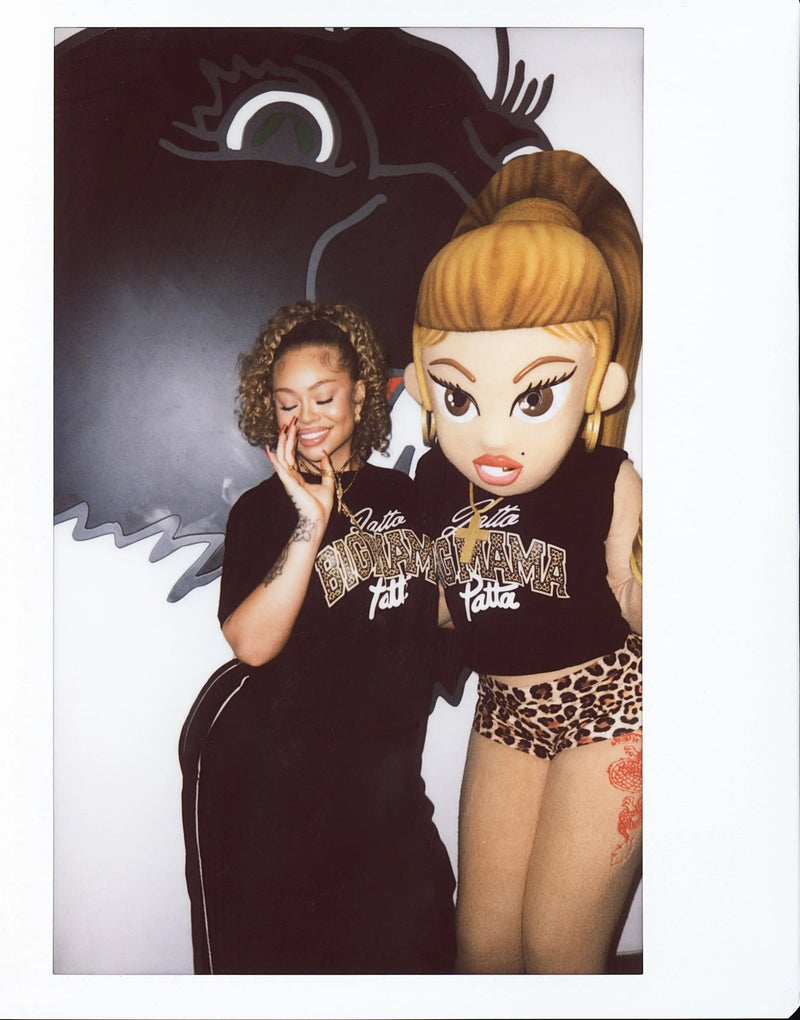
    Photography by Akadrestudio, Jamal Denzel and Romario PierauGet familiar with what went down when Latto pulled up to the Patta Amsterdam store for a special meet & greet ahead of her sold-out show at Paradiso. The energy was high, the vibes were unmatched, and the exclusive Patta x Latto T-Shirt flew off the shelves. Couldn’t make it? We hope to see you at our next event! The Patta x Latto T-Shirt is available now exclusively at Patta Amsterdam. 
    • What Went Down

  • What went down at Fête de la Musique - Patta

    What went down at Fête de la Musique

    Photography by Dennis BrankoPatta x Awake NY x Marshall x Oroko took it there for Fête de la Musique, we amplified the sound, the streets and the soul in the City of Light. Beats bounced off the buildings to a crowd that kept it moving, our all-day radio broadcast that brought our people together, and exclusive Patta x Awake NY x Marshall x Chop Chop merch made statements in the streets. This wasn’t just a party, it was a celebration of culture, community and sound in Paris. Big love to everyone who pulled up and made it unforgettable. Until next time.
    • Events

    • What Went Down

Error