Skip to content

News

  • Get Familiar: Charity Charly Patta

    Get Familiar: Charity Charly

    Interview by Liesje Verhave | Photography by Brunei DeneumostierIn her directorial debut, Tra Fasi (2026), filmmaker Charity Charly steps into Suriname’s underground punk scene through the story of Shavero Ferrier. Shavero, a young cultural organiser, creates space for punk parties and self-expression in a society that often leans toward conformity. Charly, with a multidisciplinary background in film from camerawork and styling to set design, brings a personal and multifocal lens to her work.  Driven by a desire to reveal overlooked experiences and challenge dominant narratives. We spoke with her about her first steps into filmmaking, the making of Tra Fasi, and her vision for the visual stories still to be told. You’re quite a multidisciplinary creative. How did your journey from camerawoman to director, and this “jack-of-all-trades” path, begin?My journey started as a videographer. I worked at BNNVARA, where I was directing, editing, and doing camera work all at once for their YouTube platform. I always felt that I was good at what I was doing, but something felt a bit off. I just wanted to direct. I had so many stories in my head, and I just wanted to focus on directing only. So that is where my dream of becoming a director started. To make a film, I knew I needed experience on set, so I started as a production coordinator. Then I moved into costume styling, and after that into set dressing. After doing all of that, I finally had the courage to direct my own film. Tra Fasi is really the start of my directing journey, although I’ve been working in film for about four years now.So you tried out every possible role in the film industry first before directing?Exactly. But I always felt the urge to direct. Even when I was on set watching directors, I would think, “I would do this differently, or I would do that.” That feeling was always there.Do you think working in all those roles informs how you direct now?Yeah, definitely. All the departments I’ve worked in have helped me develop a clearer vision of what I want to see on screen.What first drew you to visual storytelling like film and visual art?I was always obsessed with films. I could watch the same movie eight times in a row and memorize the whole script. I would perform it and make my brother play the other roles with me.I also used to ask my mom to sign me up as an extra in films. But when I was on set, I wasn’t focused on being an extra; I was watching the crew. I was always distracted by how everything worked behind the scenes. Somehow, I always knew I wanted to make films. Even as a kid, I used to say my name would be in the credits one day.Are there any films you remember from that time?Yeah, Like Mike with Lil’ Bow Wow. That was one of my favorites. I knew it by heart and used to act it out with my brother while playing basketball.You’re largely self-taught. What challenges came with that?I used to study media studies, but didn’t finish. I ended up going to university for media and culture, but left after seven months. I was bored. I thought, “Do I really need to know this to work on sets?” So I was like, let me find out how I can do this on my own. The biggest challenge was insecurity. You hear a lot about people who went to film school and, after that, their careers just get a major boost. I struggled with representation. Not seeing people who look like me doing this work, there were times I felt like I didn’t belong.I remember wanting to become an actress and getting through the first round of auditions, but I got so insecure that I didn’t go to the second round. I started doubting whether there would even be roles for someone like me.But once I knew I wanted to direct, things started falling into place. I was very open about what I wanted to do, wrote scripts, and connected with people. I was really curious, and at some point, I just stopped letting rejection discourage me. Even though I heard a lot of no, I kept going. For me, this was a big milestone because this is what I wanted to do. Are there other art forms you still want to explore?Definitely, it’s actually funny because I never thought I’d make a documentary; it just happened. I’m still very obsessed with fictional stories and the way you can portray them. I would love to explore that more.I also acted on screen for the first time last year and really liked it, so I want to develop that further. And I make resin art, I love working with my hands. That’s something I’ll keep developing as well.Is the resin work more of a hobby or something you want to build professionally?It started as a hobby. Also, funny story, I made ashtrays and posted them on Instagram, and people wanted to buy them even though I wasn’t selling them yet. That made me realize I could turn it into something more. Now I make custom pieces for customers.How did the story of Tra Fasi come together? How did you meet Shavero?It started with the idea of making a documentary about Black punkers in the Netherlands. But I found that there were already projects about that.Then I realized I was going to Suriname soon and got curious about punk there. I started researching and discovered it actually existed. I found an article about Shavero and his band Mutha Flac, and something about him really stood out to me.I started following him on Instagram and noticed this whole alternative scene. I was like, “How did I not know this existed? I go to Suriname every year and never see this.”I messaged him, and he responded quickly. We had a call, and at first I planned to make a documentary about multiple bands, but none of them interested me as much as Shavero. So I told him I wanted to focus on him, and he said, “That’s dope, I’ll organize an event when you’re here.” So I was like, “Okay, let’s go. I’ll capture that.”That’s how it started. Once I got to Suriname, everything shifted. I had a plan, but after the first day, I realized I had to let go of it. The environment, the heat, not being able to film before 3 or 4 - it all required a different approach. I just went with the flow.What stood out to you about that scene?The energy. Because events aren’t as frequent there, people really go all out. The love and intensity are on another level. It’s a completely different energy.You also brought Shavero to the Netherlands. How was that experience?It wasn’t even the plan at first to do a tour here. My DOP Nadine Haselier and I just wanted to bring him here so he could connect with people. He does so much for the community, so we just wanted to do something for him. We started crowdfunding, and it gained so much attention that venues wanted him to perform.Seeing him perform here was emotional. The Garage Noord concert was crazy. I crowd surfed for the first time in my life. Watching his dream come true and seeing how people responded to him and his sound, it was special. It felt like two worlds colliding. The film centers on self-expression in a conformist society. How did you approach that visually?I didn’t overthink it. I used strong visuals of Suriname and contrasted that with Shavero’s self-expression. The editing style is very DIY. The whole film just screams self-expression.Did anything about the experience in Suriname change you?Completely. It changed how I see Suriname. I didn’t expect that scene to be there, and I felt both surprised and a bit guilty for thinking it didn’t exist there.Seeing people who look like me and share the same mindset, the same attitude in life, was such a beautiful enlightenment. But at the same time, I realized how much harder it is to express yourself there compared to here. I will still get that job even though I dye my eyebrows blonde; there, you have to be ten times bolder to be yourself.That experience really shifted my perspective and deepened my connection to my motherland.You’re working on a new project now. How are you approaching it differently?With every project, you learn and want to do things differently. I always try to give something nostalgic and to surprise people, to make people think differently about stereotypes and question themselves.  I’m currently working on a new film about the gabber/hardcore scene in the Netherlands, focusing on black youth within that scene.It’s a similar niche approach, highlighting something we haven’t really seen.What drew you to that scene?I don’t even listen to hardcore, and that’s what makes it interesting to me. I’m curious about what draws people to that scene. Hardcore never dies!I started researching and found a whole bunch of young black kids going hard to this music. Even though I don’t like the music, seeing them loving it so much fascinates me. I’m going to a hardcore party soon to experience it firsthand.What perspective do you want to bring to that story?I want to show it from the perspective of people of color, especially women. Most of what we’ve seen before is from a very white, male perspective. I want to do the complete opposite.For me, the reason to make something is simple: if we haven’t seen it yet, that’s exactly why it needs to be made.What can people expect from the upcoming Tra Fasi screenings?A good film and a new, refreshing perspective on Suriname! At the Melkweg, I’ll also be doing a Q&A, chit-chat about the movie and the process. I’m really excited to talk to people also afterwards. Upcoming Screenings: 4/04 Melkweg24/04 Paard Den Haag10/05 Humans of Film Festival22/05 Plantage Dok Amsterdam5/07 Down The Rabbit Hole
    • Film & Documentaries

    • Get Familiar

  • Get Familiar: TYSON Patta

    Get Familiar: TYSON

    Interview by Liesje Verhave | Photography by nothing_._yetTYSON has always existed in a musical space of her own, one where alternative textures meet an R&B sensibility, and where collaboration feels as instinctive as solitude. We connect with her to discuss her featuring on Sam Akpro’s new single “Wayside”, The release follows a steady run of celebrated work, from her 2024 CHOAS EP to collaborations with artists such as Leon Vynehall, Dean Blunt and Coby Sey, as well as her recent appearance on Yazmin Lacey’s “Water.” Alongside her music, TYSON continues to build community through Ladies Music Pub, the London-based collective she co-founded to support women and gender-nonconforming people in the industry.In this conversation, TYSON reflects on the making of “Wayside”, the evolving nature of collaboration, and how her creative process is shifting, shaped by new environments, new experiences, and the realities of motherhood.We wanted to connect with you because of the release of the new single by Sam Akpro “Wayside” that you featured on. How was it working on that tune, and what was the process like when he first shared it with you?For me, it wasn’t an unusual process, but it was a different one. He had already started the song, not in its finished form, but enough to have an early version - and then he thought of me to feature on it. A lot of the features I’ve done have either been someone featuring on my work or us starting something from scratch together. So it was really nice that he had already begun something and thought I could add to it.I came down to the studio, heard the early version, and we just started trying things out. It ended up being quite an eventful day. I had sketched out some ideas and was about to record when the fire alarm went off. At first, there were sirens and lots of people everywhere, but both Sam and I were very chill and didn’t think it was serious. Then his friend, who was helping produce, was like, “No guys, I think something’s actually happening.” It turned out the building next door was really on fire. Everyone was okay, but we had to run down the stairs. I even had my coffee with me because I really thought it wasn’t a big deal. Then I looked over and saw flames coming out of the side of the building. So for quite a calm song, it was definitely a dramatic afternoon.Did the eventful afternoon influence how the song ended up? Definitely, it added to the energy, and it’s a good story. It’s funny because the song itself is so calm, but the day we made it was the complete opposite.You mentioned that Sam picked you for the tune and that this collaborative process was a bit different from how you usually work. Can you talk about how your collaborations usually come about, and what made this one unique?A lot of the people I’ve collaborated with are friends. I didn’t know Sam Akpro before we met to do this. Someone like Coby Sey is a long-term, consistent collaborator, and because we’re friends, the process usually starts there and then we make something from scratch. Working with Leon Vynehall was similar, we knew each other, but became closer while working together, and we made something from scratch for his project.Most of the people I’ve worked with, especially in London, I’ve met through music scenes, partying, and mutual friends. I like that process, because you get to feel someone’s vibe first. Usually, by the time we make something, there’s a sense of how it’s going to go because you’ve met each other beforehand.Since having my daughter in 2024, though, I’ve done more sessions that have been set up through my publisher and management. That means I’m often meeting people for the first time in the studio, which is very different. This song is part of that era, but it felt aligned with the way I’ve worked before because Sam and I come from a similar world, and our music fits well together. If we hadn’t met through the song, I think we would have met very soon anyway.How has meeting people for the first time in the studio and immediately working on a song influenced you as an artist?I’ve learned a lot from those sessions. I really wanted to write more for other artists, and it lets me use my creativity in a different way. I love lots of different styles of music, but I don’t necessarily want to perform all of them myself, so it’s a nice way to experiment with different genres and writing styles.I haven’t done many writing camps, but I did one in Sweden for women and non-binary artists, producers, and writers. I was there as a writer, and I think those spaces are a good exercise in just going into a room and making things. It’s less about ego and more about being open. Quite a lot of what we made had a bunch of people on it, and only later did you start thinking about who it was for.I think those sessions are a bit like blind dates. It’s always good to start by talking for a bit and listening to some music together if you’ve never met. Sometimes it’s nice to just see what happens, but sometimes it also helps if there’s some intention from the start — whether that’s for someone’s album, or for your own project — so you don’t get to the end and think, “I’m not actually sure I’d put this out.”How was your experience participating in the writing camp in Sweden, especially since you grew up there for part of your life? Do these different cultural experiences inform your work?Definitely. It was actually really interesting to go back there in that context. I lived in Sweden from age 15 to 20, and also spent quite a lot of time there in my early 20s. The last time I properly lived there, I was around 26, and I remember thinking, “That’s it — I know I don’t want to live here again.” I knew I wanted to spend time there, but I also knew my soul didn’t really belong there.So I stopped going as much, and a lot of my experiences there are rooted in youth. But in recent years, I’ve gone back more for work, and that’s been really interesting. There are so many amazing and inspiring artists there. I met people at the camp and then returned for more writing trips. I think the alternative music scenes in Stockholm and in Sweden generally are really exciting.It feels a bit like going home, but in a strange way. People often assume I’m just fully from London, but culturally a lot of my references are also Swedish, even if they’re not very current because I haven’t lived there since I was a teenager. So it still feels like home. I really admire the way writers and producers in Sweden approach music.What do you love about Sweden?I actually had an amazing time in Stockholm, and it was really important for me. I moved there when I was 15, which is kind of the worst age to move from London to a much smaller, colder, less diverse city, especially right when all your friends back home are discovering raves and nightlife. At the time, it felt terrible, but in many ways, it was the best thing my parents could have done for me.I made amazing friends there who became like family. But it’s not an easy place to live if you’re not white and Swedish. When you’re a teenager, I think you mould yourself in order to fit in and survive, and that’s what I did. I found ways to kind of “Swedify” myself to make it work. Now that I’m older, when I go back, I feel more friction because there are parts of me that aren’t really accepted there, and I’m less willing to adapt those parts of myself now.At the same time, I am also Swedish, so it’s not as simple as being a foreigner there. That’s why it’s complicated. But having a child has made me want to reconnect with that part of myself and share it with her, because she’s also Swedish. That’s made me find a new love for being there again. Going back there with purpose - going there to work, to connect with people, to make new memories — has been really helpful. And beyond that, I love the countryside. I could stay forever in our family house in the south of Sweden. The house my grandparents built feels like its own universe. So I think it’s really Stockholm that I’m still finding my place in — and music has helped with that.You also mentioned that the camp was for women and non-binary people, and of course you co-founded Ladies Music Pub, which focuses on diversity and supporting women and FLINTA people in the music industry. What inspired you to start that initiative?It was purely experience-based. I started it with my friend Hannah TW. At the moment, there are three of us involved. Hannah was on the label side of the industry, and I was on the artist side, and we realised we had a lot of the same frustrations. We’d go to the pub and talk about them, and then we started inviting more people. “Ladies Music Pub” was literally the title of Hannah’s first email inviting people. The word “ladies” is said with our eyes rolling, and people often misunderstand that.At its core, it’s about bringing people together to share experiences and learn from each other in a space that feels safe. For me, it was one of the first times in music that I felt I could ask any question freely. In male-dominated spaces, a lot of questions are treated as silly, but if knowledge isn’t shared, how are you meant to learn?Now we have meetings every month where around 20 to 30 people come together to talk, ask questions, and connect. People get jobs through it, and some attend because they want to get into music but haven’t started yet. Around 2019, when Nelly and Marina GB joined us, we also became a record label and released my first EP and other projects. Hannah and Marina also manage me now, so it grew into much more than just a meetup.It feels like you created a safe space for yourself, but also opened it up for others.Exactly. A lot of people say it feels unique because it’s not corporate. It’s very DIY, but it’s still serious. It’s not networking in suits. It’s people who genuinely want to work on their stuff and support each other.You mentioned that at one point, you had actually quit music. Did Ladies Music Pub help bring you back to it?Yeah, definitely. Both Hannah and I were at a point where we felt like we couldn’t go on in the way the industry was structured. I had quit music completely because of some of my experiences, as well as other personal things going on. I still loved making music, but I didn’t know if I could keep doing that job in that industry.So when I decided to make solo music and really commit to releasing it, I realised I needed LMP around me to survive in that space. It became essential - not just as a community, but as a record label and management structure too.You’ve released collaborations over the last few years, but you also mentioned that you’re starting to record your own music again. How has that been, and what are you working on currently?It’s been terrifying. I basically go to the studio, panic, and then go home. But I’m starting to feel more settled in it now.I went to New York in October to work with my friend Oscar Scheller, and Yazmin Lacy was there as well, which was so nice. We’d already released “Water” together, but we hadn’t had much time to make more music. We ended up in this amazing studio on our own for two days. I’d travelled there with my toddler on my own, and Yazmin was also there for sessions and a gig. So we just thought, let’s play around and see what happens.We were both joking that we don’t really play instruments, but then I came back from taking my daughter out for a nap and Yazmin had made a bassline and was playing drums. I was like, “You’ve literally produced a whole song — what do you mean you don’t do anything?” That kind of playful experimentation is really important for me right now. I need that to figure out what I want to do, without too much pressure.I’ve put a lot of pressure on making an album, like it has to be this elevated, separate thing from everything else I’ve done. So those playful sessions were beautiful because they helped me remember how to just make things.It sounds like you’re balancing playfulness with a more intentional approach now.Yeah, that’s true actually. I hadn’t thought about it like that. I keep saying this is the most intentional I’ve ever been, but then at the same time, Yazmin and I were just playing drums even though we don’t play drums. There are different types of intentions. It can also be intentional to be playful.You mentioned your daughter being around during these sessions. Has parenthood changed the way you approach music?That’s kind of what this whole process has been about since I started doing sessions for myself again in October. New York made me realise how much I’m still figuring that out. I structured that whole trip the way I would have worked before having a child, and it just didn’t work for me. She wasn’t even one and a half at that point, and I was working in a busy city for seven or eight days straight. At the beginning, I was on my own with her, so there was no break at all.Now I’m starting to feel some creativity come back, but I still need to work out how that fits with childcare and the way my life works now. Some people talk about having this huge creative surge after having a baby, but I haven’t really had that. Things in music are also often very last-minute — someone will ask if you can do a session tomorrow — and that kind of lack of structure is hard when you have a child. Children need continuity and routine, and both my partner and I have lives that are all over the place. So it’s definitely something I’m still learning.Is that also a topic discussed at Ladies Music Pub?Yes, definitely. We’ve even done a whole meeting focused on maternity and parenthood in music. A friend of ours helped restructure the maternity package at her record label, and we wanted to help because that’s exactly the kind of thing organisations can change. There were lots of parents there, and I think it’s something we’ll keep talking about as our lives evolve.I’m very lucky because my parents are amazing role models. They both do the same job, and I’ve moved into their house, so they help a lot. My mum said something really helpful to me: your schedule is always going to be the way it is, so you should still take the opportunities you want, but your daughter needs a constant point. So by living with them, she always has home as a stable base, even when I have to come and go. That’s been beautiful. I also grew up seeing my mum do this kind of thing, so it makes me feel like I can survive it too.That support network sounds incredibly important.It really is! A lot of people don’t grow up with parents who work in music, so for me, having seen this way of life since I was a child has made me feel like it would be possible to have kids and still do this. Just yesterday, my mum had been looking after my daughter a lot, and then I spent the whole afternoon with her and took her to the park. When I got back, my mum said, “Oh, that was nice, I got a break and wrote a song.” I was like, wow, we really are in this together. It was actually really cute.Your mother was a musician, and now you’re a musician too. Would you want the next generation in your family to become musicians as well?I want any of my children to do whatever they want to do. I’m kind of assuming she’ll do music because it seems to get everybody in my family. I definitely resisted it for a long time, but it catches up with you. She may be young, but she can already sing things back to me in tune, so I’m like, okay, she definitely has it. But honestly, I just want her to do whatever makes her happy. If she does go into music, I’d support her, but I’d probably also be like, “Are you sure?” It’s a wild ride.You’ve been remixed by people like Karen Nyame KG and James Massiah, and you’ve worked with a lot of artists from London’s underground music community. How do you stay so tapped into that world?It’s all just my peers, really. It all comes from friendships and from going out dancing for years and years. There’s something really beautiful about London and the way different people from different places come together in spaces and share music. When I moved back here at 20, that’s basically how I met everyone I know, through parties.Of course, part of it was about partying, but a lot of it was really about the music. Karen Nyame KG, for example, I didn’t know personally at first, but we had loads of mutual friends, so when we met up to work together, it felt very natural. James, I’ve known for years from going out and from nights like Work It. It’s all been very organic.I don’t go out as much now, but that’s definitely how those relationships started. And with anyone I didn’t know directly, a lot of those connections also came through Hannah and Marina from Ladies Music Pub. Hannah, especially, is really active in the club scene through Local Action and other things. Between the three of us, we’ve ended up connected to a lot of people. Being around your own people lets you really become yourself. I think that’s a big part of why I’ve flourished in London.Are there any new sounds you’re experimenting with for your new music?Yeah, I think so. Josette Joseph and I — who’s an amazing producer and engineer — have been talking a lot before the sessions about what I want to do. It’s been really helpful to work with more people alongside my longtime collaborator, Oscar Scheller, and invite different people into the process.Josette Joseph is also an engineer and mixer, so it’s been interesting to talk to her about vocal sound as well as production influences. I’ve joked about wanting this project to feel more “elevated,” but I do actually mean that in a positive way. I want it to feel like a step up from the things I’ve made before.One thing a lot of my music hasn’t had much of is live instrumentation, so I think that’s going to be a strong element this time. A lot of my work has been very program-based, and I’d like to bring instrumentalists into that world and add a different texture. Genre-wise, I don’t know exactly yet. I want to play with different sounds and see where it goes. But I think what stays consistent is my voice.Are you already doing sessions with live musicians in the room?That’s definitely something I want to do. A few of those sessions couldn’t happen in this first run, but they will soon. I feel inspired by Yazmin Lacey in that way too; she writes instrumentally, even if she doesn’t always literally play everything. I’m also learning over time that some melodies I write are actually instrumental parts in disguise. I’ll sing something and then realise maybe that’s actually a synth line, or a bass part. So I’d love to sit in a room with musicians and say, “What happens if you play this little thing I’m singing?”In 2025, you released a charity single with your family. Can you talk a bit about your activism and why it felt important to do that?It felt crucial. I don’t think there was any part of me that felt like not doing something was an option. I think you have to do what you can do. The concert and the single were really our way as musicians of trying to do something meaningful.Everyone was talking about trying to get it to number one, but for me, whether it did or didn’t was never really the point. It was still beautiful, meaningful, and important. Originally, it wasn’t even meant to be a recorded track; that only happened because there wasn’t enough time at the concert for us to perform it. In the end, I actually think that was a good thing.I think it reached people in this country who maybe hadn’t been engaged before, and that matters. Some people were upset it didn’t hit number one, but I think it still did what it was supposed to do. For me, speaking about what’s happening in the world is vital. I’ve actually been shocked by how many people with platforms aren’t talking about these things. Some people I’m not surprised by, but some really do surprise me. I just feel like I have to talk about it.While waiting patiently for new TYSON music, listen to the new single “Wayside” by Sam Akpro featuring TYSON.  
    • Get Familiar

    • Music

  • Marshall Live From Lagos Patta

    Marshall Live From Lagos

    Join us in celebrating the launch of the Bromley 450 speaker by Marshall in Lagos. In collaboration with leading cultural platforms and collectives, including A Place Called Mars, Suduu Lagos, EGWÚ Records, and HOMECOMING, this event brings together sound, community, and creative expression. Expect a thoughtfully curated evening of Wine & Vinyl, complemented by live music in an intimate and atmospheric setting.We look forward to welcoming you on the 2nd of April at Suduu Lagos. 
    • Events

  • Murkage Dave - Generation Left On Read (feat. KONOPINSKY) Patta

    Murkage Dave - Generation Left On Read (feat. KONOPINSKY)

    ‘Generation Left On Read’,  the single and music video from Murkage Dave’s new album Brut Thoughts. Featuring a verse from KONOPINSKY, aka James Smith of Yard Act, the song reflects on the disillusionment of the millennial generation - where hard work does not lead to respect or recognition. One of the UK’s most singular voices, Murkage Dave has spent the last decade crafting a body of work that refuses to fit neatly into any genre box. His music, loosely pop but informed by indie, outsider art, and an instinct for storytelling, is built on honesty, empathy, and fearless social commentary.With his new album Brut Thoughts, Dave connects the inner turbulence of modern life with the fractured world around him, reflecting on internet culture, overstimulation, immigrant experience, political extremism, and the power of community. The album channels present-day anger and disillusionment while refusing to lose sight of hope. “It’s millennial meme culture music,” he explains. “The cacophony of what’s going on in my head spilling out into song. Living in the shadow of 80s Thatcherite/Reaganite economic policy, the broken social contract, the unkept promise of a life we were supposed to get if we did our bit.”A cathartic soundtrack for life in late capitalism, the album draws inspiration from Talking Heads, Sampha, The Smiths, and The Streets. It came together in an unorthodox, nomadic way, across living rooms and borrowed studios in London, Manchester, Berlin, Amsterdam, Copenhagen, and the Danish countryside.Listen to 'Brut Thoughts' now! Brut Thoughts by Murkage Dave
    • Music

  • BLWKNWS at Patta Amsterdam Patta

    BLWKNWS at Patta Amsterdam

    Kahlil Joseph’s work BLKNWS is now on view at Patta Amsterdam, with new video imagery. BLKNWS (2018–2019) is an installation consisting of a two-channel video presented on large LED screens against a wall covered with photo wallpaper. The work is part of the Bonnefanten collection and is currently on view during the Warmoes Biennale.The installation questions the concept of “news” and critically examines the conventions of traditional news media, which derive their authority from claims of objectivity and reliability. In a media landscape increasingly shaped by disinformation and fake news, the status of truth and factuality is shifting.BLKNWS explores how we might reposition ourselves in relation to news, information, and representation in such a context and what role art can play in this. Alongside BLKNWS at the Warmoes Biennale, the work is also on view at Bonnefanten in Maastricht through August 30.
    • Art

  • Get Familiar: Order Tattoo Jam Patta

    Get Familiar: Order Tattoo Jam

    Order Tattoo Jam is back—and this year it’s levelling up in every direction. What started as a tight-knit gathering rooted in Amsterdam’s creative underground has grown into a global meeting point for tattoo culture, art, and music. For its latest edition, Order moves into its biggest venue yet, the iconic Kromhouthal in Amsterdam North, while reconnecting with its origins at Skatecafe for the after-hours program. With 200 artists flying in from across the world, a fully realised art market, large-scale installations, and a day-to-night format that stretches across the neighbourhood, the 2026 edition feels less like an event and more like a living ecosystem. We sat down with Order’s Etienne Memon to break down what’s new, what’s evolved, and why this year might be the most ambitious jam yet.This year, you're bringing back the Order Tattoo Jam. Can you tell us about the new location and what people can expect-both during the day and at night?Yeah, the location is completely new and actually the biggest we’ve had so far. It’s in Amsterdam North at the Kromhouthal—an old, beautiful industrial warehouse in a really accessible area. It’s close to a lot of our other spots, like my restaurant Sichuan Territory, Skatecafe, and other venues we work with, all in the same strip.What’s also new is that for the first time, the daytime event and the afterparty won’t be in the same room. The day program happens at Kromhouthal, and then we move to Skatecafe for the night. That’s special because that’s where the jam originally started, so there’s a lot of history and good energy there. It also gives people options—you can come just for the day, just for the night, or go all-in for the full weekend.That sounds like a big evolution. What can people expect from the actual event this year?We’ve got around 200 tattoo artists coming in from all over the world—Japan, Korea, Australia, the US, and across Europe. About 80% of the artists are international. A new addition this year is that a lot of tattoo shops are coming as full crews, not just individual artists. So you’ll see full shop booths from places like New York, Italy, and more. We’re also pushing them to really go all out with their booth setups and make them visually special.I also heard there’s a big market this year?Yeah, that’s something I’ve wanted to do for a long time—a proper art market. This year, we’re finally doing it with 65 stands. There’s an art book fair with people like Atheneum, Name Books, and more. Then there’s a tattoo-focused section with antiques, rare memorabilia, machine builders, and supplies—like Krautz Irons from Germany. We also have a whole cosmetica area where you can get your hair done, nails, grills, and tooth gems. Then there’s vintage clothing—Duke’s Cupboard, Cream, Second Culture—and records, toys, everything. It’s basically its own world inside the event.What about installations and visuals?We’re going big on decoration this year. There’s a Ferris wheel coming back inside the venue. We’ve got a balloon artist creating huge floating installations across the ceiling—like flying creatures throughout the space.We also have an art crew from Lithuania decorating the market area. Plus, there’s a full exhibition happening all weekend at a new gallery space called Voorwaarts featuring nine tattoo artists who also work in fine art. That exhibition actually opens on Thursday, before the jam starts, so it’s a good moment for everyone to meet before the weekend kicks off.And the night program?Friday and Saturday nights are at Skatecafe, fully programmed. We’ve invited different crews to host stages. On Friday, Order hosts the main area, Tourist Trap runs D&D with live music and DJs, and Cinnaman hosts the 1900 room. On Saturday, we continue with Order in the main room, AK Soundsystem takes over D&D, and The Gang is Beautiful hosts 1900. Plus, we have our friends running music all day long at Kromhouthal too—around seven artists per day.I think a lot of people are excited to be back at Skatecafe.Can we talk about some of the new additions, like Sexyland?Yeah, Sexyland is doing something really fun—they’re hosting a tattoo daycare. So if you have kids between the ages of 4 and 10, you can drop them off there. They’ll have mocktails, drawing stations, sticker tattoos, iPads—it’s fully set up to entertain them. Then parents can just enjoy the event without worrying.That’s actually genius. What about the merch this year?The whole identity this year is designed by Alexander Heir, also known as Death Traitors—one of my favourite artists. We’ve got a zip hoodie for the first time, a camo tee, two caps, and the lineup tee we always do. Everything is produced by Obey, who’ve been supporting us for years. We’ll also have older Order merch available, plus a Deadly Prey Gallery booth from Chicago, showing Ghanaian movie posters—both originals and prints. It sounds like a lot of moving parts, but everything feels aligned this year. It all really came together.If people want to get involved—either this year or in the future—what’s the best way to reach you?The best way is through social media or email. That’s where we handle everything, but the best thing to do is just to pull up!If you’ve been watching from the sidelines, this is the year to step in. Whether you’re coming for the tattoos, the art, the music, or just the energy, Order Tattoo Jam isn’t something you fully understand until you’re inside it. Pull up for a few hours or commit to the full weekend—either way, show up. And if you can’t make it this time, tap in online, stay connected, and position yourself for the next one.
    • Get Familiar

  • Razeen - Sudan Nights (Prod. By All1ne) Patta

    Razeen - Sudan Nights (Prod. By All1ne)

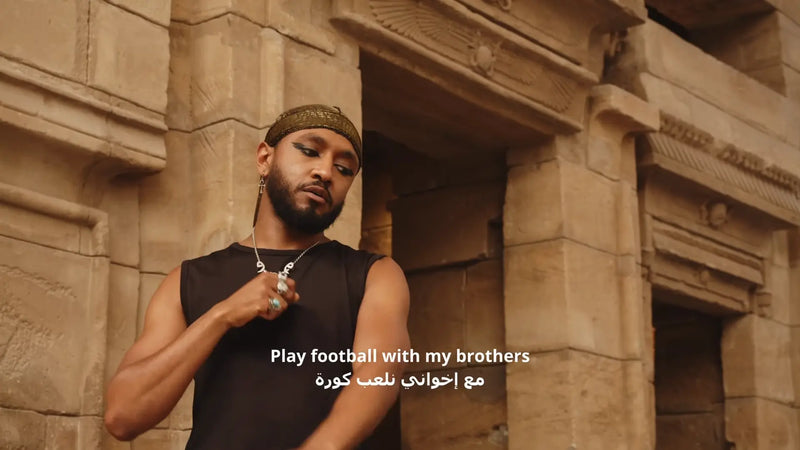
    Razeen released the music video for Sudan Nights (Prod. By All1ne), a visual love letter to Sudan. As a Sudanese artist raised in the Netherlands, Razeen walks a thin line between his Sudanese/Afro-Arabic roots and his influences from Western pop culture. Raised between these two worlds, duality is a recurring theme in his music: God and taboos, masculinity and femininity, love and the ego, war and peace. His debut album, Yallah Nargus, which is Arabic for “Let’s go dancing” is out now! 
    • Music

  • T.NO for Glamcult TV

    T.NO for Glamcult TV

    Joining forces with Patta, Glamcult TV presents T.NO, born Valentino Shakison, one of Amsterdam’s most acclaimed rising DJs and producers. Shaking up the electronic scene with infectious rhythms anchored in his Surinamese roots, T.NO digs deep into global club influences – from the restless energy of Kawina and the velocity of bubbling to the booming bass of Brazilian Funk and the minimalism of Gqom. Eschewing simple genre replication, he thrives in a grey area where all of his influences coexist and thrive.Today, T.NO delivers a selection of 100% his own productions in a high energy, contagious 30 minute set. No time is spared with a vigorously trenchant bass opener. Through a hypnotic blend spanning across weighty grime, ecstatic baile, and punchy percussion, T.NO showcases his extensive understanding of sound for an exhilarating non-negotiable dance.T.NO is wearing the Patta Stadium Tracksuit
    • Music

  • Crew Love Run with Loyiso Patta

    Crew Love Run with Lloyiso

    This Saturday, we are hosting a very special run in Amsterdam, where all music lovers are invited to join. Loyiso has dropped his debut album, and our running community has the opportunity to listen to it during a nice, easy pace 6K run. Lloyiso is even lacing up to join us for the run. Whether you are a big fan, you know a few songs or are just interested in hearing what’s up, you’re invited to drop by! Meeting up at 09.45 in Amsterdam Noord at the lovely Restaurant Van de Werf. Run starts at 10.00. See you there! Peace and love.
    • Events

    • Patta Running

  • The Alchemist in Amsterdam Patta

    The Alchemist in Amsterdam

     The Alchemist presents episode three of their tour vlog, Amsterdam edition. Watch now.   
    • Music

  • Get Familiar: ARTNOIR Patta

    Get Familiar: ARTNOIR

    Interview by Passion Dzenga | Photography by Pebbles BazurARTNOIR is a community first and an institution second — seven co-founders building the kind of art world they wanted to exist in, then inviting everyone else into it. Since 2013, they have used the platform to amplify Black and Brown creatives across disciplines, not just through exhibitions and walkthroughs, but through real infrastructure like Jar of Love: a micro-grant that has redistributed resources to artists and cultural workers when the bigger systems proved fragile.Now, ARTNOIR makes its Dutch debut through a collaboration with OSCAM in Amsterdam Zuidoost — a meeting of two Black women-led institutions that understand the power of place, and the urgency of showing up for community in real time. Their joint exhibition, Watering a Black Garden, lands during International Women’s Month and brings together eight women and non-binary artists from across the diaspora, reframing joy as something intentional: tending, care, rest, and becoming. In this conversation, Larry Ossei-Mensah and Carolyn “CC” Concepcion, co-founders of ARTNOIR, unpack how the show came together, why “radical joy” is a necessary lens, what sustainability actually looks like behind the scenes, and how they’re extending the exhibition beyond the gallery walls — into workshops, circles, and even a book list at the OBA, so visitors can take the experience home.For readers who are just meeting you: what is ARTNOIR - and why bring ARTNOIR to the Netherlands to partner with OSCAM now?Larry Ossei-Mensah: ARTNOIR is a collective platform. We started in 2013, formally it’s seven of us as co-founders and it stems from wanting to create the world we want to see. At the time, we recognized there were a lot of emerging artists doing incredible things but not getting engagement from our generation of patrons. For example, there were curators doing amazing work but not getting the support they needed. A lot of what we’ve done has been about amplifying the voices of Black and Brown, Latin, Latinx, Asian creatives — primarily visual artists but we’ve also worked with writers, dancers, musicians.One example is our Jar of Love microgrant, which we started in 2020. One of our grantees, Samora Pinderhughes, just had an exhibition at MoMA, Call and Response. He presented a new video piece and did a number of performances — and to be part of that journey has been really fruitful and rewarding. When I started working in the arts back in 2008, there were maybe a couple galleries showing Black artists. And now we’re in institutions consistently - but even within that, how do we show up and for each other?We do exhibition walkthroughs and we support exhibitions. We supported the British Pavilion for John Akomfrah’s presentation in 2024 and we’re supporting the British Pavilion again this year for Lubaina Himid's presentation. Since 2013, we’ve understood the importance of the platform being international, not just focusing on the United States. We have delivered projects in South Africa in collaboration with Black Portraiture, partnered with the U.S. Embassy in Paris, and worked in London with Samuel Ross and SR_A on the Black British Artist Grant.In terms of Amsterdam, OSCAM reached out to us to explore what a collaboration could look like. Marian Duff is the founder, and we’ve been working with Annicée Angela, who’s co-curating, and Manu Drenthem Soesman, who’s been helping with production. OSCAM does really important work. When they reached out, I hit up my people in Amsterdam: “Tell us more about OSCAM and its role, and everyone we spoke to emphasized the importance of OSCAM and the work they do.”. I’ve had the opportunity to spend meaningful time in the Bijlmer, which has given me a deeper understanding of what the neighborhood represents within a broader social and cultural context. I see art as a vehicle for conversation, specifically through this project, Watering a Black Garden: Reimagining Joy as a Radical Act of Tending and Becoming, and in considering what it means to present a group exhibition of Black and Brown women and non-binary artists.The timing is also intentional: International Women’s Month. The exhibition is celebrating the month, platforming these voices and artistic expressions, and being in dialogue with the creative community in Amsterdam. I’ve been visiting Amsterdam for the last 20 years, so my network is vast - people in fashion, visual arts, and everyday folks who live there. How can we collaborate, bring our flavor, and bring communities together?We’re not under the assumption that because Amsterdam is “small,” there isn’t an opportunity for engagement and dialogue. I always think about how, in New York, you need special moments that invite people to come out, especially after people have been hibernating, and with the weather getting better. It gives people a reason to pull up — especially if they live in other parts of the city — to say: “We’re going to go to Zuidoost, support this exhibition, see what these artists have to say, support the programming.” And also support OSCAM's work.We are always trying to identify mission-aligned partners who are changing the narrative, expanding discourse, and building a platform that’s accessible not only to creatives but to everyday folks. I did a site visit to OSCAM in October and it was great to watch the aunties coming from the grocery store popping in just to say hello. This is a really important component, community has been a bedrock for what we do regardless of where in the world we show up and collaborate.Carolyn “CC” Concepcion: I’ll add to that: community is central for us. We serve two constituents. We serve the artists — creatives, curators, culture producers, designers, makers — and we also serve communities of color that are interested in the arts. Accessibility is central to our mission. How do we invite our people into institutions, into gallery walls, into art and culture environments that can be intimidating and aren’t designed or programmed with them in mind?That’s why the field trips and walkthroughs are integral to how we got started — it was friends who wanted to see themselves in the art world, and they wanted to see it together. They wanted permission, inspiration, and to not be intimidated. If you like art — if you have even a mustard seed of interest — we can give you a path: where to go see it, how to see it. If you’re interested in collecting, we can support you with entry points. It’s about why you belong in the space, and highlighting who is creating with your narrative at the center.Watering a Black Garden brings together eight female and non-binary artists across disciplines. How did you build that list, and what threads connect their practices for you?Larry Ossei-Mensah: It’s a combination. Some are artists we’ve been following for a long time and really admire. We did research. Once we agreed on the prompt — focusing on platforming the women of colour — we were also thinking about diaspora. We wanted, to the best of our ability, to represent different voices and perspectives across the diaspora.Aline Motta, for example — Afro-Brazilian — I’ve gotten to know her over the last several years through projects in Brazil. Shaniqwa Jarvis is an incredible photographer and artist, and also a friend. It’s been amazing to witness her journey — and to find the right fit and the right timing to share her fine art practice alongside her commercial photography practice.Nengi Omuku is someone I’ve gotten to know over the last several years — I’ve shown her work before at the ICA in San Francisco. Same with Ufuoma Essi; this might be the secondtime I’ve engaged with her practice, having shown it at the MET in Manila, Philippines. Jennette Ehlers, I had been following and met last year while on a trip to Copenhagen, facilitated by the Danish Foundation. We wanted diversity in perspectives and mediums. We think about the exhibition at OSCAM as the soil — what grows from that soil are these varying expressions and ideas. So it’s been great: artists we know, artists we’ve researched, artists we feel have something to say — and we’re excited to collaborate with them. We have artists from Brazil, the U.S., Congo — Copenhagen, Nigeria, UK, France, and the Caribbean - our diaspora moves around, and we want those perspectives highlighted.Carolyn “CC” Concepcion: And another entry point to finalizing our artist list is OSCAM’s focus on emerging artists and young creatives of color. So we also looked to artists — like Rachel Marsil from Paris, Maty Biayenda from Paris, Bernice Mulenga from London — young, electric, vibrant artists at an inflection point in their careers. They have so much more to go and being part of their journey, helping expand their audience and impact, is inspiring. Larry Ossei-Mensah: So much is about the journey. The Venice Biennale just released the list of participating artists, and a number of them are artists we’ve supported in various forms. It might be romantic for me, but knowing you played a small part in helping them get to what they’re destined to get to — that’s powerful.And I believe most of these artists are showing in the Netherlands for the first time. There’s still a lot of work to do in terms of visibility for artists of color, platforming artists of color. This is showing up boldly, unabashedly, with love and care.A lot of the time, Black art gets framed through suffering and trauma. How do you present Black work without defaulting to that lens, while still being honest about the diasporic experience?Larry Ossei-Mensah: That was the intention from the beginning: to illustrate a different and more expanded point of view. It’s part of the journey, but it doesn’t have to be what we’re always centering.We’re thinking about joy, but not in a stereotypical “happy-go-lucky” way. Joy as tending. What does it mean to care for oneself and one’s community? Women and non-binary individuals are often the ones who feed our souls, minds, and spirits. We also wanted to complicate it: joy as intentional choices, how you hold space, how we hold space together, regardless of circumstance. This journey toward freedom, possibility, imagination — there’s no endpoint. It requires consistent engagement and dialogue, finding pockets of respite regardless of what’s happening.There’s always something happening in the world — to varying degrees. So, be mindful, but also look at ourselves, look at each other. Highlight the breadth and depth of what makes us human — complicated, layered, multi-faceted — and in the case of the exhibitions, using different forms of media. Centering wholeness was important in shaping the exhibition and selecting artists.Even the programming extends this. We’re partnering with the OBA Bijlmerplein near OSCAM — putting together a reading list. What does it mean to find a bell hooks book that allows you to process what’s happening in the exhibition? That extension is unique and exciting.Carolyn “CC” Concepcion: I’ll add to that by speaking on the title and the programming. The title Watering a Black Garden came to us after I revisited a photograph I took in 2024 of Raymond Saunders’s work at David Zwirner Gallery during Post No Bills, an exhibition curated by Ebony L. Haynes. Across a Black canvas “Watering a Black Garden” was written.. It felt rooted, powerful, magical. I posted it on my IG stories,Larry saw it, and said: “Oh my god, that’s the name of our exhibition in Amsterdam.” He was like: “I think that’s it.” Our good friend Ebony Haynes, Global Head of Curatorial Projects, further educated us on Saunders' work and what the garden meant to him, and it solidified things for us. So we honor these legends — the artists who laid the foundation. Raymond Saunders is centered and honored in when we speak about where the title of this exhibition came from.And in regards to joy: the programming is intentional. Bernice is coming to do a workshop around her photography practice. We’re doing a flower bouquet-making workshop — touching nature in real life. We’re doing a gathering with Up Close — part of the Amsterdam community — centered on healing circles. It’s wholesome: centering Black legends and centering women across the diaspora.ARTNOIR is a predominantly Black and Brown women-led organization — five women — so uplifting Black and Brown women artists is front and center. And OSCAM is also Black women-led and founded. So it all made sense.Larry Ossei-Mensah: From our research and observation, that’s where both organisations dovetail: pouring into our community, through exhibitions, programming, and even just being a space where “aunties” or “cousins” can come in and say hello. When I did my visit, I noticed it’s a vibe on multiple levels.The title encapsulates the idea: we have to keep pouring into each other regardless of what’s happening — sometimes in spite of what’s happening — to give ourselves the strength, the vision, the imagination to keep moving forward collectively.You’re building something that’s sustainable — and sustainability usually means you’re also thinking about burnout, rest, and care. How do you create space and respite inside the work, especially when this becomes a transatlantic diasporic conversation?Larry Ossei-Mensah: Definitely. It’s a constant process of evolution. It has different faces. For example, when we do our women’s dinner — usually biannual — it can look different. Last year, we did a ceramics workshop, and the year before, it was at the studio of our good friend Asmeret Berhe-Lumax, the founder of One Love Community Fridge. We are constantly mixing the approach to how we engage our community: field trips, going to see art, breaking bread and sharing a meal, and exchanging ideas. And physical, tactile moments — slowing down — is where a light bulb might go off.That’s partly why the programming has landed where it has. It’s one thing to say: “Come see the show, come do a tour.” It’s another to have an artist workshop guide us through lens-based practice — documenting community, telling stories, building an archive. Or to do a flower-arranging workshop — it might seem simple, but we’re all busy, we’re all programmed. So, saying - stop for an hour or two, focus on yourself, focus on community, bring a friend, share time - is helpful.Coming out of COVID, people are more hyper-alert to what’s sustainable. This is a long fight and journey toward freedom or liberation — a holistic approach to living. Our communities — especially if you’re first-gen — hard work and sacrifice are embedded in our psyche. That is important, but so is enjoying life, enjoying friends, having space to dream. The pressure is intense.Even reading a book shouldn’t be a luxury, but for some people it is. Taking time to read Toni Morrison and feed your mind, that matters. So we try to be intentional and strategic with how it shows up in our work.I co-curated an exhibition at Storm King (with Nora Lawrence & Adela Goldsmith), a sculpture park in upstate New York, of Sonia Gomes' work last year— and bringing people into a landscape, showing work, having a performance — it’s a reset. While living in a big city, those reminders are important.And there’s also a benefit in having seven co-founders, mixing and matching when needed. When someone steps back, someone else can take the baton and move things forward.Carolyn “CC” Concepcion: I wanted to speak to the shadow side: burnout, labor, and what it actually takes to build something like this. We’re seven co-founders, but none of us take a salary. We have a small but mighty team of interns and fellows who keep the engine going. We all have full-time jobs. We have kids. We have parents — aging parents. We have partners. And we make a choice every day to do this work for ARTNOIR — to make this space for our community. It’s intentional, curated, selected. And yes, it burns us out sometimes. Institution building for our community — resources aren’t always available. So we have to be scrappy and chic all the time, on a nonprofit budget.And especially in this climate — Black History Month is every day for us. DEI is not a checkbox; it’s our life. In this new administration — it’s more challenging to be loud and proud, but also to stay on the low with the work so we’re not targeted. That’s a new reality. Burnout isn’t just “wellness”; it’s also the pressure of leadership and visibility.Patta is doing this work too — you’re just using a different lens — but it’s all culture-making: image-making, object-making, archival work, storytelling of the Black experience. That’s the shadow side of building in service to our people.Jar of Love is one of the infrastructural pieces that really stands out. Can you break down what it is, how it works, and what resource redistribution and care look like in practice?Larry Ossei-Mensah: Jar of Love emerged from a practical use case. During COVID, once we understood what was happening, I noticed colleagues being furloughed, laid off — and you saw these “mighty” institutions were basically built on wooden stilts. On top of everything happening in the world — George Floyd, etc. — we asked: how do we support from where we stand?So we decided collectively: how can we re-grant or create mutual aid for colleagues in a dire moment? We started the fund in 2020 in partnership with several artists. We did online auctions with Artsy, with the support of then-CMO Everette Taylor — now CEO at Kickstarter — and raised funds. Then we held an open call for a non-restricted microgrant: $500 to $3,000, depending on need.Since 2020, we’ve reinvested over $350K in more than 150 artists, curators, cultural workers, and filmmakers. Initially, it was “for the COVID moment,” but even after that, we still saw the need. It’s an infrastructural gap.We’ve partnered with Sotheby’s, with the support of Walden Huntley-Fenner, and moved to a cohort model. Now we bring in a group of six or seven and try to create a network effect. With the recent cohort, it becomes not just funding, but convening: a filmmaker meets a musician — can you do a score? It becomes an ecosystem.We still provide resources for dream projects and needs, but now we’re asking: what does professional development look like? What do people need now? What are you working on that we can amplify? How else can we support — emotionally, with introductions, and by showing up? And it’s satisfying to see grantees hit their moments. Watching it manifest is one of the most satisfying feelings. We keep evolving it to meet the moment — needs change — and our superpower has been our adaptability and nimbleness.Carolyn “CC” Concepcion: It’s about being responsive when people need it most. COVID was the impetus, but it continues. We expanded Jar of Love in LA during the LA fires — distributing funds aligned with how we did it during COVID. Artists have studio fires, lose parents, get sick — that drumbeat continues, alongside the cohort model.Funding looks different across countries. London isn’t as generous as the U.S. in cultural funding. Our $5,000 might not be “that much,” but it’s the intention: we see you. It’s not only financial — it's the community seeing you and supporting you at different stages.Our goal is to expand in Paris. Our goal is to expand in Amsterdam. That’s something we can work on together — finding the funds — especially in centers of creative exchange tied to the African diaspora.Let’s get practical: what’s the full rundown of programming around OSCAM? Key dates, key moments — what should people pull up for?Carolyn “CC” Concepcion: March 6th is press and VIP programming. Miss Sunny will DJ and Sylvana Simons will do the welcoming — she’s very loved in Amsterdam. We’ll have a panel with fourof the artists who are in town. For the opening, we have more DJs: Princess Vineyard is coming, and then there’ll be an afterparty with AK SoundSystem — so it’s going to be kind of lit. A lot of music, a lot of vibes.The caterer is Tabili, two sisters doing beautiful work inspired by different parts of the diaspora: Brazilian food, Caribbean food, food from the continent all on the 6th.Then the other programs run between March and April: programming with Up Close and the library, an art workshop with Bernice Mulenga, and the flower-making workshop. And the book selection — when does that hit the OBA?Larry Ossei-Mensah: It will launch during the opening of the exhibition. At OBA Bijlmerplein, we will have an area with books, a flyer, and materials with QR codes. The book list will also be online.We’re also doing a playlist. It’s about extending the exhibition and letting people bring it home. You see an incredible painting by Rachel Marsil, you’re moved, then you stumble into an Audre Lorde book that invites you to think about what it is to be a person of color in repose.The first time I came to Amsterdam, a buddy lived by the Heineken factory and said, “Let’s bike to the park.” I was 24, from the Bronx — I was like, “What?” Watching people picnic, relax, and be at rest - that was strange for me then. If I went to the park, it was to play basketball, not to rest.So to have a visual representation of your body at rest — not in fight-or-flight — and then literature or music that can support what you feel as you move through the show: that’s an essential part of making it holistic.Watering a Black Garden is curated by Annicée Angela (OSCAM), Carolyn “CC” Concepcion & Larry Ossei-Mensah (ARTNOIR) and will be on view at OSCAM, Bijlmerplein 110, 1102 DB Amsterdam from Friday, March 6th to May 6th, 2026. 
    • Art

    • Events

  • Get Familiar: Jerrau Patta

    Get Familiar: Jerrau

    Interview by Passion Dzenga | Photography by Liesje Verhave and Pebbles BazurOver the past few years, Jerrau has quietly but confidently carved out his place as one of Amsterdam’s most versatile and forward-thinking DJs. Effortlessly moving between breakbeats, bass-heavy club sounds, alternative electronic hip-hop and soulful house, the Surinamese-Dutch selector has built a reputation for sets that are hard to categorise but impossible to ignore. Whether he’s closing at Lowlands, holding it down in the club at De School, performing at Down The Rabbit Hole with Erykah Badu on the mic or showing us the way during his Patta x Keep Hush session, Jerrau’s approach has always been rooted in curiosity, culture and an instinctive understanding of the dancefloor.Now, after years of refining his voice behind the decks, he steps into a new chapter with his debut EP, It All Starts With This, released on Who’s Susan. A project shaped by discipline, mentorship and a deep love for bass lineage — from Amsterdam to the UK and beyond — the record marks a deliberate beginning. Inspired as much by Sonic soundtracks as by sound system pressure, Jerrau’s move into production feels less like a pivot and more like a natural extension of the world he’s been building all along.We caught up with him to talk about finally committing to the studio, learning to let go during a month-long residency in Nicaragua, his unexpected place within the Black British music ecosystem, and why, whether DJing or producing, the room always comes first.Jerrau is wearing the Patta 3M Reflective Waterproof Rain JacketThis will be your first release after years behind the decks and you have mentioned that you have “flirted” with producing for years, what shifted for you to take it more seriously now?I’ve always been curious about producing and I’ve picked it up a few times over the years, but it never really stuck. I’d dive in, get excited, then I would feel overwhelmed by how many possibilities there are and then life or DJing would pull me back out of it. It was always there in the background though.What really shifted things was when Tsepo, offered to teach me. That felt different. There’s this “each one, teach one” mentality — almost like that Black Panther ethos — and when he reached out, it felt like a moment I wasn’t supposed to ignore. We only had a couple of sessions together but it was really a turning point for me. I took that as a sign that it was time to stop flirting with the idea and actually commit. So when starting this journey, next to the few sessions I had with Tsepo. My friend Tijn also just started making music and for the first few months we went to the studio together all the time just to try to get better and learn from each other.I sometimes think I should have started during the pandemic when there was more time and space to focus, but I’ve realised you don’t find time — you make it. Over the past 18 months, I’ve really treated it seriously: I got access to a studio here in Amsterdam, put in the hours, and approached it with the same discipline I’ve brought to DJing. That consistency is what’s made the difference.The title, It All Starts With This sounds very intentional. What does “this” represent in your musical journey right now?The title actually comes from one of my favourite games, Sonic Adventure 2. I basically have all the dialogue from that game burned into my head. I’m honestly not the best at naming things — even my DJ name is just my actual name — so titling tracks and projects has always been a bit of a challenge for me.When we were finalising the selection, the artwork and the sequencing for the record, that dialogue just kept coming back to me. It felt simple but loaded. It didn’t feel forced or overly conceptual — it just felt right.For me now, “this” represents the starting point. It’s the first proper step into producing, into putting something out that’s fully mine. It’s not necessarily about having all the answers — it’s more about committing to the beginning.Jerrau is wearing the Patta Track Top CardiganHow has your journey as a DJ influenced your approach to producing — and has producing changed the way you DJ?DJing has definitely influenced the production more than the other way around. Years of being on the dancefloor and in the booth teach you what actually works in a room — how tension builds, how long a groove needs to breathe, when to strip things back, when to push. That experience naturally informs how I approach making a track. I’m always thinking about how something will translate physically, not just how it sounds in the studio.Producing has influenced my DJing in a more subtle way. I’ve had to think more carefully about how my own tracks fit into my sets — where they make sense, what they sit next to. But I’m never going to brute-force my own music into a set just because it’s mine. DJing and producing are different practices, and they should be treated that way. For me, the room always comes first. If one of my tracks serves that moment, great. If not, that’s fine too.At the same time, I still feel like I’m learning, and there is a lot to learn. One area I really want to deepen my understanding of is mixing and mastering. I want to understand that final stage of the process properly — not just creatively, but technically — so I can have even more control over how the music translates, both in the club and beyond.Why did you choose to work with Who’s Susan?Who’s Susan is just a really dope label. Over the past few years, I’ve bought pretty much everything they’ve released. I’ve always respected their curation and the world they’ve built around the music.It actually happened quite organically. I was promoting one of my own nights and used one of my demos as the audio for a post. Willem from the label heard it and reached out to ask if I had more material. He connected with the direction I was exploring and felt it aligned with what Who’s Susan was doing. That meant a lot, because it didn’t feel forced — it felt like a natural fit on both sides.That alignment made the decision easy. And it feels full circle in a way — the one feature on the EP is from one of their legacy artists, DJ OSX, formerly known as DJ Windows XP. So to go from being a supporter of the label to releasing on it, and collaborating within that family, feels really special.The artwork for your debut EP aesthetically reminds me of one of your big inspirations, Sonic, was this intentional?Interestingly, the artwork was actually made before we fully put the record together. So it wasn’t a case of me saying, “Let’s make this look like Sonic.” It was more organic than that. Sjon de Baron, who does all the artwork for Who’s Susan, really understands me and what I’m about. He was able to translate the feeling of the music visually, while still keeping it consistent with the label’s wider art direction. I think that’s why it resonates in that way — it reflects my influences without being literal. There’s definitely a shared visual language there, but it came from mutual understanding rather than a direct reference.You traded Amsterdam for a month in Nicaragua at Popoyo’s Secret. What pulled you there, and how did a residency format change your approach compared to festivals or single-night gigs?What really appealed to me about Nicaragua was the idea of stepping outside my usual rhythm. Amsterdam can be intense — fast-paced, scene-driven, and very plugged in. Spending a month somewhere more remote, surrounded by nature and a different energy, felt like a chance to reset.I ended up loving it. I’d go back in a heartbeat. There was something really refreshing about being there — it stripped things back in a good way. The residency format was also very different from a festival or a one-off club set. I tend to approach DJing almost like programming — thinking carefully about structure, context, and what makes sense for a specific slot. During the residency, I played at different times of day, so each set required a different mindset. You can’t approach a sunset set the same way you approach a late-night peak-time slot.What I really enjoyed, though, was the freedom. Being in the same place for a month allowed me to build a relationship with the space and the people. I felt less pressure to prove something and more space to just have fun. I think I let go of a slightly more “pretentious” side of DJing — that idea of only playing very specific records to signal something. It became more about what felt good in the moment. That shift was probably the biggest takeaway.Being a devoted Chelsea supporter, do you feel your connection to the UK through football has influenced your relationship with UK music? And where are you hoping to head next?I was actually living in the UK for my first few years on this earth, Surrey to be exact. It’s funny — the last time I was in the UK for a show, I visited a museum exhibition about the history of Black British music. I was watching one of the video installations and saw this quick flash that looked like me. I kept watching and realised it actually was me — they had included footage from my Patta x Keep Hush set in the exhibition.That was a surreal moment. It made me realise that my connection to the UK scene isn’t just from a distance — in some small way and it was cool to be included in the Black British music ecosystem. I’ve always felt drawn to the UK, not just because I’m a Chelsea fan, but because of the depth of its bass music culture. There’s such a strong lineage of sound system energy and low-end pressure that really resonates with me. That influence definitely shapes how I think about rhythm and space in my own sets. I’d love to spend more time in places like London, Bristol and Manchester — cities with deep bass traditions and strong musical identities. And of course, making it to Stamford Bridge for a Chelsea game is still on the list too!Ready to hear the next step? is out now via Who’s Susan — press play and start the journey with Jerrau. It all starts with this by Jerrau
    • Get Familiar

  • Get Familiar: ARTNOIR Patta

    OSCAM and ARTNOIR Present 'Watering a Black Garden'

    A Transatlantic Exhibition Centering Joy, Lineage, and the Creative Sovereignty of Women of Color at OSCAM (Open Space Contemporary Art Museum), AmsterdamMarch 6th to May 6th, 2026Eight women and non-binary artists from across the African diaspora, based in six countries, come together in Amsterdam to affirm joy, presence, and flourishing as radical and necessary acts.On March 6, 2026, OSCAM (Open Space Contemporary Art Museum) and ARTNOIR present Watering a Black Garden, a group exhibition that reimagines joy as a radical act of tending and becoming. Centering Black and Brown women as visionaries of abundance, the exhibition frames joy as an intentional and sustained practice of care within Black femme experiences.This landmark exhibition marks a powerful transatlantic collaboration rooted in shared commitments to equity, visibility, and cultural exchange. The exhibition features work by Maty Biayenda, Jeannette Ehlers, Ufuoma Essi, Shaniqwa Jarvis, Rachel Marsil, Aline Motta, Bernice Mulenga, and Nengi Omuku.Connecting New York and AmsterdamWith this collaboration, ARTNOIR makes its debut in the Netherlands, forging a cultural bridge between New York and Amsterdam. A female-majority, Black- and Brown-led platform, ARTNOIR supports artists of color through exhibitions, partnerships, and global storytelling.Together, OSCAM and ARTNOIR expand access, visibility, and opportunity within the contemporary art world, bringing underrepresented voices to the forefront. The partnership connects local audiences with global conversations while positioning Amsterdam-Zuidoost on the international cultural stage.Joy as a Sustained PracticeWatering a Black Garden takes inspiration from a seminal painting by Raymond Saunders, which bears the phrase “watering a black garden” written across a black canvas. The painting serves as both metaphor and call to action for the exhibition’s curators.The exhibition asks: What does it mean to nurture oneself, one’s community, and one’s creative lineage in a world shaped by histories of erasure and ongoing inequity?Through diverse artistic practices, “watering” becomes a metaphor for ongoing, intentional acts that foster flourishing. The garden emerges as a site where memory and lineage are nourished and alternative futures take root. Rather than functioning as a passive backdrop, the garden proposes a way of being—grounded, attentive, and expansive.The richness of the exhibition reflects the fullness of Black and Brown femme life, where radiance is essential rather than decorative. Across disciplines, the artists assert presence as both a personal and political act, resisting invisibility while opening space for healing, connection, and becoming.Marian Duff, Founding Director of OSCAM, shares:“This collaboration feels both natural and deeply meaningful. I have followed ARTNOIR for many years, and I am proud that together we are bringing artists from around the world to Amsterdam-Zuidoost for their Dutch debut.”Larry Ossei-Mensah, Co-founder of ARTNOIR and co-curator of the exhibition, adds:“Watering a Black Garden is both an offering and an insistence. It creates space for women of color to be fully present—joyful, complex, and sovereign. The works in this exhibition remind us that flourishing itself is a form of resistance.”Eight Artists from Across the DiasporaThe participating artists embody this ethos across diverse disciplines and cultural contexts:Maty Biayenda (FR) interrogates the erasure of African narratives in European discourse.Jeannette Ehlers (DK/TT) confronts colonial histories through processes of healing and repair.Ufuoma Essi (GB/NG) explores Black feminist epistemologies and collective memory through video.Shaniqwa Jarvis (USA) captures vulnerability and optimism through photography.Rachel Marsil (FR) reimagines embodiment and identity through performance.Aline Motta (BR) traces familial histories disrupted by colonial violence.Bernice Mulenga (GB/DRC) examines intimacy within the self and the Black queer community.Nengi Omuku (NG) creates immersive worlds reflecting place and belonging.
    • Art

  • SALIMATA - Jackpot & Foil Patta

    SALIMATA - Jackpot & Foil

    SALIMATA brings Brooklyn bravado and fearless wordplay to the COLORS stage with a razorsharp performance of ‘Jackpot’ and ‘Foil’, from her latest album ‘The Happening’.
    • Music

  • PLOEGENDIENST - SURINAAMSE BROODJES Patta

    PLOEGENDIENST - SURINAAMSE BROODJES

    Ploegendienst drops new single “SURINAAMSE BROODJES”. Ahead of their upcoming album "GEEN TITEL" and 2026 live tour. Pre-order "GEEN TITEL" now. 
    • Music

  • Echobox presents Echonow: AMBIT Patta

    Echobox presents Echonow: AMBIT

    Young talent from Amsterdam’s nightlife scene to present at special club night in Garage Noord on March 5, made possible by AFK, Productiehuis Nowhere & Echobox Radio. On March 5, 2026, the seven young creators of Echonow, the ten-month talent development program from Echobox Radio and Productiehuis Nowhere, will present their own night at Garage Noord, titled AMBIT. This serves as the final presentation of the program in which they developed their skills across disciplines such as DJing, visual arts, producing, curation, and performance art.Launched in 2025, Echonow was designed as a comprehensive development program to give emerging talents a serious start in Amsterdam’s nightlife scene: a field that can be both challenging to access and sustain a career in. The program featured masterclasses, one-on-one coaching, and access to professional equipment. Over ten months, participants worked on their own projects under the structural guidance of key figures from Amsterdam’s nightlife ecosystem.Thanks to funding from the Amsterdam Fund for the Arts (AFK), we have been able to lower the barriers for young makers in the city. Without this support, the program would not have been possible. AFK specifically backed initiatives that help creators aged 18-27 gain access to nightlife as a cultural and artistic space.During the club night at Garage Noord, visitors will experience a full evening curated entirely by the makers themselves - featuring DJ sets, live performances, and visual art. It’s both a presentation of the results of their ten-month journey and an opportunity for the creators to introduce themselves to pioneers, curators, and others in the field.This event demonstrates how public arts funding operates in practice: how AFK resources are used to nurture new talent and strengthen a vibrant, inclusive nightlife sector. Echonow stands as a concrete success story of sustainable support for emerging creators.Tickets are available now.
    • Events

Error